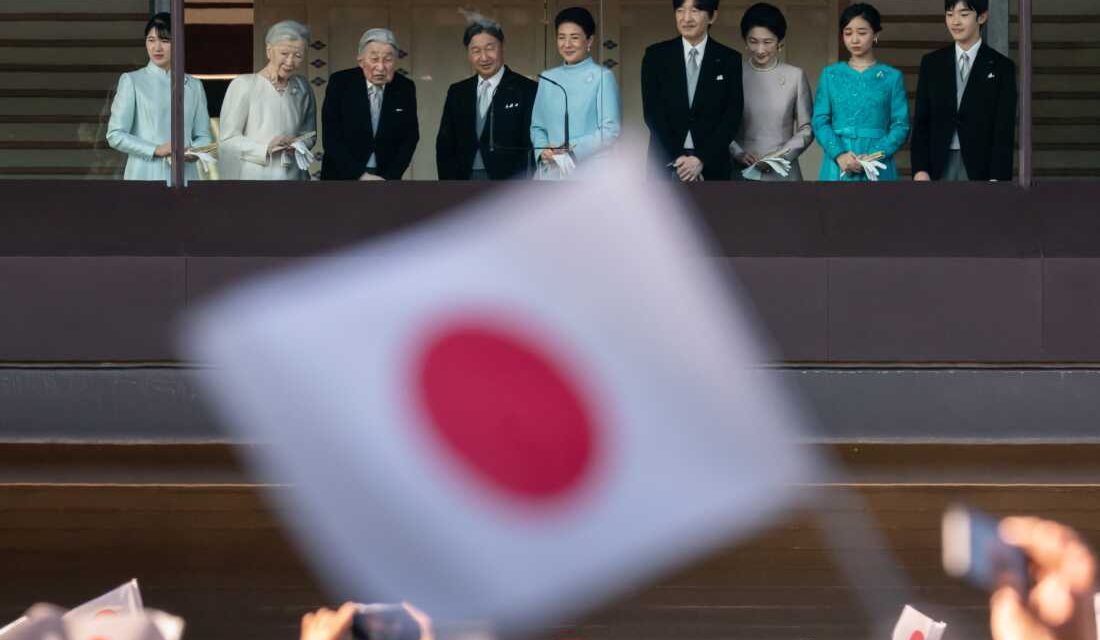
In a significant development, Japan’s upper house of parliament approved revisions to laws governing imperial succession. This action followed the lower house’s approval of the contentious changes. The revisions aim to secure a sufficient number of imperial family members, maintaining their duties as the family diminishes due to aging.
Critics, however, argue that these changes have another motive. Seiichiro Noboru, a former diplomat with imperial ties, claims that the objective is to prevent female emperors. Public support for Japan’s constitutional monarchy is crucial, especially as the nation redefines its military role and stresses adherence to international norms.
The revisions allow princesses to remain royals after marrying commoners. Moreover, male-line descendants from former branches can be adopted into the imperial family. However, these adopted men and married princesses still remain ineligible for the throne.
Currently, 19-year-old Prince Hisahito, Emperor Naruhito’s nephew, is the last young heir, creating a public concern about the imperial family’s future. Noboru suggests that acknowledging a female emperor could resolve these complex succession issues.
The Case of Princess Aiko
Princess Aiko, the only child of Emperor Naruhito, is a popular candidate for succession. With a Japanese literature degree and a position at the Japanese Red Cross Society, she garners public admiration. Surveys indicate strong public support for female emperors, with 60% to 90% in favor.
However, Japan’s first female prime minister, Sanae Takaichi, opposes this. She emphasizes the emperor’s historical male lineage as essential for legitimacy. Yet, eight female emperors from a male line have ruled, much like Princess Aiko, over the past twelve centuries.
Historical Context of Male-Only Succession
This male-only succession approach originates from 1889 under the Meiji government, viewing emperors as military leaders and patriarchs. This era classified married women as legally inept, requiring husband’s consent for property ownership or contracts.
Facing high infertility and mortality rates, the Meiji era’s solution for heirs included concubinage, which led to many emperors born from concubines. Noboru argues that excluding women from the throne now clashes with constitutional protections against gender discrimination.
Japan’s constitution empowers its people, with the emperor symbolizing the nation by public will. “Article 1 of the Japanese Constitution states that the Emperor is the symbol of the nation and that his position is determined by the will of the people,” Noboru explains. The emperor remains politically neutral but subtly emphasized the importance of public support for ensuring enough imperial members.
Chie Kobayashi contributed to this report in Tokyo.
 Trump Delivers Warning to Iran, Cuba at UN General Assembly
  Lukashenko and Putin’s Unique Relationship and Belarus’ Strategic Role
  Alan Ritchson Faces Backlash Over Political Remarks
  Himalayan Pilgrimage: A Couple’s Narrow Escape and Lingering Questions
  Former CEO Sentenced for Bank Fraud and Sanctions Evasion
  Russia’s Potential Incursion Into Estonia: NATO’s Resilience Under Scrutiny