China’s latest artificial intelligence model, Kimi K3, has taken the U.S. tech industry by surprise. This development signals that Chinese startups with open-source AI technology are posing competition to major U.S. companies. The Kimi K3 model, launched by Beijing-based startup Moonshot, is on par with the leading models like Anthropic’s Claude and OpenAI’s ChatGPT.
Anastasios Angelopoulos, co-founder and CEO of Arena, stated that this release is potentially the most significant of the year. He noted that open-source Chinese models might be surpassing American closed models. Kimi K3 has topped Arena’s ranking for “front-end coding capability,” showcasing its strength among large language models.
“This may be the single biggest release of the year,” Angelopoulos commented.
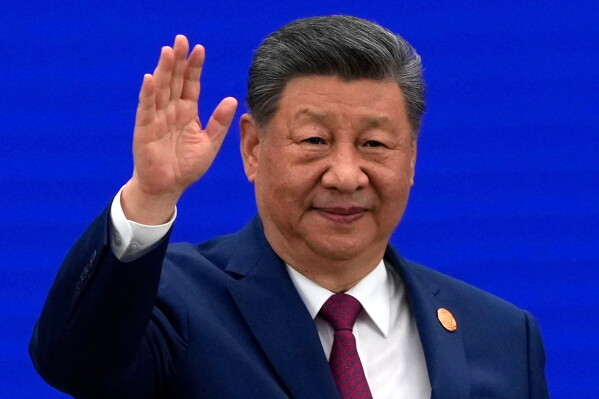
The launch of Kimi K3 coincided with Chinese President Xi Jinping’s opening speech at the World Artificial Intelligence Conference in Shanghai, highlighting China’s strategy to develop domestic technology amid U.S. restrictions. Xi emphasized global cooperation in AI development.
Chinese AI models have shown rapid progress. The K3 follows closely after another significant model from Chinese startup Zhipu, known as Z.ai. Zhipu’s GLM-5.2 is favorably used by software developers worldwide, offering performance comparable to top U.S. models but at lower costs.
However, reactions to the K3 model are mixed. Tech analyst Patrick Moorhead described the response as an “overreaction,” similar to the market’s reaction to DeepSeek’s model release last year. While there could be benefits to the industry, challenges to Anthropic and OpenAI’s revenues are anticipated.
The conference in Shanghai also featured Huawei’s new AI computing system, the Atlas 950 SuperPoD. This indicates China’s growing capability to manufacture crucial hardware, countering U.S. restrictions on chip imports.
Moonshot has not disclosed the hardware used for K3, but has partnerships with Huawei. The cost of utilizing K3, although the highest for a Chinese model, remains about half of what OpenAI charges for its GPT-5.6 Sol model.
Concerns arose regarding potential “distillation” of technology, where companies might acquire capabilities from competitors’ models. American companies like Anthropic and OpenAI have accused Chinese models of this method. Beijing has denied these allegations as “groundless.” Anthropic views distillation as legitimate unless used to unfairly gain powerful capabilities.
Yet, U.S. startups like Anysphere have also benefited from this practice. Anysphere’s Cursor, based on Moonshot’s K2.5, is set to be acquired by SpaceX for $60 billion.
Yang Zhilin, Moonshot co-founder and CEO, studied at Carnegie Mellon University, contributing to the AI field. His work has been recognized widely, and his former adviser Russ Salakhutdinov expressed pride in Yang’s achievements. Yang’s work demonstrates potential benefits and risks of open-source AI models. While they foster innovation, they also raise safety concerns.
 President Trump Proposes ‘Super Intelligence’ as New AI Term
  First Lady Melania Trump’s AI Education Push Amid Concerns
  Expansion of Data Centers Fueled by AI Development
  Beijing’s Tactical Undermining of U.S. Supremacy Through AI
  The Discovery of Incendiamoeba cascadensis: A Fire Amoeba
 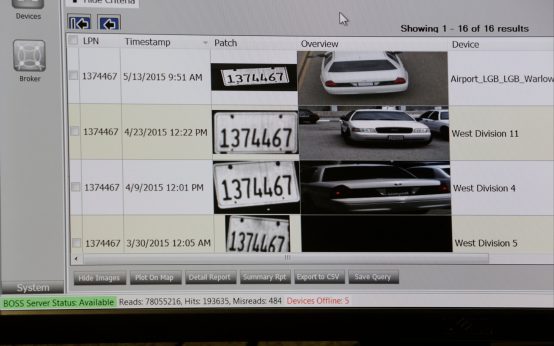 Controversy Surrounds Automated License Plate Readers Across the U.S.