
During a primetime speech, President Donald Trump shared a plethora of documents aiming to support his claims of widespread voter fraud, a theory that has been repeatedly disproven. Addressing the nation from the White House, Trump revealed purportedly shocking details, including alleged interference from China to undermine his presidential campaign in 2020 and cover-ups by the so-called ‘deep state.’ He stated, “Americans were blatantly lied to about the security of our election infrastructure.”
An analysis by The Associated Press, however, found no evidence in the released documents to substantiate these claims. The collection includes declassified reports, investigation files, and intelligence analyses, many of which are heavily redacted, leaving their conclusions ambiguous. Existing vulnerabilities and assessments did not highlight any manipulation by China or other foreign entities during the 2020 or any past elections.
David Becker, executive director of the Center for Election Innovation & Research, attended a White House briefing on the documents before the address. He commented, “The White House promised a bombshell, and they delivered a dud,” noting the absence of new information questioning past elections, including those in 2020.
China’s Alleged Data Acquisition
Trump claimed Thursday night that since the 2020 election cycle, China had conducted what was described as the largest compromise of election data ever, illegally acquiring 220 million U.S. voter files. Despite these allegations, evidence does not suggest China utilized this data in a nefarious manner. Chinese data collection efforts concerning Americans have been well-established, regardless of election outcome influence. Public voter files are readily accessible and traded by political campaigns and parties for strategic outreach purposes.
While China’s attempts to sway the 2020 campaign have been documented, there has been no assessment of direct interference. The released records indicate an internal debate within the intelligence community about China’s objectives, revealing disagreements over perceptions of China’s desire to undermine Trump.
China responded to Trump’s accusations as “groundless” and “entirely fabricated,” asserting no involvement in U.S. elections.
Noncitizen Voter Registration Controversies
Trump highlighted a Department of Homeland Security investigation, which allegedly identified about 278,000 noncitizens registered to vote in federal elections. However, the report found no evidence these individuals voted, a criminal act, and the data remains unverified. The SAVE database, responsible for some findings, suffers from inaccuracies, often misclassifying naturalized citizens as noncitizens.
Noncitizen voting is rare according to studies. In some local elections, noncitizens are permitted to vote, explaining their presence in voter rolls.
Russia’s Ongoing Election Interference
The documents shed light on Russia’s continued efforts to meddle in U.S. elections. A 2020 document highlights Russia’s focus on undermining Joe Biden rather than supporting Trump. It discusses Russia’s attempts to spread claims about Biden’s purported misconduct with Burisma, a narrative echoed by Trump and Republican allies.
The document from the National Intelligence Council clarifies Russia tried penetrating election systems to defeat Biden, contrasting with China and Iran’s desire for Trump’s loss. Russia denies these allegations.
Michigan Case and Voter Registration Issues
Numerous documents detail an unresolved Michigan case where a pro-Biden canvassing operation submitted dubious voter registrations during the 2020 election. Authorities were alerted by a local official, leading to case closure due to lack of evidence or security threat identification. Michigan Republicans criticized the Democratic attorney general for not pursuing charges.
Challenges in Voting Systems
Trump disclosed intelligence reports describing vulnerabilities within election infrastructure susceptible to hacking and manipulation. The documents list breaches, predominantly by Russia, urging state and local officials to strengthen defenses. While voting machines pose risks, security measures like equipment testing and post-election audits aim to mitigate inaccuracies.
The administration’s actions to support these efforts remain vague. Trump removed members from a bipartisan election commission after their resistance to additional voter citizenship documentation. He also reduced funding for the U.S. Cybersecurity and Infrastructure Security Agency (CISA), which plays a vital role in election security.
The SAVE system, endorsed by Trump for state adoption, faces criticism as a centralized federal database, potentially tempting foreign adversaries.
It remains essential for election officials to maintain robust security measures to uphold the integrity of the voting process.
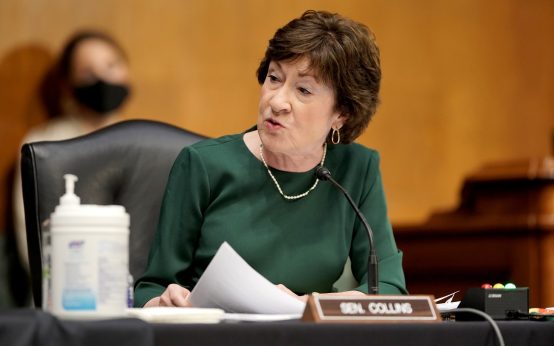 Collins Battles Trump Administration on NIH Grant Control
 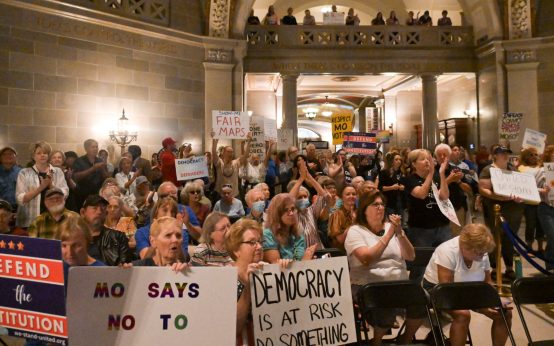 U.S. Appeals Court Supports New Missouri Congressional Map
  GOP Candidates Call to End Iran War Amid Rising Fuel Costs
  Trump Administration Seeks to Influence NIH Grantmaking
  Protests in Austin: Analyzing the Coordination Behind Anti-ICE Demonstrations
 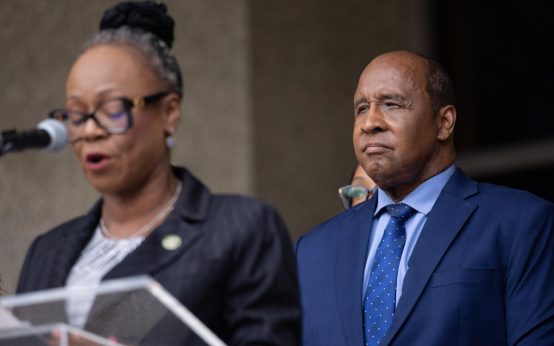 Controversy Surrounds Inglewood Mayor Amid Allegations