Inside the U.S. Capitol, statues honor notable Americans like Will Rogers, a renowned social commentator. Rogers famously remarked about Congress, “Every time they make a joke, it’s a law, and every time they make a law, it’s a joke.” This sentiment resonates with nearly 90% of Americans who express dissatisfaction with Congress.
Carl Hulse, chief Washington correspondent for The New York Times, notes the enduring frustration with Congress. Hulse, who has reported on Capitol Hill since the Reagan era, labels it a ‘broken institution’. He emphasizes a significant lack of cooperation between political parties, which hinders progress. Despite good intentions, many lawmakers struggle to effectively implement them.
The U.S. Constitution grants Congress substantial power. Hulse points out that Republicans in Congress err by ceding power to the administration on matters like tariffs and war powers, weakening Congress’s role. Even if viewed as strategic under President Trump, reclaiming ceded power later proves challenging.
Partisan Dynamics and Legislative Challenges
Currently, Republicans lead the Senate and the House, resulting in legislative gridlock. The 119th Congress has enacted fewer bills compared to past sessions. Still, notable legislation includes a GOP tax bill projected to cut taxes by $4.5 trillion over a decade, and a bipartisan housing bill. However, memories of a government shutdown over homeland security funds linger.
President Trump often bypasses Congress on issues like trade or military actions, further pressuring lawmakers by proposing changes such as an overhaul of federal voting rules. The Senate faces uncertainty as former majority leader Mitch McConnell remains hospitalized and Senator Lindsey Graham’s unexpected passing shakes the chamber.
Hulse remarks that Congress is confronting age-related challenges and a more divisive political climate compared to the mid-1980s. Back then, lawmakers, many World War II veterans, approached their roles with a sense of duty, unlike today’s partisan alignment with presidential interests.
Perspectives on Congressional Effectiveness
“People should be mad,” remarks Sarah Binder of the Brookings Institution regarding public sentiment toward Congress.
Binder and Philip Wallach of the American Enterprise Institute describe Congress as both ‘struggling’ and ‘marginalized’. This reflects a broader issue of executive authority overshadowing legislative power. Members of Congress view the executive branch and judiciary as the centers of significant action, a result of decades of power transfer.
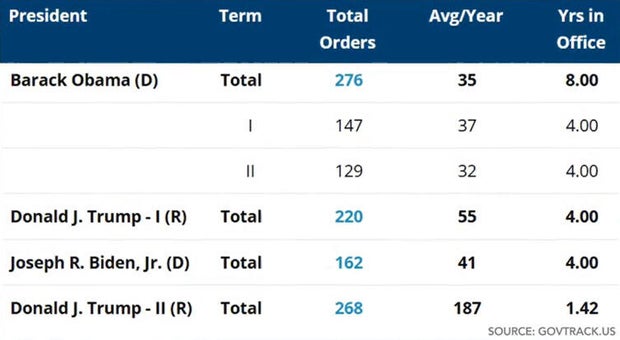
President Trump has issued over 260 executive orders, much more than the combined total of previous administrations. This trend raises questions about Congress’s efficacy.
Binder suggests public scrutiny of Congress is warranted given critical issues like the national debt and Social Security’s future. Despite unreasonable expectations at times, achieving legislative success requires broad bipartisan agreement, a challenge in a polarized America.
Looking Forward
Binder and Wallach reflect on Congress’s future. Despite current challenges, Binder remains less optimistic due to longstanding problems. Wallach takes a long-term view, hopeful that Congress can reform itself and reclaim its place as a central legislative force.
Ultimately, today’s Congress mirrors the societal and political complexities of its era, reflecting both its strengths and shortcomings.
Story produced by Robbyn McFadden and Reid Orvedahl. Editor: Jason Schmidt.
 House Races Shift Amid Democratic Momentum
  Iowa Senate Race: Marist Poll Shows Democrat Josh Turek Leading Republican Ashley Hinson
  Kamala Harris and Abdul El-Sayed Campaign Together in Detroit
  Challenges Facing the Supreme Court’s Public Perception
  California Democratic Aide Arrested for Visa Overstay by Federal Authorities
  Experts Doubt Export Ban Will Lower Fuel Prices