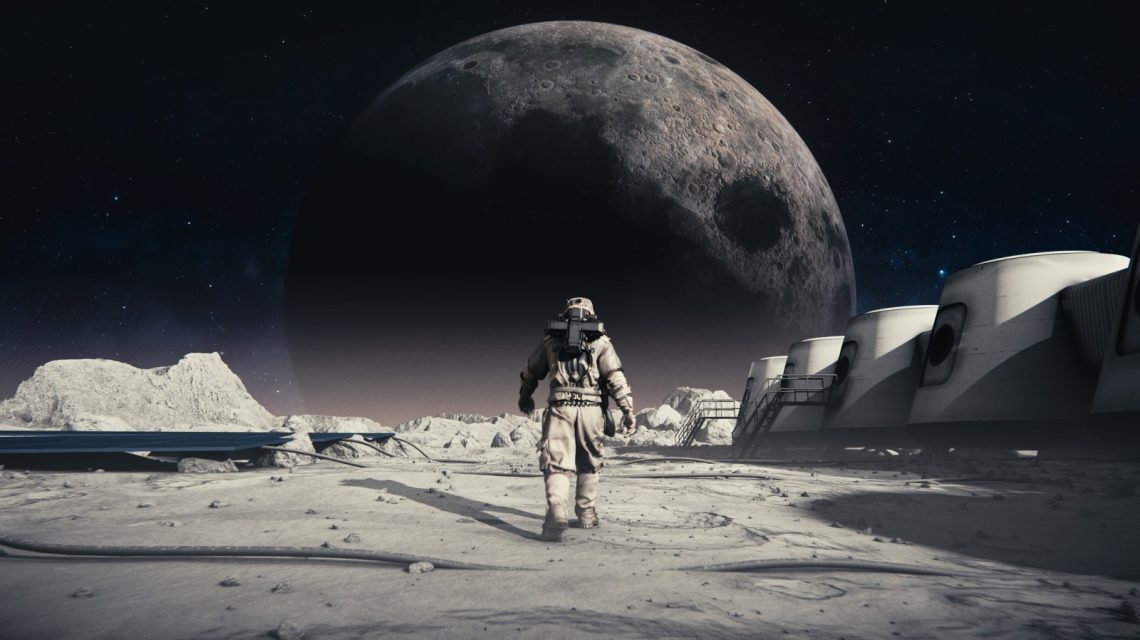
NASA’s plans for a lasting human presence on the moon are moving from fiction to reality. In May, the agency revealed a detailed strategy for a Moon Base near the lunar South Pole. This plan aims for a sustained human presence, where living and working on the moon becomes feasible. NASA also announced partnerships for lunar exploration, including contracts for lunar terrain vehicles and delivery systems. By June’s end, NASA chose three companies for four moon missions in late 2028.
Experts suggest future lunar settlements might differ from Earth’s skyscraper-filled cities. George Sowers, professor in the space resources program at Colorado School of Mines, says building structures using lunar materials is technically feasible. Earth’s skyscraper challenges like hurricanes and earthquakes diminish on the moon, which is seismically inactive with no substantial atmosphere.
Hao Chen, assistant professor at Stevens Institute of Technology, envisions lunar skyscrapers as highly functional habitats. These would be modular and built with lunar materials like processed lunar regolith. With moon gravity only one-sixth that of Earth, architects have greater freedom. However, life-supporting functions, such as pressure containment, oxygen and water supplies, thermal regulation, radiation shielding, and crew safety, remain priorities.
Despite possibilities of tall structures, experts argue that future lunar cities may be underground. Sowers believes settlements will move underground due to radiation exposure. Unlike Earth, the moon lacks natural protection from space radiation. Giant lava tubes on the moon present a potential solution. These tunnels, larger than Earth’s, formed in low gravity and could provide radiation shielding.
Architect Scott Specht agrees, suggesting underground living is preferable on the moon. He mentions lava tubes and caves as ideal for housing communities. Shielding from radiation and stable temperatures are notable advantages. Nathan Silvernail, co-founder of Plantd, also envisions a subterranean civilization. Future settlements would likely use processed regolith and nuclear power for atmosphere and energy needs.
Specht noted that making lava tubes livable requires minimal changes by aerospace standards. Essential elements would include a lift for access, pressurized modules for breathable air, and solar panels for power.
Moon architecture innovations could influence Earth designs. Chen suggests forcing designers to see buildings as closed-loop ecosystems could transform sustainable architecture. Technologies for lunar construction, like autonomous robotics and zero-waste resource systems, might benefit resource-scarce areas on Earth.
Specht believes moon lessons could change design philosophy, focusing more on the interior. Without views or exteriors in buried habitats, all experiences must be created within. This could be valuable for Earth architecture as well.
 NASA’s New Space Telescope Launch: A Breakthrough in Cosmic Exploration
  Trump’s Call with ISS Astronauts and Honors at NASA
  Anticipated Northern Lights Due to Solar Activity
  NASA’s Nancy Grace Roman Telescope Prepares for Launch
 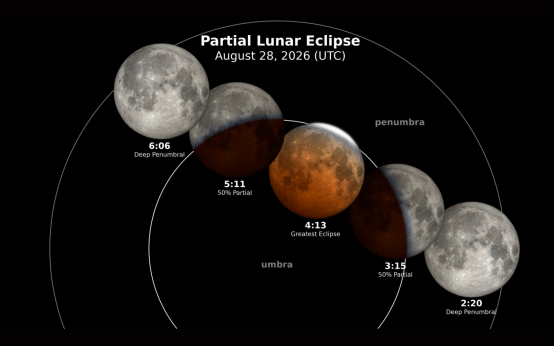 Rare Deep Partial Lunar Eclipse Visible Across the U.S.
  China Delays Chang’e-7 Lunar Mission Plans