
Understanding why a young Republican might support solar power but oppose a carbon tax requires exploring the nuances of political beliefs. Political identities do not always align with expected policy preferences. This insight holds true for individuals across the political spectrum.
Consider the situation of two Democrats who both acknowledge the reality of climate change. They might still differ on policy approaches such as increasing household charges for exceeding energy use limits. This illustrates that agreement on foundational issues does not guarantee alignment on specific solutions.
Political opinions on climate topics often reflect deeper values and priorities rather than simple party lines. Factors like economic considerations, personal values, and regional influences can all contribute to an individual’s stance on climate policies. For instance, some might view solar power as a viable economic opportunity, while others see carbon taxes as unnecessary financial burdens.
Overall, these examples underscore that party affiliation is not the sole determinant of climate policy opinions. Instead, personal beliefs, economic interests, and diverse influences play significant roles in shaping individual perspectives on climate measures.
 Republican Lawmaker Opposes Funding for Trump’s Arch Near Arlington
  House Bill Aims to Enhance Benefits for Combat-Injured Veterans
  Debate Over Transgender Athletes Shapes Political Strategies
  Cold Weather Alerts and El Niño Influence
 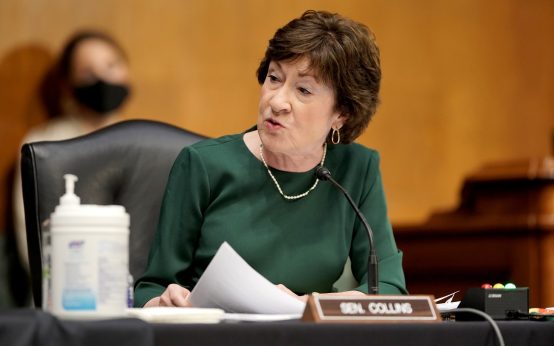 Collins Battles Trump Administration on NIH Grant Control
  Turning Home Food Waste into Compost: A Guide