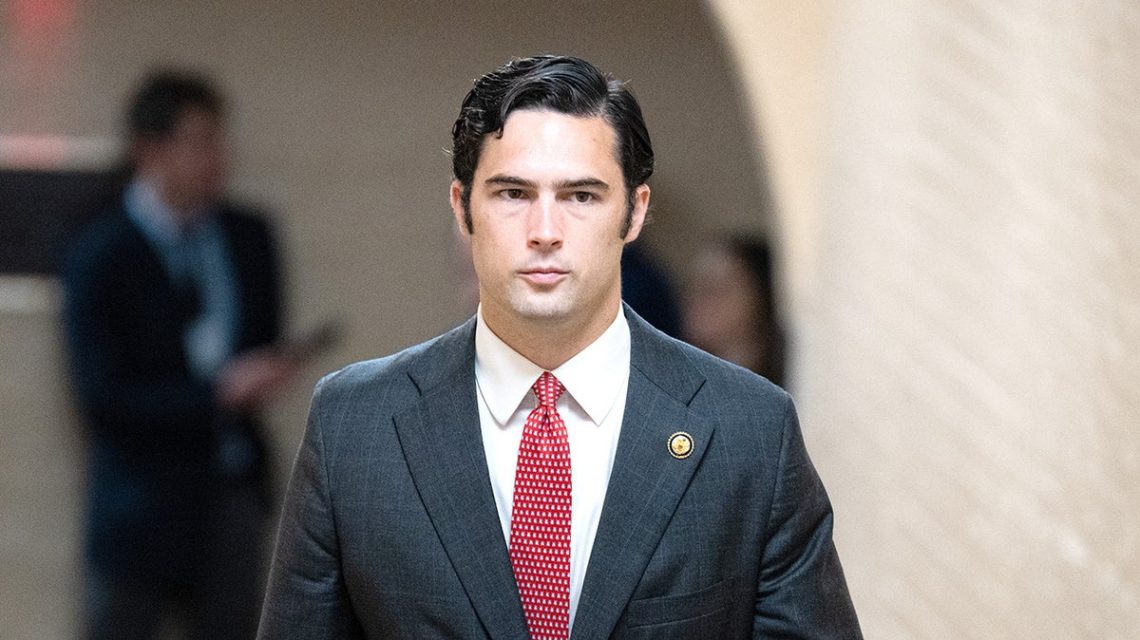
Rep. Brandon Gill, a Republican from Texas, pressed American Bar Association (ABA) President Michelle A. Behnke about the association’s diversity policies. This intense exchange took place during a House Oversight Committee Task Force hearing. The focus was the ABA’s influence on law school accreditation and diversity, equity, and inclusion (DEI) policies.
During the hearing, Republicans accused the ABA of using its accreditation authority to promote race-conscious policies in the legal field. They argued the organization pressures law schools to adopt DEI policies and mandatory related coursework. Despite this, the ABA defended its commitment to diversity, saying it strengthens the legal profession without enforcing racial quotas.
Gill, who chairs the task force, criticized DEI as promoting discrimination and taking opportunities from those earning positions based on merit. He questioned Behnke on whether the ABA’s diversity principles would justify rejecting a third Black Supreme Court justice.
“DEI is a cancerous ideology that promotes unlawful discrimination,” Gill stated before the hearing.
Another point Gill raised was regarding the ABA’s website statements supporting judicial diversity. He asked if the Supreme Court should reflect America’s racial diversity. Behnke emphasized the importance of diversity but did not provide a direct yes-or-no answer.
During the exchange, Gill noted that two of the nine Supreme Court justices are Black, representing 22% of the Court compared to 13% of the U.S. population. This led him to question if the Senate should reject another Black nominee to maintain racial proportions.
“The ABA does not support quotas,” Behnke reiterated.
Gill further questioned Behnke about President Joe Biden’s pledge to nominate the first Black woman to the Supreme Court and whether race was a factor in Justice Ketanji Brown Jackson’s appointment. Behnke stated the ABA does not support any form of discrimination but did not directly address the criteria used in Jackson’s nomination.
The ABA has significant influence over legal education, as graduating from an ABA-approved law school is required for the bar exam in most states. Although the ABA claims its law school accreditation council is independent, Republicans argued otherwise.
Behnke continued to defend the ABA’s commitment to diversity, asserting it enhances the legal field. She told lawmakers diverse teams strengthen the profession and improve problem-solving by drawing from various experiences and perspectives.
This hearing coincides with several states, including Texas, Florida, Alabama, and Tennessee, exploring alternatives to relying solely on ABA accreditation for bar eligibility.
Elaine Mallon is a writer for Fox News Digital and Fox Business, covering national politics.
 Alani Bankhead Faces Allegations and Campaign Challenges in Montana
  States Take Action Against Cash Welfare Abuse
  Global Coordination Behind Anti-Israel Protests
  Violence in Twin Cities Spurs Criticism from GOP Candidate
  Jack Smith’s Political Involvement and Controversial Actions
  Trump’s Comments Spark Speculation About Senator Fetterman’s Political Future