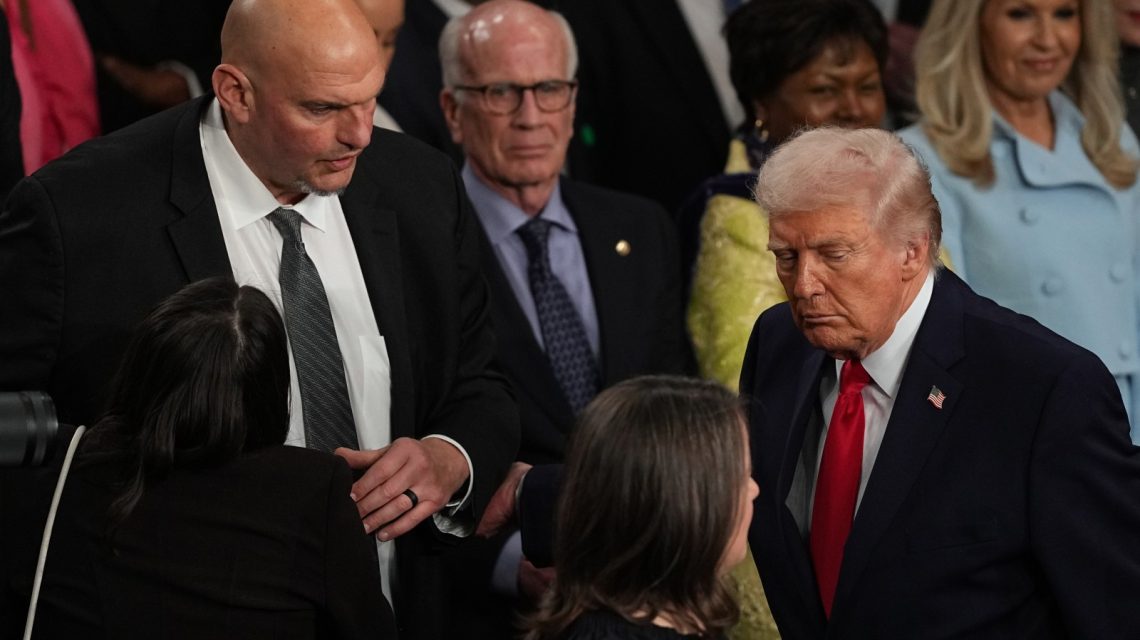
President Donald Trump expressed interest in Democratic Senator John Fetterman of Pennsylvania joining the Republican Party. These remarks have rekindled discussions about the senator’s political trajectory, given his recent high-profile disagreements with his party.
Trump’s Statement and Fetterman’s Stance
While speaking to reporters at Joint Base Andrews, Trump stated, “I’d love to see him as a Republican.” He remarked that Fetterman performs better in polls as a Republican compared to being a Democrat. Trump praised Fetterman as a “very solid person” with “great common sense” and mentioned having discussions with his “magnificent parents.” These comments reflect Trump’s significant effort to encourage Fetterman to shift parties, especially as the Senate’s control remains uncertain ahead of the upcoming midterm elections. Attempts were made to reach Fetterman’s office for comment.
Despite the rising speculation, Fetterman has consistently dismissed the idea of switching parties. He wrote in The Washington Post, describing himself as a “terrible Republican who still votes overwhelmingly with Democrats.” Although Fetterman, who has yet to announce a 2028 re-election campaign, has caused frustration among Democrats by opposing the party on several topics, including immigration and support for Israel.
Fetterman’s Role in Political Discussions
Concerns within the Democratic Party increased when Fetterman praised Republican Sen. Dave McCormick in a video message for a midterm convention. Fetterman criticized extremism and emphasized his stand against socialism and anti-American values. These actions come amid Democrats’ efforts to regain Senate control. Winning back the Senate majority requires Democrats to secure four additional seats, presenting a challenging electoral landscape.
Polling Insights on Fetterman’s Popularity
Polling illustrates Fetterman’s unique political position, with support from Republicans and less favorability within his own party. Trump’s comments at Joint Base Andrews suggest potential difficulties for Fetterman in a Democratic primary race for 2028.
A poll by Inquirer/New York Times/Siena University indicated that 73% of registered Pennsylvania Republicans view Fetterman favorably, compared to 63% approval for Republican Senator Dave McCormick. Conversely, Fetterman’s favorability among Democrats has decreased sharply; from 74% in 2024 to 22%, with 63% viewing unfavorably.
Similarly, a February 2026 Quinnipiac University poll highlighted this partisan division. Seventy-three percent of Pennsylvania Republicans approve of Fetterman’s performance, while only 22% of Democrats and 48% of independents share this view. These findings underscore Fetterman’s unique status as a Democrat whose support is more robust among Republican voters.
Historical Context: Party Switches and Senate Control
High-profile party switches have historically impacted Senate control. The last significant switch was by Jim Jeffords of Vermont in 2001, who left the Republican Party and caucused with Democrats, shifting the majority. Arlen Specter of Pennsylvania made a similar move in 2009, strengthening the Democratic majority.
Nevertheless, Fetterman identifies as a Democrat and continues to reject suggestions of leaving the party. Despite polls reflecting strong Republican backing, he remains committed to the Democratic Party.
 Jack Smith’s Political Involvement and Controversial Actions
 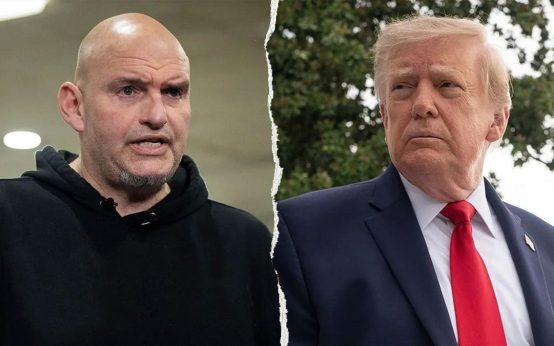 Trump Invites Sen. Fetterman to Join GOP
 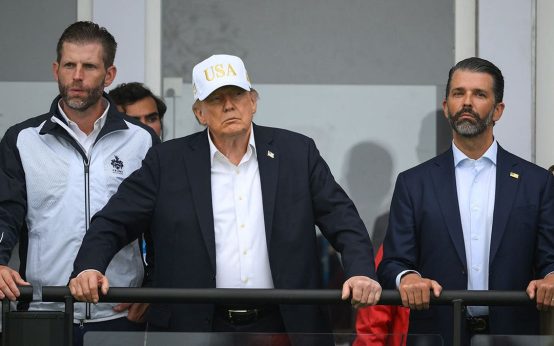 ABC News Issues Corrections on Report Involving Trump Sons
 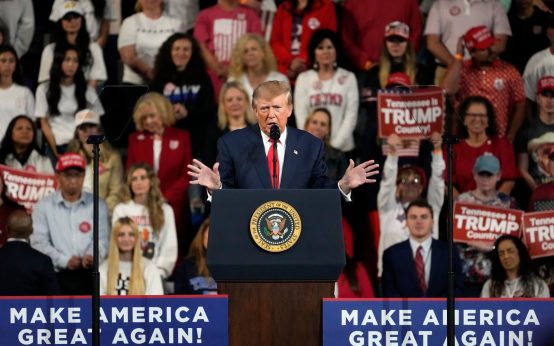 Trump’s Influence and Enthusiasm Challenges Ahead of Midterms
  Bernie Sanders Campaigns for Maine Senate Candidate amid Competitive Race
  Supreme Court Climate Case Could Impact Oil Companies and Consumer Costs