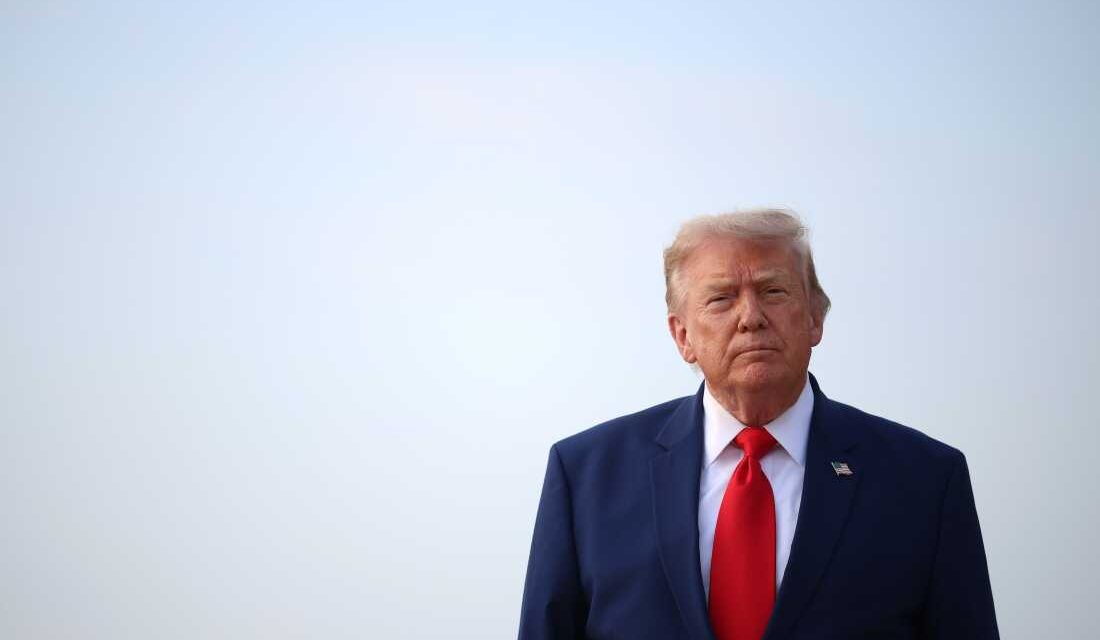
U.S. President Donald Trump expressed anger after the Supreme Court ruled against many of his tariffs. Undeterred, he promised to introduce new ones. “Other alternatives will now be used to replace the ones that the court incorrectly rejected,” he stated during a White House briefing on February 20. Alternatives included other laws that permit tariffs, as tariffs under the 1977 International Emergency Economic Powers Act (IEEPA) were deemed unlawful by the court.
In response, the administration is using various legal avenues to maintain Trump’s tariff regime. This week, the government replaced a global tariff with new ones, imposed fees on Canadian imports, and threatened tariffs on pharmaceuticals. These actions reinforce that the president is committed to this economic approach despite public discontent.
After the global 10 percent tariff expired, a new set of tariffs on major U.S. trading partners took effect, ranging from 10 to 12.5 percent. These tariffs target goods from 60 major partners, including 59 countries and the European Union. They are justified as measures against forced labor in foreign-produced goods.
The U.S. Trade Representative confirmed these tariffs affect over 99% of imports but will exclude some categories like energy and specific foods. A senior official, speaking anonymously, mentioned the timing was meant to simplify businesses’ adjustments to tariff changes while expressing a commitment to ending forced labor.
The United States is the only country effectively enforcing a ban on imports produced with forced labor.
Critics are skeptical of these motives. At a recent hearing, Sen. Ron Wyden accused the administration of misleading the public to justify tariff policies. Alternative methods now being used require investigations, contrasting with IEEPA’s swift tariff implementations. Some cases, like recent 50% tariffs on Canadian goods, show Trump’s ability to act quickly. He invoked a rarely used 1930 law for these actions.
Despite new legal methods, Trump’s tariff instincts remain unchanged. He has a history of threatening tariffs that don’t materialize, leaving room for negotiation, as with the Canada tariffs and potential talks under the USMCA agreement.
The tariffs are enforced under various legal codes, adding complexity for importers. Kathleen Claussen from Georgetown Law notes the increased complexity in navigating these regulations.
It has created a much more complex landscape with all of the three-digits going at once and having to figure out: do they add, how does one fit with the other, what are the exceptions?
Further tariff actions remain possible. A section-301 investigation is ongoing into other nations and the EU, accused of unfair manufacturing practices.
Polls show Americans generally dislike tariffs and the president’s economic approval ratings have dropped. Nonetheless, Trump values tariffs, often highlighting them in speeches. His criticism of free trade agreements and preference for protectionist policies are part of his populist appeal since 2016.
The administration believes tariffs will eventually bring economic benefits, especially in manufacturing. However, manufacturing employment hasn’t surged since Trump took office, casting doubt on the strategy’s long-term effectiveness.
 Concerns in U.S.-China Relations Ahead of Summit
  German Chancellor Friedrich Merz Vows to Continue Amid Election Losses
  Nikole Hannah-Jones Reflects on School Choice and Its Impact
  Republican Senator Criticizes Trump’s $5,000 Check Proposal
  Trump’s Approach to Iran at the United Nations
  Trump’s Triumphal Arch Controversy