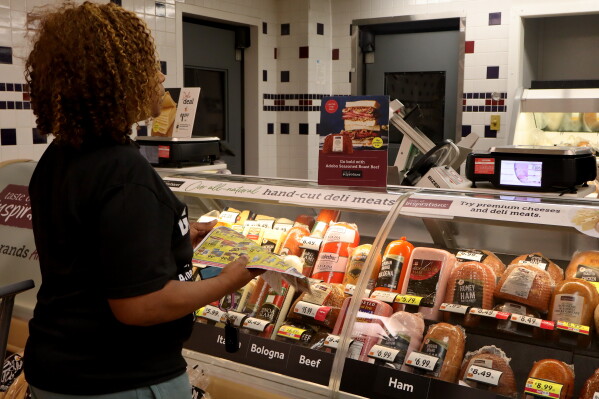
With grocery prices continuing to rise, Apral Jack finds her dinners are dictated by what’s on sale. Shopping smart, she uses an app to seek out store deals and revises her shopping list if prices are too high. For instance, she opts to buy apples at a cheaper store, Market Basket, rather than paying higher prices locally. On a trip to Stop & Shop in Lexington, Massachusetts, her approach underscores a trend for many Americans feeling the pressure of food costs.
Grocery expenses have skyrocketed 33% in urban areas since 2019, according to government records. The increase is linked to pandemic-related challenges, natural disasters, tariffs, and global conflicts. These factors have influenced voters going into the fall midterm elections, especially as fresh conflicts in the Middle East contribute to rising prices.
Despite wages increasing, according to the U.S. Bureau of Labor Statistics, consumers find it difficult to maintain previous shopping habits. Jared Bernstein from the Stanford Institute for Economic Policy remarks that higher housing and utility costs compound this issue for consumers.
“People have a well-honed sense of those prices, just as much as gas and maybe more so,” Bernstein said. “You need groceries to live.”
The U.S. Department of Agriculture reports that low-income households spend a third of their income on food, compared to the 12.9% average. Costs can vary regionally, too. For instance, food price inflation is more severe in places like San Francisco than in St. Louis.
Strategies and Challenges of Rising Costs
Interviewed residents describe adapting to rising prices by seeking discounts, changing brands, and being grateful for food banks. Sally Lyons Wyatt of Circana highlights how consumers are developing strategies to manage financial pressure in their grocery shopping.
In Cleveland, Texas, meat has become a luxury for Ada Torres and her family of five. Due to the high price of beef, they now rely more on chicken and cold cuts. Despite switching brands for cost-saving, performing her role as the primary shopper poses challenges for Torres.
Shopping outside of Boston, Apral Jack has turned to apps and sale-driven meal planning. Her grocery list has shrunken to essentials, avoiding perceived overpricing on snacks and branded goods. As Matt Hamory from AlixPartners points out, consumers spend cautiously and adjust store preferences based on price and economic conditions.
Cost-Saving Practices Nationwide
In San Francisco, Jack Chang, a self-employed barber, faces rising living costs while trying to support his family on a limited income. He and his partner rely on generic brands and benefit from assistance programs like SNAP to make ends meet. Chang’s mother contributes by sharing food from local food banks.
Over in Hawaii, the challenge is compounded by the state’s dependence on imported goods. Pastry chef Amanda Tabadero has had to switch to non-local produce due to increased prices and shipping costs. Adjustments at home include substituting ingredients to continue making family-favorite meals affordably.
This report was a collaborative effort among The Associated Press, The Lexington Observer, La Esquina, and Honolulu Civil Beat, with contributions from various journalists.