
U.S. Immigration and Customs Enforcement (ICE) intends to step up operations to arrest and deport Haitian migrants. This move comes as hundreds of thousands of Haitians face the end of their legal status, according to sources and federal documents obtained by CBS News.
The operations may target migrants in Ohio, particularly in cities like Springfield, where significant Haitian communities reside. During the 2024 presidential campaign, President Trump promoted baseless claims about these communities. ICE plans suggest these migrants could be arrested and swiftly deported to Haiti, a country experiencing severe issues.
Impact of TPS Termination
More than 300,000 Haitians are set to lose deportation protections and work permits under the Temporary Protected Status (TPS) program. The Supreme Court recently supported the Trump administration’s efforts to end TPS for Haitians and Syrians. The binding mandate will soon be issued to lower courts.
The end of TPS has caused fear and uncertainty within Haitian communities in the U.S. Once TPS protections lapse, affected immigrants lose their legal work status and risk arrest and deportation unless they have another legal status. However, those without removal orders can appear before an immigration judge.
Deportation Plans Raise Concerns
The plans to deport Haitians could begin soon, though details remain unclear. ICE sources, requesting anonymity, described the fluid, undisclosed internal plans. Increased deportations to Haiti would likely pose political and humanitarian challenges, considering Haiti’s dire conditions, with much of the country under gang control.
Generally, U.S. deportations to Haiti are limited to Cap-Haïtien due to the instability in the capital, Port-au-Prince. The State Department advises Americans against visiting Haiti, citing widespread violence.
Government Stance on TPS
The Department of Homeland Security (DHS), which oversees ICE, stated it does not discuss ongoing or future operations. DHS has characterized TPS as a “de facto amnesty program” and suggested that those losing status should self-deport.
“The good news is it’s not too late to get a $2,600 check and a free flight home,” DHS said.
TPS, created in 1990, allows work permits and deferment from deportation for immigrants from countries facing emergencies. The Trump administration argues TPS programs have overstayed and incentivize illegal immigration. They have sought to end TPS for immigrants from Afghanistan, Cameroon, Honduras, Nicaragua, Venezuela, and other nations.
Haiti’s TPS began in 2010 after a devastating earthquake. Most current beneficiaries arrived during the Biden administration, either illegally or through programs that Trump’s White House terminated. The plan to end Haiti’s TPS has been challenged in court.
Court Rulings and ICE Operations
In February, U.S. District Court Judge Ana Reyes found that terminating Haiti’s TPS was “in part” driven by “racial animus,” citing remarks from DHS officials and Mr. Trump. However, the Supreme Court ruled that judges cannot review TPS determinations and deemed Trump’s comments not “overtly racial.”
ICE decreased large immigration roundups after incidents involving U.S. citizens. However, this summer, the agency has faced pressure to record 2,000 daily arrests. Last month, ICE bookings hit a monthly record high. Meanwhile, two immigrants were killed by ICE agents during recent operations in Texas and Maine.
 Karoline Leavitt on Trump’s Direct Diplomacy
  Trump’s Speech Targets Iran’s Nuclear Ambitions at U.N.
  Impact of Tariffs on Everyday Products
 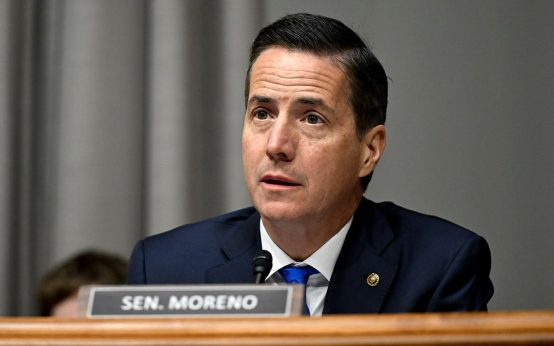 Senator Bernie Moreno Urges DOJ to Address Drug Policy Enabling Forced Abortions
  Karoline Leavitt Offers Insights on Trump’s Calls With Putin and Xi
  Curtis Pushes for Investigation into Trump Jr. and Biden