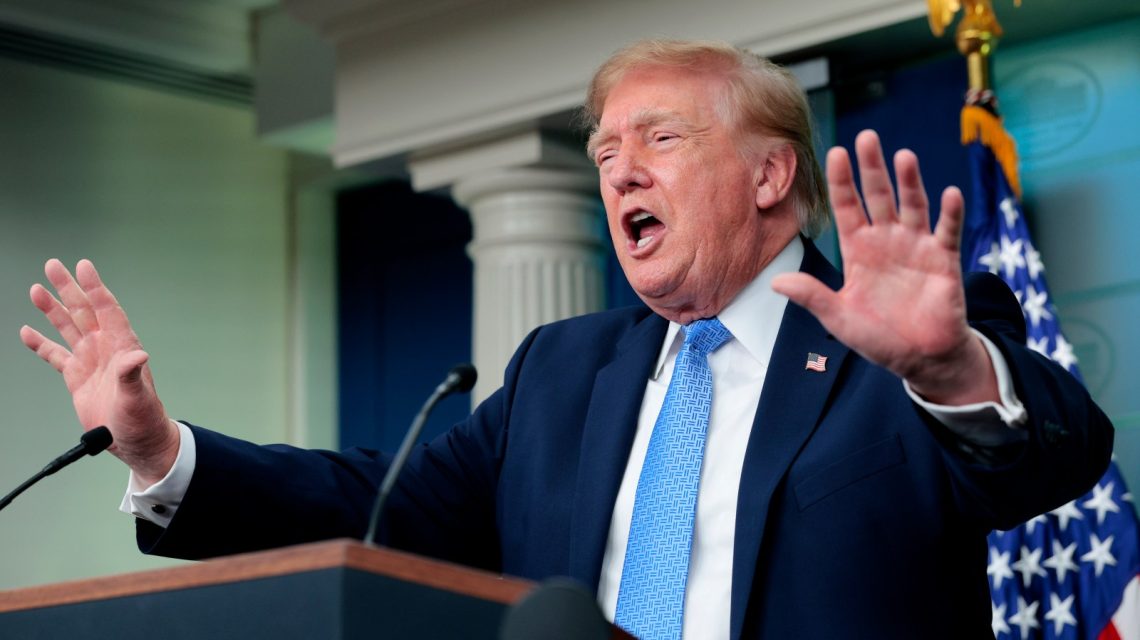
President Donald Trump expressed full support for a Senate bipartisan energy permitting bill on Monday. However, he opposed the inclusion of wind turbines in the bill. Trump stated, “The permitting bill is a great bill that’s supposed to be bipartisan. We are behind it 100 percent.” When asked about influencing House votes for the bill, Trump responded, “Well, we may see, but the Democrats want that… they wanted it as much as the Republicans.”
Upon learning of the wind provisions in the bill, Trump asserted, “I know, but I won’t approve it. I will not approve wind turbines because wind turbines are a major loser.” These comments surfaced as the Senate advanced with the Bipartisan American Affordability and Jobs Act of 2026, a plan to expedite energy and infrastructure project approvals.
A White House official confirmed Trump’s total support for the Act, stating, “The White House has been working in good faith with Senate Democrats to get this bill passed to unleash American energy and lower costs.” Meanwhile, Newsweek sought comments from Democratic Senators Sheldon Whitehouse of Rhode Island and Martin Heinrich of New Mexico, two key bill negotiators.
Bipartisan American Affordability and Jobs Act Explored
The act, introduced in September by Whitehouse, Heinrich, and Republican Senators Shelley Moore Capito of West Virginia and Mike Lee of Utah, aims to revise federal permitting and environmental review processes. It addresses transmission, natural gas, oil, geothermal, hydropower, and renewable energy projects. The Environmental Policy Innovation Center’s analysis highlights the bill’s impact on wind and solar energy projects.
The legislation emerges as a response to rising data center and electricity cost concerns. It mandates data center operators to cover the costs of necessary transmission and grid upgrades, avoiding passing these costs to other utility customers if projects fail. Republican supporters stress regulatory reforms, while Democrats focus on accelerating clean energy development.
After gathering feedback from lawmakers, environmental and labor groups, and Tribal leaders, the four lead senators released a substitute amendment. Whitehouse noted the bill’s potential to “juice the clean energy economy,” while Capito emphasized its bipartisan foundation. Whitehouse also expressed optimism about meeting campaign promises on affordability and data center accountability.
Nevertheless, the passage remains uncertain, with some Democrats and environmental groups concerned it could weaken environmental protections or aid fossil-fuel infrastructure. House Democratic Leader Hakeem Jeffries and Democratic Senator Ron Wyden have called for greater input and alternative agreements, respectively. The Senate moved forward with the bill’s consideration on Monday.
Trump’s Stance on Wind Energy
Trump’s resistance to wind energy provisions is part of longer efforts to reevaluate wind-energy development. Last October, Trump issued a proclamation on wind turbine imports, citing national security concerns. It did not impose immediate tariffs but directed further negotiations and left tariff possibilities open.
Amid campaigns against offshore wind projects, the administration sought a federal judge’s permission to review a permit for a Massachusetts project. Trump’s position complicated permitting negotiations, as Democrats sought clarity on protecting wind and solar projects from interference. Whitehouse and Heinrich labeled Trump’s actions a “reckless and vindictive assault on wind energy.”
Environmental Group Warns Democrats Over Trump, Wind Energy
Brett Hartl from the Center for Biological Diversity criticized the permitting bill and Trump’s motives, stating that Democrats are aiding a deregulatory agenda. Hartl argued that Trump’s continual attacks on renewable energy compromise climate efforts.
He accused Whitehouse and Heinrich of believing that free markets without environmental safeguards offer solutions. The Center opposed the legislation, while its sponsors contended that it could streamline clean-energy projects.
The ongoing debate reflects the challenge of achieving enough bipartisan support without alienating environmental interests. Trump’s remarks are likely to intensify the discussion as the Senate proceeds with the bill.
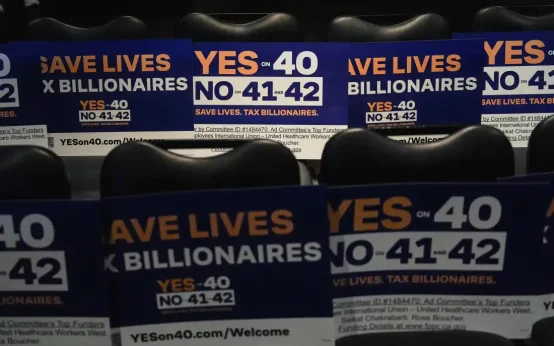 California Voters Reject Proposition 40 on Billionaire Tax
 Shifting Political Landscape: Vulnerable GOP Senate Seats in 2028
 Trump’s Support for Nvidia’s CEO Sparks Controversy Amid Espionage Concerns
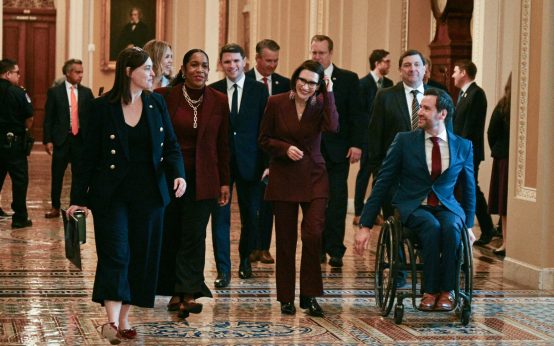 Democrats’ Midterm Victories to Influence Congressional Agenda
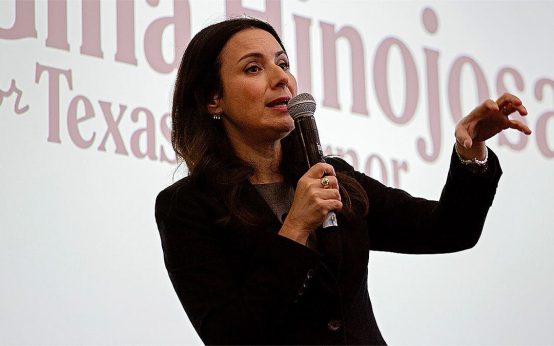 Potential Voter Response to School Choice Policy Changes
 Impact of SNAP Changes on American Families