Newly elected members of Congress arrived on Capitol Hill for orientation, highlighting the impact of the recent midterm elections. The results are reshaping the political scene and pinpointing which Republican-held Senate seats could face challenges in 2028.
In 2028, all 435 House seats and a fresh set of Senate seats will be contested. The midterm elections saw a significant Democratic wave, flipping several traditionally Republican states. Notable victories include Democrat James Talarico in Texas and Democrat Annie Andrews in South Carolina. Some Senate races remain undecided, such as those in Alaska and Mississippi.
Key Senate Seats at Risk
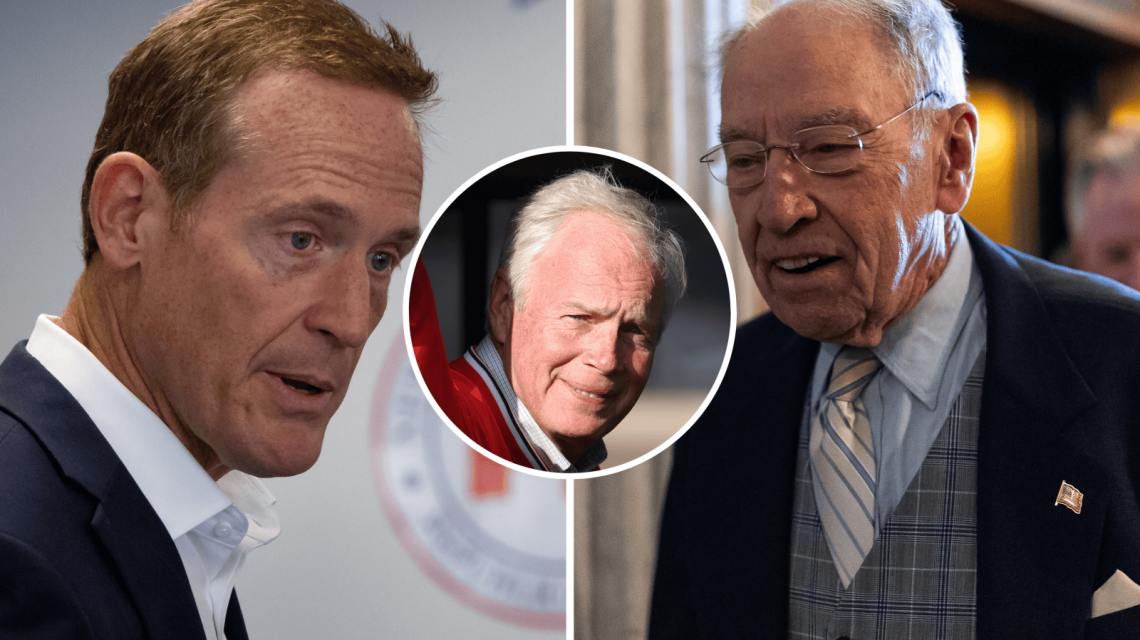
For the GOP, three Senate seats present significant vulnerability: Chuck Grassley of Iowa, Ron Johnson of Wisconsin, and Ted Budd of North Carolina. Political factors put these seats at greater risk for Democrats to flip.
Chuck Grassley, Iowa
“If the GOP could recruit quality candidates, something different might occur,” said David Schultz, a political science professor.
Grassley, elected in 1980, faces potential challenges due to his advancing age. At 93, Grassley would be 95 at re-election. Recent electoral shifts in Iowa saw Democrat Josh Turek win a Senate seat, suggesting a possible change in voter sentiment.
Grassley’s age is a factor, according to University of Akron’s David Cohen. Should he run and win, Grassley would surpass 100 years. Considerations about retirement also play a role, influencing the timing of potential replacements under Iowa’s political laws.
Ron Johnson, Wisconsin
Johnson narrowly retained his Senate seat in 2022 by a single percentage point. His potential decision to retire rather than face another tough campaign is a consideration.
Wisconsin remains politically divided, with equal numbers of Democrats and Republicans securing House seats. The state’s recent gubernatorial race, won by Democrat David Crowley with 54 percent, indicates its battleground status.
Ted Budd, North Carolina
Budd’s seat in North Carolina represents a key target for Democrats. His narrow victory in 2022 and the state’s electoral trends place him among the more vulnerable Republicans.
“North Carolina is a genuine battleground state,” noted political science professor Henrik Schatzinger.
Budd won in 2022 with a slim margin, while the other Senate seat went to Democrat Roy Cooper with a significant majority.
Other GOP Seats of Interest
Apart from Grassley, Johnson, and Budd, other Republican senators face potential challenges. Seats held by Lisa Murkowski in Alaska, Jerry Moran in Kansas, and Ashley Moody in Florida are noteworthy.
In Alaska, the outcome between Democrat Mary Peltola and Republican Dan Sullivan remains unresolved. Kansas has shifted by electing Democrat Adam Hamilton to the Senate, and Florida saw notable Democratic gains despite Republican resistance.
Looking Ahead
Midterm results may influence how vulnerable GOP senators adjust their strategies in Washington. Focus areas likely include economy-related concerns and distancing from unfavorable national party stances.
All U.S. senators facing election in 2028 could be considered vulnerable. Political Science Professor Sharon Austin emphasized the potential for Democratic victories when voter mobilization occurs.
This story was created using input from Newsweek’s journalists and AI assistant Martyn.
 Trump’s Support for Nvidia’s CEO Sparks Controversy Amid Espionage Concerns
 Democrats’ Midterm Victories to Influence Congressional Agenda
 Potential Voter Response to School Choice Policy Changes
 Impact of SNAP Changes on American Families
 US and Russia Tensions Over Ukraine Conflict
 Trump’s Shift on Deportation Policies