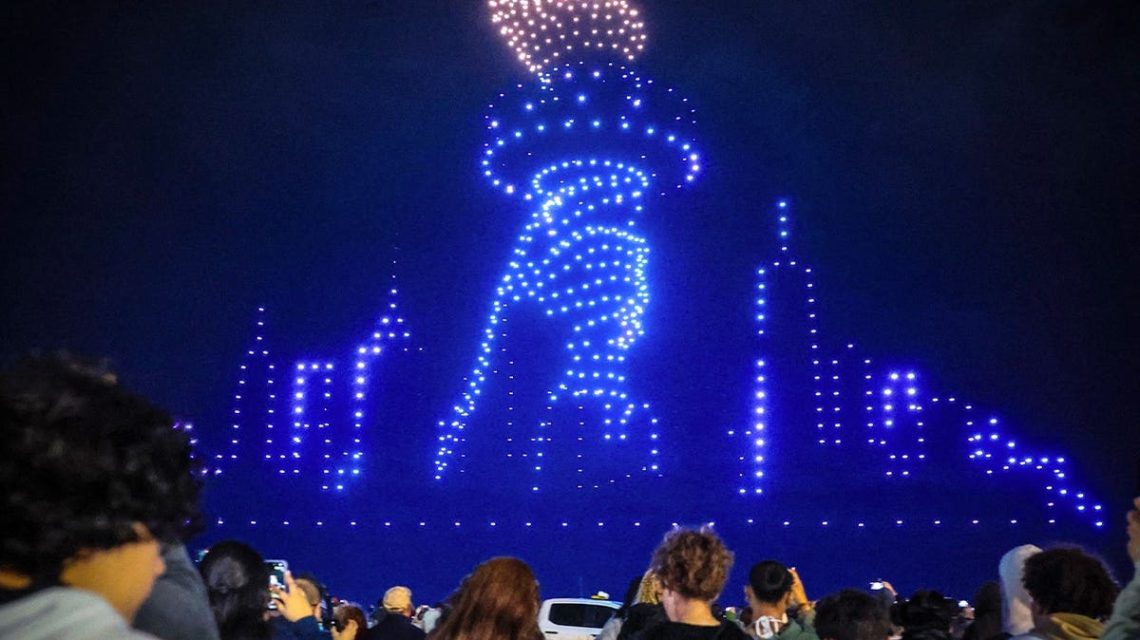
Drone shows are gaining popularity as they replace traditional fireworks at various events like concerts, sports events, and Fourth of July celebrations. Many see them as a safer and more environmentally friendly alternative. However, the increased presence of drones in the sky poses new security challenges.
Security Concerns with Drones
Cordell Bennigson, CEO of U.S. Operations for R2 Wireless and a retired Marine Corps officer, highlighted the accessibility of drone technology as a rising concern for public safety. While Bennigson enjoys drone shows and finds them impressive, he cautions that they underscore a substantial security challenge beyond the shows.
The crowded airspace can make it harder to detect unauthorized drones that might be used for illicit activities.
Challenges in Drone Detection
Drone shows themselves are not direct security threats, but they signal how widely accessible drones have become. The radio frequency (RF) spectrum, consisting of invisible wireless signals used by devices like cellphones and drones, becomes quite congested during such events. This makes it difficult for security personnel to identify unauthorized drones amid legitimate electronic activity.
Detection remains the first line of defense. As Bennigson explains, it’s crucial to detect and navigate through the electromagnetic spectrum’s clutter and noise to identify potential threats.
Advances in Detection Technology
Reducing wireless transmissions isn’t a feasible solution; hence, improving detection capabilities is important. Bennigson draws a parallel to night vision, where instead of eliminating darkness, technology improved the ability to see within it.
The Role of Artificial Intelligence
Artificial intelligence (AI) is playing a pivotal role in tackling these challenges. AI efficiently processes large volumes of wireless data to identify unfamiliar or unauthorized transmissions swiftly. Bennigson emphasizes AI’s strength in pattern recognition, making it well-suited for detecting unusual drone activity.
The Future of Drone Security
According to Bennigson, as drones become more common, new strategies will be needed to monitor airspace around critical infrastructure and places with large gatherings. There is a necessity for detection and defense systems to stay ahead of potential threats rather than reacting to them.
The Federal Aviation Administration (FAA) has effective systems for legal drone operations. However, issues arise when drones operated by individuals with malicious intent are involved. While radar can detect non-transmitting drones, it has limitations, especially in urban environments. Bennigson stresses the need for comprehensive systems beyond just radar to address these challenges.
 U.S., Denmark, and Greenland Sign New Security Agreement
 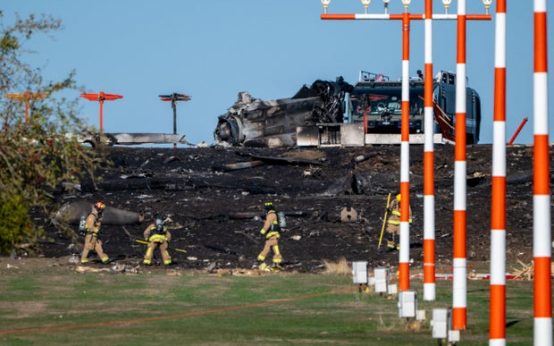 U.S. Military Aircraft Crash at Spangdahlem Air Base
  Marco Rubio Criticizes NATO’s Role Amid Middle East Conflict
  Israeli Prime Minister’s Visit to the U.N. Amid Controversy
  U.S. Secures Strategic Arctic Agreement
  Trump Administration’s Plan to Resettle Afrikaners as Refugees