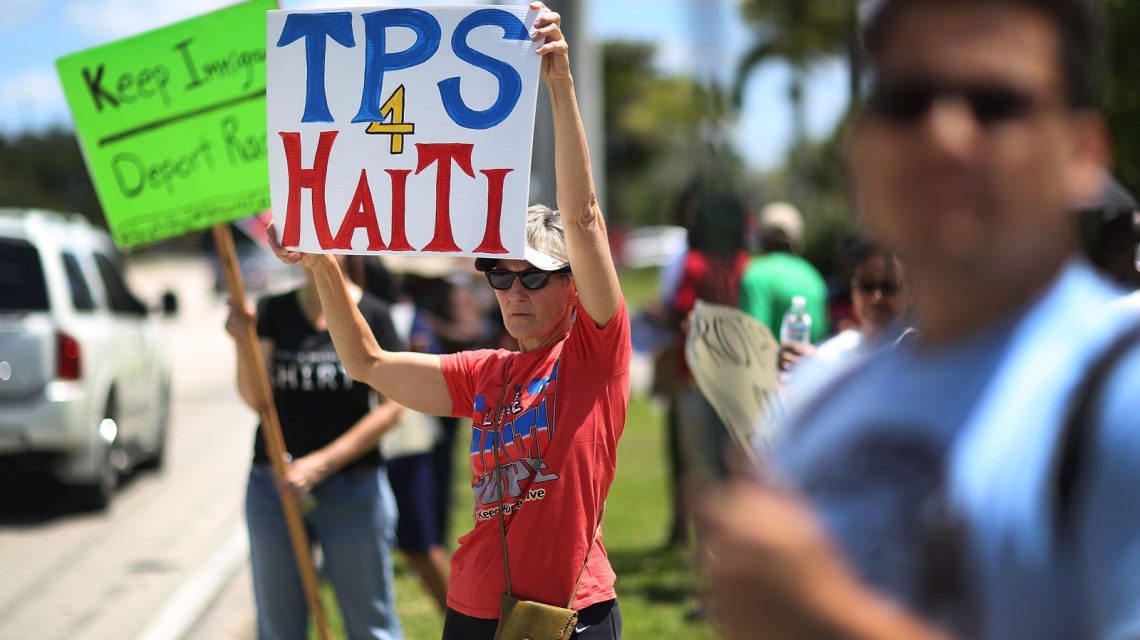
Temporary Protected Status (TPS) for hundreds of thousands of Haitians is nearing its expiration. This change affects communities across the U.S., particularly in Florida, which has the largest number of Haitian TPS holders. According to data from FWD.us, around 158,000 Haitians in Florida are covered by TPS. New York follows with about 40,000, while Massachusetts, New Jersey, Pennsylvania, and Ohio have significant populations as well.
Supreme Court Decision
The Supreme Court recently supported the effort to end TPS for Haitians. This decision could impact more than 300,000 Haitians who may lose work permits and face deportation. The Department of Homeland Security (DHS) stated that TPS was meant to be temporary. U.S. Citizenship and Immigration Services mentioned that current conditions in Haiti do not meet the criteria needed for the TPS designation.
The primary purpose of TPS is to allow nationals from countries with war, natural disasters, or extraordinary circumstances to work and live in the U.S. temporarily. It does not offer a direct path to permanent residency or citizenship.
Economic Implications
States with large Haitian populations are expected to feel the economic impact most acutely. FWD.us analysis indicates that Haitian TPS holders contribute $5.9 billion annually to the U.S. economy. They pay approximately $805 million in federal and payroll taxes, and $755 million in state and local taxes. In Florida, about 93,000 TPS workers contribute roughly $2.6 billion to the economy, with many employed in food service, agriculture, warehousing, and healthcare sectors.
In New York, 25,000 Haitian workers generate approximately $863 million annually, while Massachusetts sees around $481 million from 10,000 workers. Advocates warn of severe economic consequences in regions reliant on Haitian labor, such as the Miami metropolitan area, where their contribution reaches $1.5 billion.
Sector-Specific Effects
The potential end of TPS might cause profound disruptions in various sectors. Industries already experiencing labor shortages are likely to feel the greatest impact. Healthcare, notably, faces challenges due to Florida’s aging population and the demand for nurses and caregivers. Losing experienced staff could result in higher costs and reduced capacity.
Agriculture, hospitality, and logistics sectors could see similar disruptions. Farms might struggle to fill seasonal positions, which might lead to increased reliance on automation or temporary visas. Hospitality businesses could face higher recruitment costs, eventually affecting consumer prices.
Government Stance
The Trump administration has justified ending TPS. DHS General Counsel James Percival expressed this stance on social media, highlighting the Supreme Court’s rulings on Haiti and Syria. He mentioned a voluntary departure program offering $2,600 and a flight home for affected migrants.
Efforts are underway to create a permanent status pathway for TPS holders. The American Dream and Promise Act aims to let eligible TPS holders apply for lawful permanent residency. Though the bill faced obstacles, Rep. Sylvia Garcia initiated a discharge petition to prompt a vote.
Community Concerns
Haitian communities express concern over increased deportations, given Haiti’s unstable conditions. According to a CBS News report, ICE plans to increase enforcement operations targeting Haitians once TPS expires. This could include arrests in Ohio and deportation flights to Haiti.
Criticism arose from Aaron Reichlin-Melnick at the American Immigration Council, who condemned the apparent plans as discriminatory. He stressed that TPS recipients undergo thorough background checks and noted that many Haitians arrived legally.
During the 2024 presidential campaign, allegations of misconduct by Haitian migrants in Springfield, Ohio, surfaced but lacked evidence. The incident garnered national attention.
Recently, DHS reported the deportation of individuals convicted of serious crimes to Haiti, following a removal flight carrying over 100 people.
In April, the House passed legislation to extend TPS for Haitians by three years with a narrow margin. However, the Senate did not approve this measure.
 House Races Shift Amid Democratic Momentum
  Iowa Senate Race: Marist Poll Shows Democrat Josh Turek Leading Republican Ashley Hinson
  Kamala Harris and Abdul El-Sayed Campaign Together in Detroit
  Challenges Facing the Supreme Court’s Public Perception
  California Democratic Aide Arrested for Visa Overstay by Federal Authorities
  Experts Doubt Export Ban Will Lower Fuel Prices