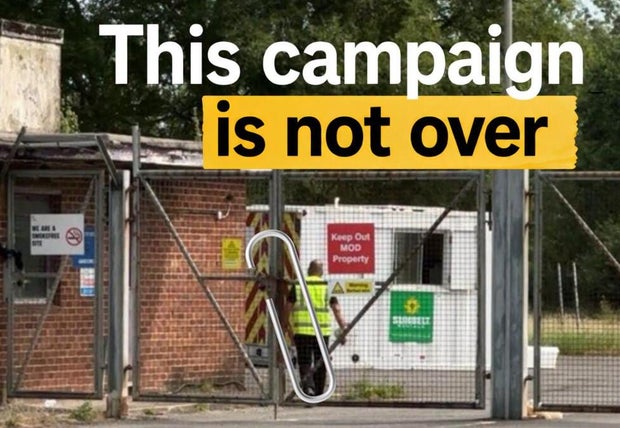
Residents of Piddington, a small village in England, are planning to hold a symbolic referendum as a form of protest against the British government’s decision to house asylum seekers in a nearby unused military barracks. This move reflects the community’s strong disapproval of the plan.
The decision to use the Ministry of Defense site near the village of Piddington could lead to as many as 1,250 asylum seekers being accommodated there, significantly outnumbering the village’s own population. Local Parliament Member Calum Miller posted about the community’s protest on social media, emphasizing the villagers’ sense of disempowerment.
Piddington Parish Council’s Tim McNally compared their actions to the American struggle for independence. He expressed determination to instigate change, likening himself to George Washington.
On July 4, coinciding with U.S. Independence Day, Piddington residents voted on whether to propose a referendum to leave the United Kingdom. The results showed that 96% of voters supported the proposal, signaling widespread discontent with the government’s approach.
The plan has drawn criticism from various quarters. Jane Coles from the Oxfordshire branch of “Stand Up to Racism” criticized the housing scheme, suggesting it attracts negative attention and presents a polarized view of the community. She advocated for government investment in speeding up asylum claim processing rather than such housing solutions.
Notably, the protest gained international attention. Elon Musk, the American tech billionaire, highlighted the potential adverse impact on communities like Piddington if political reforms are not implemented. His comments further elevated the issue to global prominence.
The British Home Office defended this strategy, citing a need to decrease reliance on hotels for accommodating asylum seekers. Despite the legal weight of the referendum being non-existent, Piddington’s bold stance has sparked a national conversation on immigration policy and local community consultation.
While the vote and subsequent actions remain symbolic, they underscore significant issues regarding government transparency and local engagement. The outcome and broader reception of this initiative may influence future policy considerations.