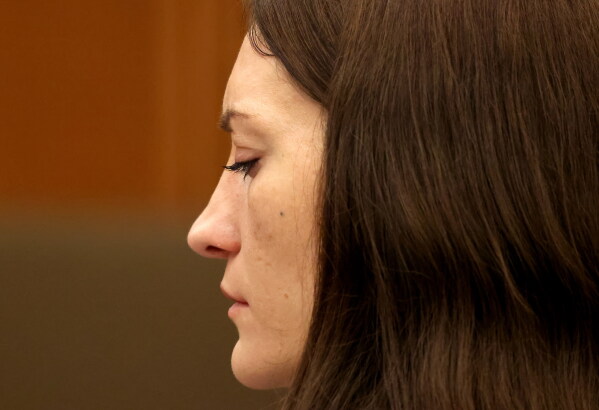
In Plymouth, Massachusetts, a deeply tragic case has unfolded involving Lindsay Clancy. She found herself in a dire situation after jumping from her second-floor window during a period of severe mental distress. Police officers discovered her in the snow, slipping in and out of consciousness while her husband, Patrick Clancy, frantically called for help downstairs.
Patrick Clancy discovered their children, 3-year-old Dawson, 5-year-old Cora, and 8-month-old Callan, unresponsive in the basement. The officers and emergency responders provided firsthand testimony about the chaotic and heartbreaking scene they encountered. The case against Lindsay Clancy revolves around her mental state when the incident occurred.
Defense lawyers for Lindsay Clancy argue she was experiencing postpartum psychosis, a rare and severe mental illness. It’s associated with stress, sleep deprivation, and hormonal changes following childbirth. They do not dispute that she strangled her children with exercise bands but maintain she was not fully responsible for her actions due to her mental condition.
Prosecutors contend that Clancy, who formerly worked as a labor and delivery nurse, acted with intent and should be held criminally accountable for the deaths. The trial has been emotionally charged, with Patrick Clancy expressing forgiveness toward his ex-wife, whom he believes was ill rather than malevolent.
Lindsay Clancy now remains paralyzed from the waist down, following multiple suicide attempts that night. She claimed to hear a voice urging her to take her children’s lives and her own. This grim context casts a heavy shadow over the trial.
During the trial, officers Stephen Hall and Brian Josephine testified about their experiences that night. Upon their arrival, Patrick Clancy directed them to the basement, where they worked to save Callan, the only child with a faint pulse. Despite their efforts alongside firefighters and paramedics, Callan succumbed to his injuries.
Firefighter PJ Hussey and paramedic Jennifer Stratton shared their perspectives on the intense and chaotic scene in the basement. Their testimonies highlight the severity of the situation they faced. Meanwhile, legal consequences weigh heavily. Lindsay Clancy could face life imprisonment without parole if convicted. If found not guilty due to mental incapacity, she would be committed to a state mental health facility.
The trial has also addressed Lindsay Clancy’s mental health history. Her attorney declared that previously prescribed antidepressants potentially exacerbated her bipolar disorder. Patrick Clancy described his wife’s declining mental health, mentioning her intrusive thoughts and suicidal tendencies.
Lindsay Clancy sought help from postpartum mood disorder specialists. Despite treatment with various psychiatric medications, her condition did not improve. She was released from a psychiatric facility 19 days before the tragedy.
Both Clancy and her former husband have filed lawsuits against healthcare providers, alleging a failure to appropriately diagnose and treat her condition. These legal actions underscore their belief in systemic failures contributing to the heartbreaking events.
 ChatGPT’s Trusted Contact Feature Aims to Support Users in Distress
  Prescription Weight-Loss Medications Linked to Increased Mental Health Risks
  Bear Grylls on Managing Fear in Everyday Life
  Addressing Mental Health in the Workplace
  Mistrial Declared in Lindsay Clancy Case Amid Deadlock
  Maternal Mental Health: The Importance of Mother and Baby Units