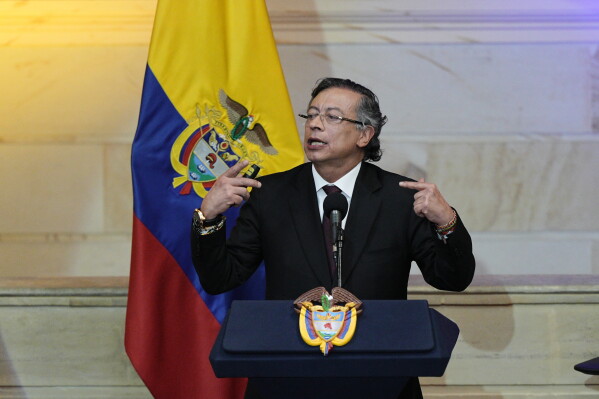
The citizens of Venezuela cautiously welcome the start of a new round of negotiations between the government and the opposition. These discussions focus on a shared agenda to strengthen democracy and restore fundamental rights after nearly thirty years of socialist rule.
The negotiations are led by current members of Venezuela’s National Assembly, which has a strong government majority, and a group of former opposition lawmakers. These lawmakers had previously attempted to unseat former President Nicolás Maduro. The United States is mediating the talks.
Soraida Martínez, a 58-year-old homemaker, expressed hope for respect and agreement, saying, “I hope that finally, the government understands that arbitrary actions won’t help us move forward. They must respect the agreements.” She added, “Both sides must make concessions for the country’s benefit.” The first meeting is set to occur nearly seven weeks after a session in Caracas involving Jorge Rodríguez, President of the Legislature, and Dinorah Figuera, a former deputy who briefly returned to the country after nearly eight years in exile.
The initiative gained momentum with the backing of Washington. Figuera anticipates that the priority will be developing an institutional agenda that transcends the interests of various political organizations, aligning with proposals from the Trump administration.
Following the capture of Maduro and his wife by U.S. forces in January, the Trump administration proposed a three-phase plan for Venezuela. This plan covers stabilization, recovery, and democratic transition. The Department of State highlighted priorities such as rebuilding democratic institutions, strengthening the majority-government National Electoral Council (CNE), and ensuring lasting political participation guarantees. It emphasized the protection of civic freedoms essential for open political discourse.
Negotiators also plan to call for national unity to address the aftermath of two powerful earthquakes that struck on June 24. The disaster resulted in over 5,500 deaths, 16,700 injuries, and more than 20,000 people left homeless, according to the latest official report.
In 2023, Figuera was chosen to represent the former opposition lawmakers from the 2015 National Assembly. This assembly, which had an opposition majority, was widely regarded as Venezuela’s last democratically elected institution.
Despite the failure of four previous dialogue processes between 2017 and 2024, there is significant hope for positive outcomes due to Venezuela’s unique political environment following Maduro’s removal and U.S. influence on Rodríguez’s government. Many believe minimal agreements could improve the country’s situation.
However, analysts agree a transition to democracy still seems distant. They warn that a free election will be the culmination of a lengthy process. Establishing an electoral timetable and conditions does not appear imminent.
Political consultant and professor at Andrés Bello Catholic University, John Magdaleno, noted, “The transition to democracy doesn’t start with the initiation of dialogue. It begins with recognition and restoration of violated guarantees.” Magdaleno stressed the importance of reinstating civil liberties and political rights such as freedom of speech, press, assembly, association, privacy of communications, and other human rights protections.
 Venezuelan Leadership at the United Nations
  Ontario Synagogue Shooting During Yom Kippur Leaves One Officer and Shooter Injured
  Pope Leo XIV’s Upcoming Visit to Latin America: An Overview
  Ukraine Deploys Ground Robots in ‘Operation Vivaldi’
  Understanding AI’s Impact Compared to Historical Threats
  State Department Alerts on Middle East Travel Amid Rising Tensions