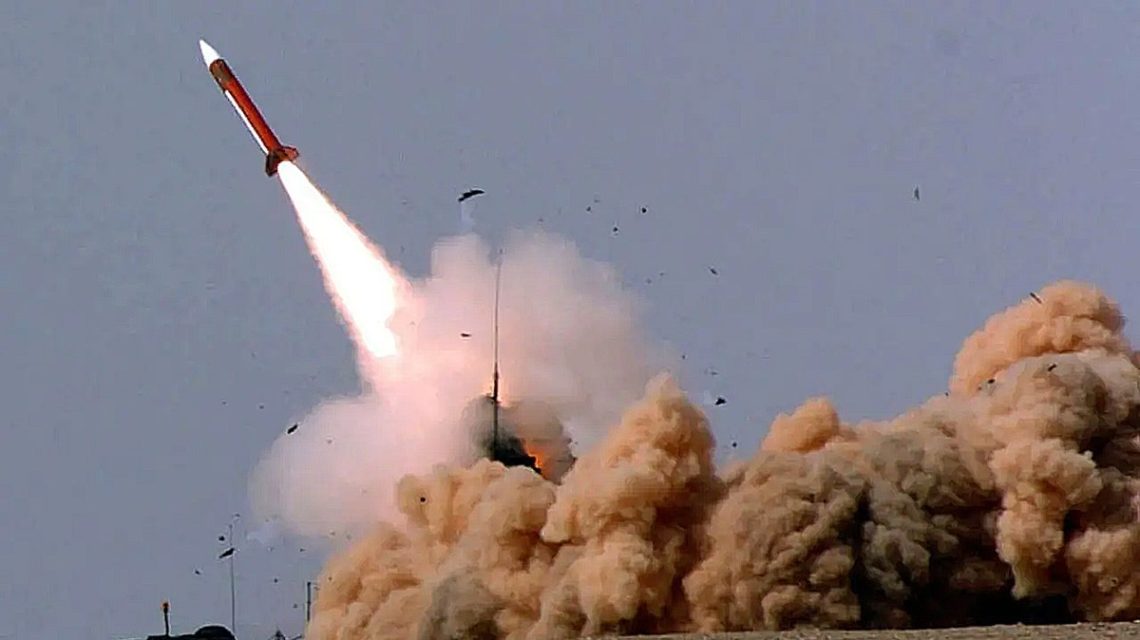
The Pentagon is confronting the reality of dwindling missile defense inventories after months of engagement with Iran. America’s stockpile of missile interceptors is decreasing, prompting military planners to consider the sustainability of ongoing limited retaliatory strikes.
The Center for Strategic and International Studies (CSIS) reports a drop in U.S. Patriot interceptor inventories from roughly 2,300 before the conflict to fewer than 827. Similarly, THAAD interceptor stocks have reduced from 452 to under 278. Bloomberg outlines that rebuilding these reserves could take over three years, creating concerns about defending U.S. forces if another major conflict arises, especially in regions like the Pacific.
“If you look at the Patriots, for example, over half the global inventory has now been consumed in the Middle East. And THAAD interceptors are similarly affected,” said Kelly Grieco, a missile expert at the Stimson Center.
The Pentagon has reportedly requested $67 billion for fiscal year 2026 emergency funding, including $18.2 billion to replace advanced missile defense systems. By 2031, it is expected that 70% of the munitions purchased will be low-cost, as tracked by Jerry McGinn from CSIS.
“The munitions today are effective but not designed for mass production,” McGinn noted, highlighting the challenge in scaling production because of the intricate nature of these systems.
Operations such as Midnight Hammer and Epic Fury have strained missile supplies. A Pentagon meeting recently involved leading Silicon Valley defense firms to discuss replenishing munitions. Concerns remain about these companies’ capacity to scale production using their commercial technologies.
SHIELD AI, founded by former Navy SEAL Brandon Tseng, is among the tech startups engaged in defense innovation. Tseng’s AI-driven V-BAT system, already deployed in Ukraine, offers cost-effective targeting and reconnaissance compared to traditional drones.
In the midst of these challenges, Adm. Brad Cooper of CENTCOM has developed a potential 10- to 14-day air campaign to curtail Iran’s missile capabilities. This reflects the unsustainable nature of the current missile interception strategy due to dwindling resources.
Iran continues to target U.S. bases, necessitating the use of valuable missile interceptors, with the hope that prolonged conflict will deplete U.S. resources and resolve. As Kelly Grieco mentioned, Iran perceives the situation as existential, whereas U.S. interests may be seen as limited.
Jennifer Griffin, a national security correspondent for FOX News Channel, has contributed to providing insights from the Washington D.C. bureau.
 Congressional Inaction Amid AI Concerns
  Zohran Mamdani Faces Backlash at Staten Island Event
  Legal Battle Over Media Ban at White House
  Governor Pritzker Addresses Hasan Piker Controversy
  Rising Demand for Data Centers Driven by AI Development
  Trump and NYC Mayor Mamdani: Political Divides and Collaborative Efforts