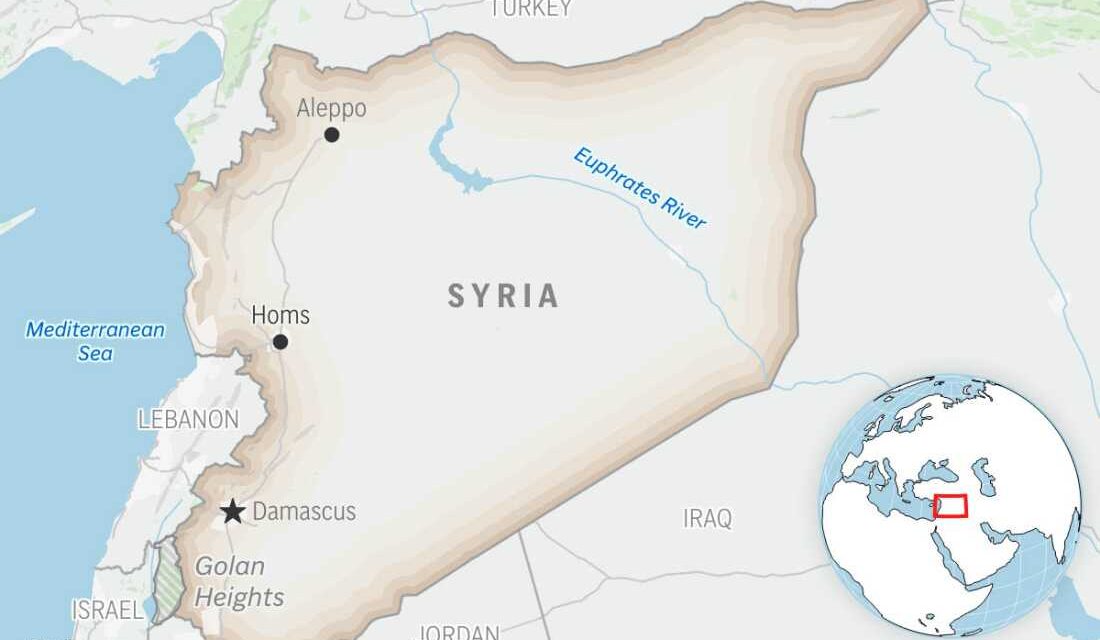
In recent developments in Damascus, Syria, Israel launched airstrikes targeting an air base in northwest Syria. The attacks were reportedly aimed at preventing Turkish troops from deploying at the base. Turkey, having close ties with the Syrian government, has been supporting Syria’s military. The complex relationships among these nations have influenced the situation greatly, as Turkey and Israel have been working to limit each other’s sway in Syria.
The airstrikes affected the Abu Duhur air base located in Idlib province, damaging the runway without causing any casualties, according to state television reports. Syria’s Foreign Minister, Asaad al-Shibani, expressed condemnation, describing the strikes as an unwarranted provocation that violates Syria’s sovereignty and poses a threat to both regional and global stability.
From Israel’s perspective, Prime Minister Benjamin Netanyahu’s office issued a statement explaining that the action was in response to Syria’s potential breach of a security agreement by permitting Turkish military presence at the base. Israel had reportedly warned Syria against such deployment, considering it a security threat.
Turkey’s Foreign Ministry openly criticized the attack, urging the international community to address and hold accountable Israel’s actions, which Turkey views as in violation of international law.
The Syrian Observatory for Human Rights, based in Britain, relayed that the base was previously used by foreign fighters, recently relocated. Turkey has been instrumental in rehabilitating this base, which had fallen into disuse during the protracted Syrian conflict, a conflict that has tragically claimed nearly half a million lives.
Expressing concern, Tom Barrack, the U.S. ambassador to Turkey and special envoy to Syria, remarked on social media that Israel’s confirmed airstrikes contribute to unnecessary regional tensions. He emphasized that Syria’s interim government, led by President Ahmad al-Sharaa, has not displayed aggressive intentions towards Israel and has shown a desire for de-escalation. The U.S. has played and plans to continue playing a role in diplomatic discussions to resolve these issues.
Several regional governments, including Qatar, Egypt, and Saudi Arabia, have also denounced the actions. Since the fall of former Syrian President Bashar Assad in December 2024, tensions between Israel and Turkey over Syrian matters have been progressively increasing. Israel has conducted numerous airstrikes in Syria following Assad’s displacement, primarily targeting Syrian military assets to prevent their use by Assad’s successors. Additionally, Israel has occupied a U.N.-patrolled buffer zone in southern Syria after intercepting control post-Assad era.
Drone attacks attributed to Israel hit a southern Damascus suburb last year, resulting in military casualties. Though Damascus’s new government claims no desire for conflict with Israel, Israeli authorities remain wary of the administration led by former insurgents. Despite ongoing negotiations mediated by the United States aimed at achieving a security agreement between Israel and the new Syrian government, no conclusive talks have yet succeeded.
 Skeletal Remains Found Near Huaca Pucllana Shed Light on Ancient Rituals
  Mapping the Road to 9/11: August 19, 2001
  Ukrainian Citizen Convicted of Espionage in Germany
  Last-Minute Agreement Avoids New Tariffs on Canadian Goods
  Strategic Moves in Asia Reflect U.S. Confusion
  Tupac Shakur Murder Trial: Evaluating Key Evidence