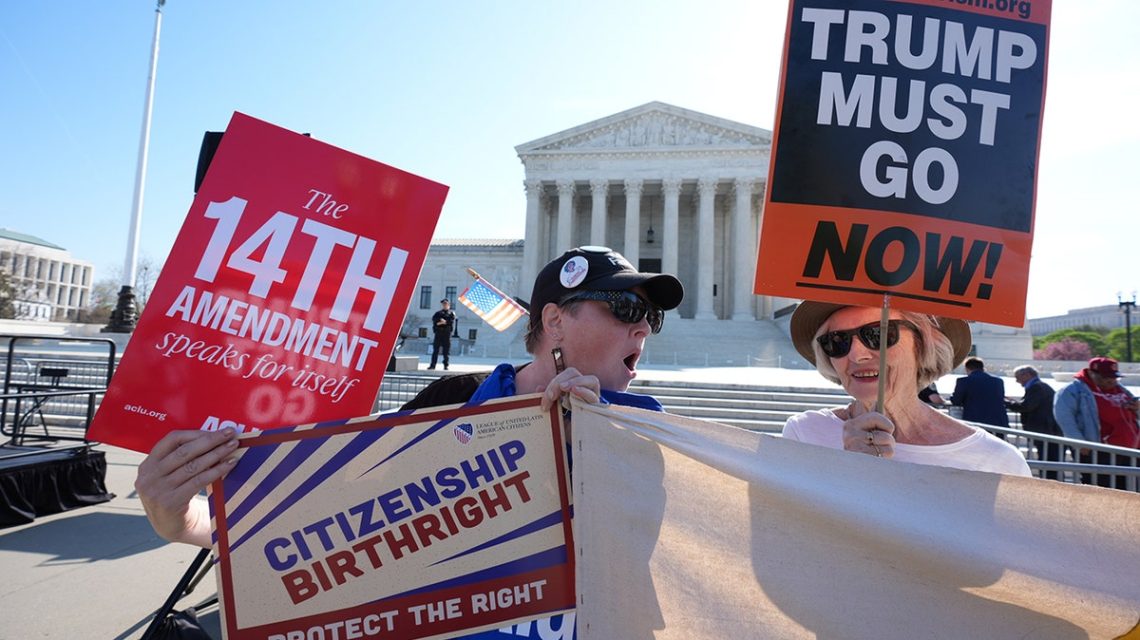
The Supreme Court has made a decision that deeply affects America’s sovereign power. In the Trump v. Barbara case, five justices have ruled to constitutionalize birthright citizenship for children of individuals who enter the U.S. illegally or temporarily. This decision impacts how America determines its citizens and affects the census process, which decides the allocation of House seats and Electoral College votes that elect the president.
The Fourteenth Amendment grants citizenship to anyone born in the United States and “subject to the jurisdiction thereof.” Initially, this provision aimed to ensure citizenship for children of freed slaves after the Civil War. However, this decision now includes children born to Chinese birth tourists and others who may not have a connection to the U.S. other than birth.
The census also counts illegal aliens and temporary visa holders, affecting representation in Congress and the Electoral College. This counting has been practiced since Jimmy Carter’s administration. Diplomatic personnel and soldiers from other countries are excluded from the census and citizenship, while children born on U.S. soil to tourists or temporary visitors are considered citizens but not counted for the census. This discrepancy raises questions about fairness and accuracy.
Congress can address this issue with the Equal Representation Act, which redefines “persons” in the census as American citizens and lawful permanent residents. This act aligns with earlier interpretations of the Fourteenth Amendment, focusing on lawful and permanent domicile. By passing this legislation, Congress can correct this error without a Supreme Court challenge.
Moreover, the census impacts federal funding distribution, including Medicaid, affecting how financial resources are allocated to states. States can exploit this system, influencing who controls Congress and how funds are distributed. The current system was not envisioned by the Framers of the Fourteenth Amendment, and adjustments must be made to reflect today’s realities.
Concerns also arise regarding national security. For example, China has used birth tourism to gain American citizenship for many of its nationals. These children, being U.S. citizens, can vote or run for high office while remaining abroad. Addressing this loophole is crucial for national security and democratic integrity.
It is essential for Congress to act swiftly by passing the Equal Representation Act and ensuring that the Supreme Court upholds this decision. Reforming the census and citizenship criteria is vital to maintaining the integrity of U.S. democracy and safeguarding national interests.
 Holding Washington Accountable: Combatting Corruption and Self-Enrichment
  Court Order Leads to Removal of Trump’s Name from Kennedy Center
  Irish Prime Minister Rejects Claims of Antisemitism in Israel Criticism
  Potential Impact of Changes to the National Vaccine Injury Compensation Program
  Governor Newsom Signs Bills to Protect LGBTQ Community in California
  Trump Administration Faces Legal Scrutiny Over Use of Pocket Rescission to Cut Funding