
First Lady’s Advocacy for AI in Education
First Lady Melania Trump, through a Fox News op-ed, is advocating for the use of artificial intelligence (AI) to advance education for children. Her stance is supported by David Marchick, Dean of Kogod School of Business at American University. Marchick emphasizes the importance of AI literacy for students’ future careers, noting a significant increase in employer demand for AI skills over the past three years.
The Broader Implications of AI in Higher Education
As discussions about AI’s role in education gain momentum, concerns about plagiarism and cheating dominate conversations. However, educators argue that these concerns miss a crucial point: assessing what students genuinely learn.
“I don’t think cheating is the right concept here,” says Amy Bruckman from Georgia Institute of Technology. “Banning AI at the university level is unwise; it is likely to be a workplace staple.”
Some professors advocate for educational redesign to integrate AI into learning. Bruckman warns that many students avoid meaningful learning by resorting to AI tools, leading educators to explore traditional assessment methods. She favors analog evaluations to distinguish between learners and those merely using AI for assignments.
Rethinking Student Evaluations
Several educators are exploring alternative evaluation methods. They aim to assess student understanding, rather than exclude AI outright.
“We must redesign our assessments to resist AI usage,” Bruckman says.
Dr. Grace Alexis at Generations College notes that faculties initially viewed AI as a threat before adapting to its potential. This shift involves training students to use AI while enhancing critical thinking skills.
Balancing AI Integration with Skill Development
Educators emphasize responsible AI usage as crucial. The goal is to foster an environment where AI informs student work without dictating outcomes.
“AI is acceptable in classrooms, but faculties must guide students in its appropriate use,” Alexis explains.
Both Bruckman and Alexis assert that critical thinking must remain central to education. Bruckman illustrates the gap in student engagement, noting a decline in critical thinking skills among some learners.
AI in Education: Future Opportunities and Challenges
Bruckman acknowledges the inevitability of AI integration in education. She warns against focusing solely on AI use accusations, advocating for redesigned learning strategies that prepare students for workplaces reliant on AI tools.
“We will adapt,” Bruckman concludes. “Yet, there’s a risk of losing a generation in the transition phase.”
 Concerns Over Racism and School Funding Inequality Discussed by ‘The View’ Co-Host
 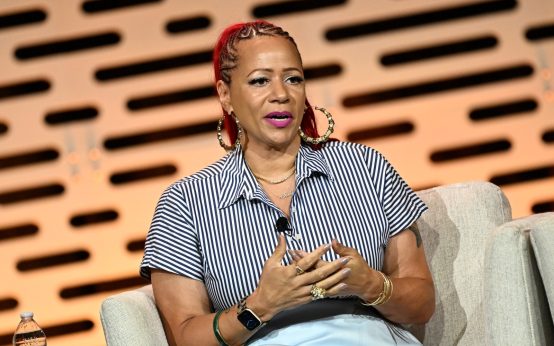 Nikole Hannah-Jones’ Reflection on School Integration and the Impact on Her Daughter
  Congressional Inaction Amid AI Concerns
  Understanding School Shooting Preparedness Drills
  Rising Demand for Data Centers Driven by AI Development
  Evaluating College Value in the AI Era