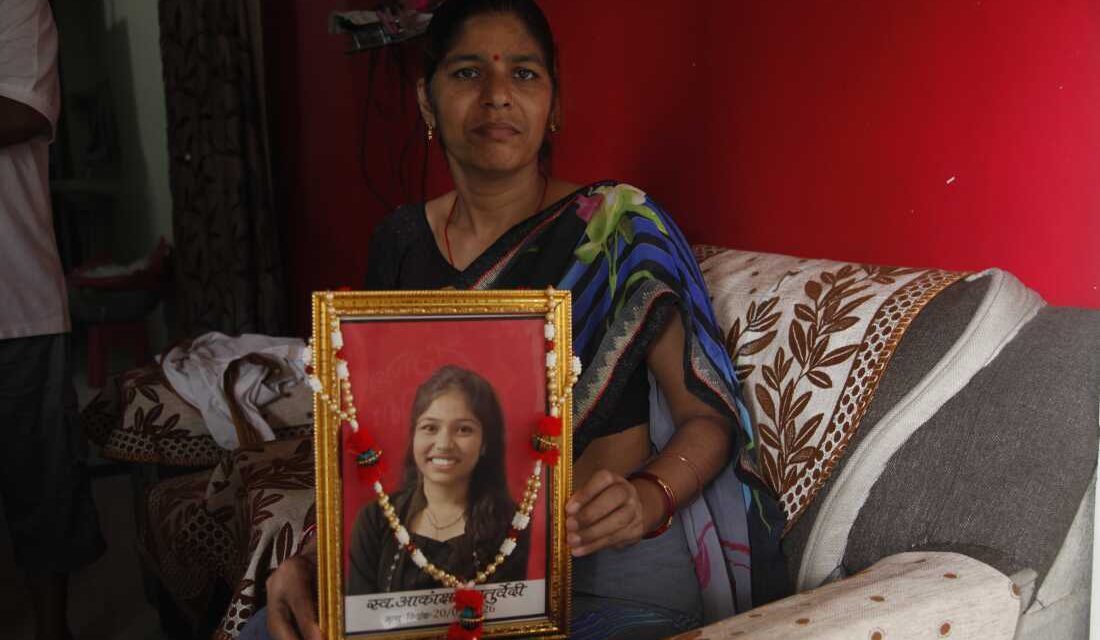
NAGPUR, India: Neelum Chaturvedi holds a picture of her smiling daughter Akanksha, who took her own life in May. The tragic event followed the cancellation of a medical exam Akanksha had taken, because the results were leaked. Akanksha’s mother recalls her daughter’s beautiful English handwriting in a note addressed to her parents, reading ‘Mummy, Pappa,’ as Akanksha struggled with the pressure of retaking the exam.
The suicide of Akanksha was among several student deaths covered by Indian media, highlighting intense pressure in the education system. These incidents have fueled nationwide protests, challenging Prime Minister Narendra Modi’s government.
Educational Pressure and Student Suicides
Akanksha’s story reflects the crisis many students face in India. Students deal with complex education systems and high-stakes exams, with intensely competitive environments. As students work toward coveted positions in universities and government jobs, high-pressure exams are often unavoidable.
Data from The Indian Express shows a substantial increase in student suicides, jumping from 8,068 in 2014 to 14,488 in 2024. High-pressure exams contribute significantly to these tragedies.
Critics argue that coaching centers are essential yet unaffordable for many families. Maheshwer Peri’s analysis shows most successful students attended such centers.
Coaching Centers: A Profitable Industry
Coaching centers dominate this sector, guiding students on exam strategies. However, many families incur significant debt to enroll their children. The centers advertise successful students, creating a misleading perception about outcomes.
The ties between coaching centers and loan companies factor into this situation. Parents, eager for children to succeed, often face financial strain due to this cycle.
Personal Struggles and Tragic Loss
Achieving dreams was costly for Akanksha’s parents. Her father, Krishna Kumar, faced financial challenges despite selling his land to pay for his daughter’s education. Akanksha assured him she would repay the debts by becoming a doctor.
Akanksha worked tirelessly, neglecting sleep and food to succeed. She remained optimistic until her exam results were canceled, leading to her withdrawal from family interactions and eventually her tragic end.
Protests and Government Response
Akanksha’s death ignited protests that intensified after inflammatory remarks by Chief Justice Surya Kant about unemployed youth. Activist Abhijeet Dipke initiated the Cockroach Janata Party, gaining millions of followers. Protests swelled demanding Education Minister Dharmendra Pradhan’s resignation.
Though initially ignored, Modi promised justice for the exam leak. Pradhan resigned, and compensation was offered to affected families. A committee was announced to evaluate potential exam reforms.
Despite these actions, political scientist Šumit Ganguly expresses skepticism about real change, citing bureaucratic and governmental interests tied to the existing system.
Concluding Thoughts on a Tragedy
While efforts are underway, Neelum Chaturvedi mourns her daughter. She shares the family’s struggles amid ongoing financial hardships. An official denied failed attempts to reach Akanksha’s family, yet no official condolences were received.
As Akanksha’s family navigates grief, they face uncertainty without immediate support. The coaching center she attended promised potential aid, acknowledging their awareness of her tragic story.
 Understanding College Rankings and Their Impact
  Scrutinizing Accountability in Missouri’s Education System
  AI’s Impact on Entry-Level Jobs: UCLA Research Insights
  Education Department Returns to Previous Title IX Rules
  Accountability: Consistency vs. Selective Application
  The Impact of College Rankings on Lesser-Known Institutions