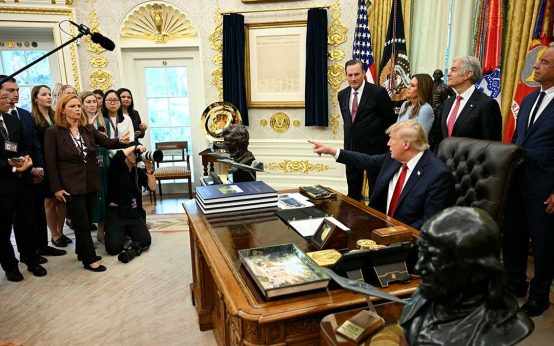
President Donald Trump issued a stern warning to Iran, calling upcoming talks with Tehran the “last chance” to reach a deal and avoid further U.S. military strikes. Speaking from the Oval Office, Trump expressed hopes for negotiations that would reopen the Strait of Hormuz and address U.S. concerns over Iran’s nuclear activities.
Trump outlined a two-phase approach involving the opening of the straits followed by Iran’s denuclearization. Despite the aggressive U.S. military actions against Tehran’s leadership and forces, Iran remains hopeful to withstand the pressure, betting on Trump’s diminished resources and the unpopularity of the war domestically.
In a recent dialogue with reporters, Trump revealed that Iran and key Gulf allies like Qatar, Saudi Arabia, and the United Arab Emirates urged restraint, leading him to pause an extensive planned attack labeled “the biggest since World War II.” This decision followed discussions with Saudi Crown Prince Mohammed bin Salman and unnamed Iranian officials.
However, Trump conveyed impatience with Iran. He criticized Iran’s narrative of talks with Oman focused only on navigation safety in the crucial oil trade route, while maintaining that discussions about Iran’s nuclear program are indeed happening.
As tensions mount, Trump has threatened escalation multiple times but withdrawn his threats to let diplomacy take root. Although some criticize this pattern, Trump suggested his approach is measured, considering potential Iranian casualties.
Critics and Republican Concerns over Iran Strategy
Senator Mark Kelly expressed concerns over Trump’s erratic strategy, suggesting an underlying desire to revert to the situation before the escalation. Over recent months, Trump has repeatedly exhibited a mix of aggressive threats and sudden retreats, claiming progress towards peace. Critics suggest these actions reveal a reluctance to fully commit to military solutions.
There have been several notable instances where Trump has escalated tensions only to back down at crucial moments, often attributing the de-escalation to successful negotiations or advice from allied Gulf leaders.
In a significant development, communication with the Saudi crown prince was instrumental in Trump’s decision to avoid a major escalation. Concerns were raised about potential retaliatory effects on the global economy if Iran responded to new bombings by targeting U.S. Gulf allies. Saudi officials have assured their readiness to defend against further Iranian threats, though vulnerabilities remain, particularly in Kuwait.
Midterm Elections and U.S. Public Opinion
As the conflict affects global economic stability, Trump insists that the forthcoming midterm elections do not influence his approach. Yet, polling suggests wide public disapproval of the war’s benefits, with notable dissatisfaction among Republicans facing tough election prospects.
Senator John Kennedy emphasized the need for perspective on the conflict, highlighting the significant impact of U.S. military action on Iran. He advised restraining military aggression to prevent exacerbating economic issues and inflation domestically. Kennedy advocated tightening sanctions and focusing on Iran’s nuclear program as possible alternatives.
 Congressional Inaction Amid AI Concerns
  Ontario Synagogue Shooting During Yom Kippur Leaves One Officer and Shooter Injured
  Pope Leo XIV’s Upcoming Visit to Latin America: An Overview
  Zohran Mamdani Faces Backlash at Staten Island Event
  Controversial Removal of ‘The Bluest Eye’ from Georgia School Libraries
  Legal Battle Over Media Ban at White House