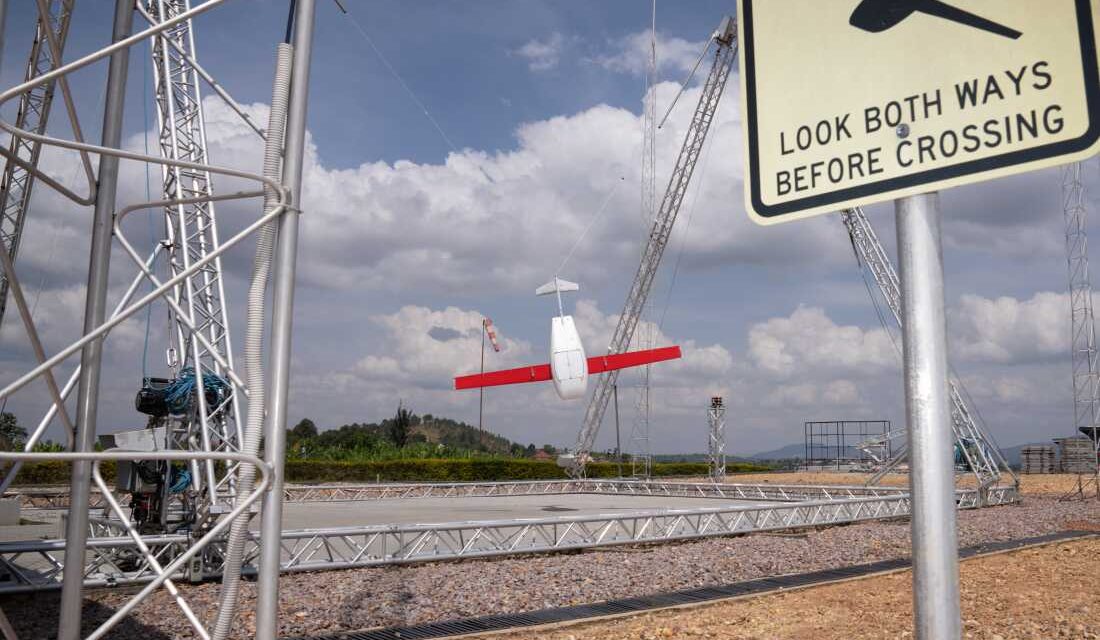
A drone recently executed a successful landing in Muhanga, Rwanda, following a delivery mission. Since 2016, the Rwandan government has partnered with Zipline, an American robotics company, to distribute emergency blood supplies via drones.
The Impact of Drone Technology
Muhanga’s resident, Noella Mukanoheli, experienced a life-threatening situation while nine months pregnant. Her journey to healthcare was arduous, involving a 50-minute motorcycle ride to a local clinic lacking a doctor, followed by an ambulance trip to the nearest hospital. Despite the two-hour journey over difficult roads, Mukanoheli arrived at the hospital needing a massive transfusion of blood, about 5 liters, a challenge for the facility due to the unavailability of her blood type.
In this critical situation, drones became her lifeline, delivering the required blood within minutes. Mukanoheli credits the drones with saving her life and the life of her newborn. “My doctor said I had given birth and the baby was alive, but I would have died without the drone,” she recounts.
Rwanda’s Strategic Shift
The use of drones highlights Rwanda’s efforts to navigate its challenging terrain, known as the land of a thousand hills. In 2016, the Rwandan government sought immediate solutions for emergency blood deliveries, establishing a partnership with Zipline to deploy drone technology.
Drones now provide a crucial service, delivering a range of medical supplies across Rwanda. Despite being a country of nearly 15 million, with most of its population in rural settings, Rwanda has made strides in healthcare improvements since the 1994 genocide.
Technological Expansion
By 2025, with a U.S. grant of $150 million, Zipline’s operations will expand in Rwanda and other African nations. However, this coincides with a $200 million funding reduction affecting food and health aid organizations in Rwanda, marking a shift toward American businesses in global health ventures.
NPR queried the U.S. State Department about these funding changes and the drone collaboration but received no feedback. An official statement emphasized the commitment to using innovative technologies to enhance health responses.
Zipline’s Drone Technology
The functionality of drones in Rwanda is consistently visible in the skies. Constantly dispatched, Zipline drones deliver medicines, vaccines, and blood efficiently. Each drone resembles a small airplane with red wings, powered by Styrofoam bodies and advanced AI software.
The drones, which travel at 64 miles per hour on average and can ascend to 400 feet, are central to Rwanda’s pharmaceutical logistics. The Muhanga distribution center manages orders comprehensively, with a high-standard medical warehouse complying with FDA regulations.
Technicians prepare packages, ensuring they meet the minimum weight requirement to withstand wind interference. Following this, an engineer launches the drone, which navigates deliveries autonomously.
Drone Impact on Healthcare
The drones dramatically reduce delivery time compared to vehicle transport, particularly benefiting hospitals like Kabgayi, which managed Mukanoheli’s case. Doctors now receive urgent supplies much faster via drones instead of waiting hours for deliveries.
Rwanda’s healthcare transformation includes adopting drones as part of reducing maternal mortality, supporting universal healthcare, and investing in midwives. The health minister, Dr. Sabin Nsanzimana, notes significant declines in maternal mortality since the deployment of the drones.
Future Challenges and Opportunities
Despite these advances, U.S. aid cuts have raised concerns about sustaining lifesaving programs. There is an urgent need for comprehensive strategies incorporating infrastructure improvements alongside the adoption of high-tech solutions.
Efforts continue to ensure that logistic systems like Zipline complement basic healthcare needs. However, many rural health centers still face challenges such as inadequate staffing and lack of essential equipment.
Reflecting on her experience, Mukanoheli appreciates the drone deliveries but highlights the gap in health services in her locality. As her infant faces malnutrition, she identifies a need for local medical facilities to extend their capabilities, an issue currently beyond the reach of drone technology.
 Expanded Recall of Bettergoods Brand Lemon Alfredo Fettuccine Due to Listeria Concerns
  FDA Closes Investigation on Cyclosporiasis Outbreak
  Chicago Expands Non-Police Mental Health Response Amid Challenges
  Roseland Community Hospital Suspends Labor and Delivery Services
  VA Enhances Suicide Prevention Efforts with $112 Million in Grants
  State Funding Urgency for Psychiatric Hospitals