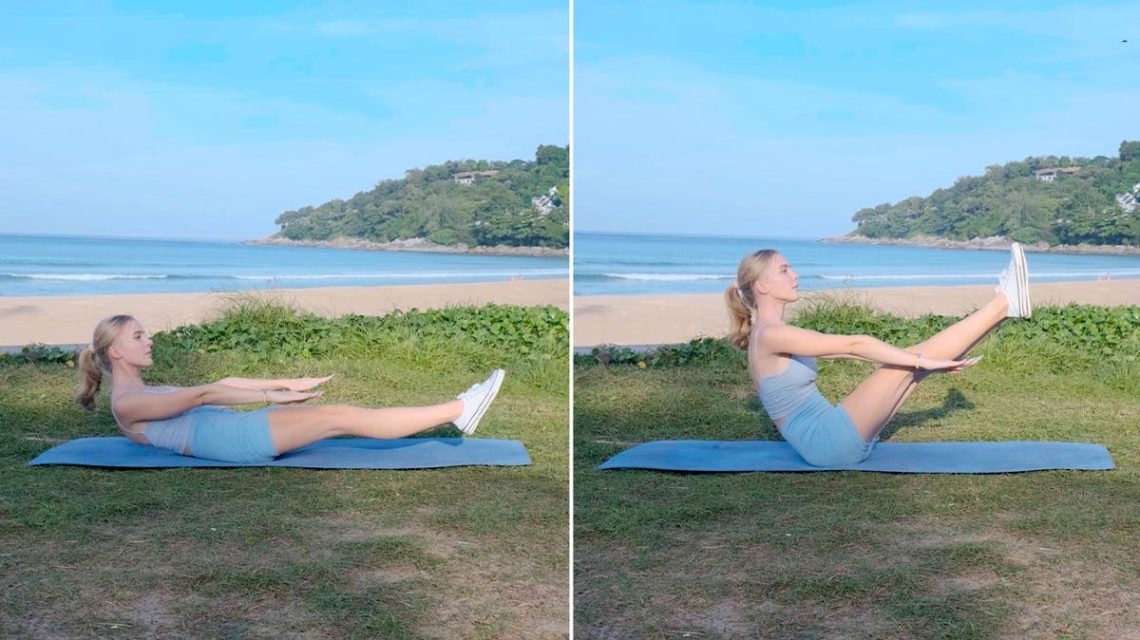
Improving core strength enhances balance and stability, supporting movement and physical performance. Experts highlight the benefits of traditional abdominal exercises but emphasize the added value of the yoga pose known as Boat Pose, or Navasana. This pose forms the body into a ‘V’ shape, challenging multiple muscles crucial for core stability.
Why Core Strength Matters
Melissa Leach, a certified yoga instructor and strength and conditioning coach in Philadelphia, explains that a strong core serves as a foundation for both exercise and daily movement. She notes that core exercises strengthen key muscles such as the obliques, lower back, and deep stabilizers like the transverse abdominis.
These muscles work collectively to stabilize the spine, creating a base for movement and enabling efficient force transfer between your upper and lower body. Routine tasks, from carrying groceries to rising from a chair, involve core muscles for trunk stabilization, balance, and controlled movement.
Leach adds that a strong core can reduce the risk of lower back pain by enhancing spine stability and ensuring control during demanding physical activities. A well-conditioned core provides a stable foundation for everyday life movement.
Core Benefits of Boat Pose
Boat pose targets the abdominal muscles while engaging the hip flexors, glutes, and back, fostering functional core strength rather than focusing on a single muscle group. Leach highlights that situps operate in a single plane, whereas boat pose requires the entire core to work cohesively to maintain balance and lift.
This pose trains the muscles that stabilize your spine and pelvis rather than primarily building the muscles required for trunk flexion. Boat pose develops both stability and muscular endurance, engaging deep core muscles to support your spine and pelvis throughout.
Over time, this engagement can lead to improved posture, a stronger lower back, and a core that supports everyday activity.
How to Perform Boat Pose
Leach offers the following steps for a safe and correct boat pose:
- Begin by sitting on a mat or floor, knees bent, feet flat.
- Lean back onto the sit bones, keeping your lower back straight.
- Lift feet off the ground, shins parallel to floor. Extend legs upward for full pose.
- Reach arms forward, parallel to the ground.
- Engage your core and maintain balance.
For a dynamic approach, move in and out of the pose. Lie flat, use core muscles to lift legs and upper body into the ‘V’ shape, then extend back to the mat and repeat.
Modifications and Tips
Leach provides alternatives for beginners:
- Perform a half boat pose by keeping legs bent to reduce strain.
- Support your thighs lightly for added balance.
If balance and a straight spine are challenges, sit on a folded blanket or cushion to aid pelvic tilt. Sitting a short distance from a wall offers reassurance while executing the movement.
For seniors or those with limited core strength, try a chair-assisted version. Sit at the edge of a sturdy chair, hold sides for support, lean back slightly, and lift one or both feet a few inches. This method builds the same muscle engagement without the difficulty of balancing unsupported. Progress to the floor version as confidence and strength build.
These approaches make boat pose accessible, allowing individuals to customize their practice based on their ability and comfort levels.
 Golden Spurtle World Porridge Making Championships
  How Dogs Adapt Communication with Hearing-Impaired Owners
  Local Events Highlight October Festivities and Arts
  Benefits of Particle Skincare for Men
  The Rise of Solo Travel and the Industry Response
  Prepare for Rainy Fall with Discounted Columbia Rain Jacket