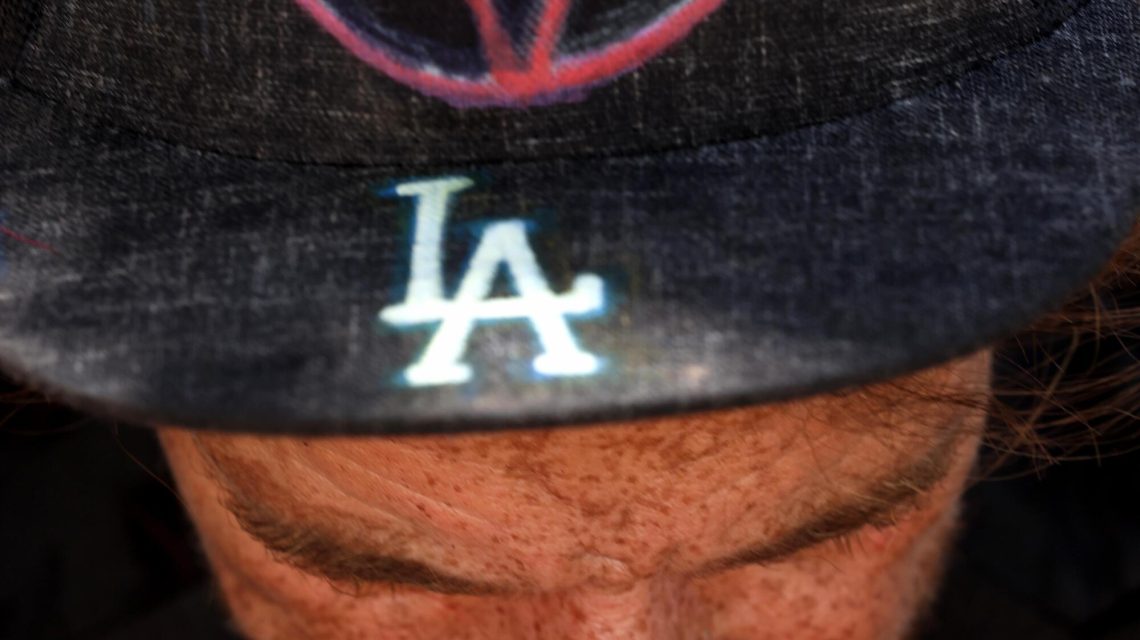
Abigail Aguirre has been experiencing poor sleep due to the noise from a nearby homeless encampment. Residents there often party late into the night, sometimes yelling and blasting music. This situation is especially challenging for her husband, who leaves for work before 5 a.m.
“Oh my God, they don’t let us sleep,” said Aguirre, whose home is situated just east of the 110 Freeway in South Los Angeles. “They do drugs in there. They play the loud music. They don’t care.”
Three years ago, Mayor Karen Bass’ Inside Safe program relocated homeless individuals from Aguirre’s neighborhood to adjacent hotels and motels, while sanitation crews cleared trash from the streets and sidewalks. Nevertheless, people and their tents continued to arrive, affecting not only Aguirre’s area but also other east-west streets crossing the 110 Freeway south of downtown, such as 43rd, 49th, 51st, and Vernon Avenue.
The Los Angeles Times investigated Mayor Bass’ Inside Safe initiative as part of the USC Annenberg Center for Health Journalism’s 2025 Data Fellowship. Unsheltered homelessness, referring to individuals living on the street or in cars, rose nearly 8% citywide in this year’s homeless count. This increase poses a challenge to Bass, who is seeking reelection with homelessness as a central issue.
The streets lining the 110 Freeway between 42nd and 58th present a significant obstacle for Bass and her program. According to records obtained by The Times, Inside Safe workers have conducted 25 operations along this one-mile stretch during her first three years, often returning to bring individuals indoors.
Frank Gordon, a 51-year-old residing on Cahuenga Boulevard at the 101 Freeway in Hollywood, has been relocated multiple times through Inside Safe. During one operation, 42 individuals were moved indoors, and a month later, 54 more followed. Other operations saw smaller numbers relocated.
Despite the efforts, several overpasses and side streets still host encampments. The situation is especially grim on the 51st Street overpass, where tents and mounds of garbage line the sidewalks. A refrigerator, devoid of its door, lies in the street overflowing with trash.
Nearby resident Joel Galarza attributes the encampment to crime, fires, prostitution, open-air drug use, and other issues. In May, a man was stabbed on the overpass. Galarza’s family has contacted the city and LAPD numerous times, but the situation has worsened.
“It feels like there’s no more hope, that your voice doesn’t matter,” he said.
Bass has prioritized the removal of street encampments, deeming them risky for both homeless individuals and residents. Her Inside Safe program has relocated over 6,200 people to hotels, motels, and other interim housing. By June, however, 43% had returned to the streets, either leaving on their own or being expelled.
City Councilmember Traci Park and residents of Venice expressed gratitude for Bass’s efforts to relocate more than 100 individuals from sidewalks into temporary housing.
Bass acknowledged the frustration of those living near encampments, expressing her intention to secure more control over services like medical care, addiction treatment, and case management in the coming months. She believes her administration has made advances by keeping about 80% of locations visited by Inside Safe free of tents recently.
“Inside Safe has been a success in terms of getting people off the streets and clearing encampments,” Bass stated. “What Inside Safe has not been able to do is reach the scale that is needed.”
Bass noted Inside Safe has conducted 137 encampment operations so far, with a need for many more. To widen the program’s scope, the city must transition from costly hotels and motels to quality homeless shelters, she added.
The challenges aren’t confined to the 110 corridor. By December, the end of Bass’s third year, 23 Inside Safe areas had been visited at least five times by the mayor’s outreach team. Inside Safe visited several streets east of MacArthur Park 10 times over two years. In Hollywood, eight operations occurred around Franklin and Argyle avenues over 18 months.
By late 2025, 80% of Inside Safe operations involved areas that had repopulated. City Councilmember Nithya Raman, who is challenging Bass, criticized Inside Safe as ineffective and costly.
“When 40% of the people who participated in the program return to homelessness, and some locations need repeat outreach visits five, 10, even 25 times, it tells us that something is wrong,” she stated.
Bass identified freeway overpasses as common sites for encampments due to their shelter from the elements and privacy. In some cases, individuals relocate to an Inside Safe location hoping to obtain housing, while others return to the streets needing intensive care unavailable through the county.
Estela Lopez, representing businesses in Skid Row, attributed repopulation to a lack of enforcement. Police should enforce city laws to keep areas clear once encampments are cleared, she suggested. Lopez reported complaints about encampments on Alameda Street between 4th and 6th. Inside Safe visited this stretch 12 times last year, despite a dozen tents blocking pedestrians who must divert onto the roadway.
Lopez identified drug availability as a reason for homeless individuals returning.
“That’s where the drugs are,” she said. “Skid Row is where the drugs are, and has the fewest consequences for open-air drug use and sales.”
Bass’s inaugural Inside Safe operation took place more than three years ago on Cahuenga Boulevard under the 101 Freeway in Hollywood. Inside Safe visited Cahuenga and the 101 six times over 18 months.
During COVID, Frank Gordon and his girlfriend lived in an RV on Cahuenga beside the 101 amid encampments. Outreach workers eventually moved them into the Stuart Hotel in Westlake, then the Highland Gardens, another interim housing site.
Last month, they returned to Cahuenga and the 101, which Gordon termed “familiar ground.”
Kevin Paz, residing on the 51st Street overpass, said he would take a motel room if offered. Being previously local to the area, he chose his spot for shade under the freeway’s elevated carpool lane.
“Honestly, nobody wakes up in the morning and says, ‘Hey, I wanna go live on that street,’” he said.
Bass’s team highlighted locations where encampments haven’t reappeared. They cited success at 6th and Fairfax, where sidewalk narrowing and landscaping prevented camping. Nearby Angelus Rosedale Cemetery remained clear after 48 individuals moved indoors in April 2025, supported by a no-parking zone on Washington Boulevard.
Previously crowded areas such as Harbor City and Baldwin Hills have been free of encampments for several months. Councilmember Tim McOsker and his staff have repeatedly offered housing to newcomers, while removing a group distributing glass pipes and hypodermic needles.
Johnnie Raines III, involved in the local neighborhood council, praised Inside Safe as “life-changing” for some individuals.
Nonetheless, Raines maintained realistic expectations regarding challenges.
“If you house these three people that are in this space today, three more will show up,” he said. “That doesn’t mean that you were not successful in housing the first three people. That just means that three more people come.”
In neighborhoods near the 110 freeway in South L.A., impatience persists among some residents. Elmer Roldan, who lives on 55th Street, reported fire-related incidents caused by his homeless neighbors. Though tents are reduced, vehicle dwellers remain prevalent. He expressed his concern over the situation deteriorating further.
“I certainly don’t want it to get worse,” Roldan said.
 Arizona Helicopter Crew’s Swift Action Saves Stranded Driver
  Trump Issues Order to Combat Mosquito and Tick Populations
 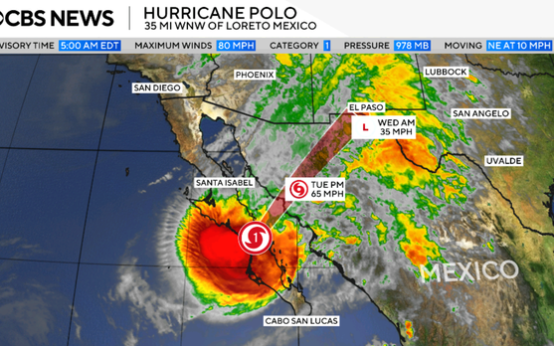 Hurricane Polo Poses Flood Threat as It Approaches Southwestern U.S.
  Family Struggles with Tragic Loss Amid Deportation Proceedings
  Maritime Expert Investigates Nantucket Shipwreck Exposed by Nor’easter
  Incident on USS Dwight D. Eisenhower Injures U.S. Service Members