
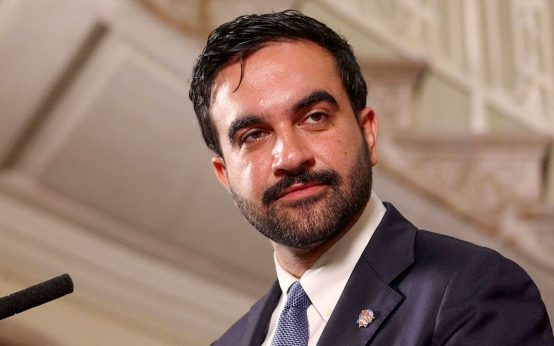
Abdul El-Sayed, a progressive figure in the Democratic primary for the U.S. Senate in Michigan, recently addressed reporters at the Spirit of Detroit. His remarks followed the March of the Many held on August 2, 2026, in Detroit.
The Democratic Party faces significant challenges. Polls indicate that 53 percent of Americans hold an unfavorable view of the party, while only 38 percent see it favorably. Dissatisfaction with the party’s leadership, perceived as aging and uninspiring, contributes to this sentiment. Approval for how congressional Democrats perform stands at just 24 percent.
A divide emerges among likely Democratic primary voters for the 2028 presidential election. Voters under 30 lean towards Rep. Alexandria Ocasio-Cortez from New York, whereas those over 65 prefer California’s Governor Gavin Newsom. Notably, even the declining popularity of former President Trump hasn’t benefited the Democrats significantly.
Some hope is sparked by people identifying as democratic socialists, comprising about one-third of Democrats. Yet, recent surveys from the Washington Post revealed less than half of Americans would consider a democratic socialist for president. Among Democrats, three-quarters are open, but 54 percent of independents dismiss the option.
Michael Greenberg from the New York Review of Books highlights a critical fear among moderate Democrats. They worry not about their silence against a far-right rise, but the potential backlash from a socialist influence within their ranks.
Ideological divides have shaped American politics historically. The 19th-century Whig Party collapsed over slavery. The split between Northern and Southern Whigs underscored the party’s downfall by 1855. Similarly, both Democrats and Republicans faced conflicts in the late 19th century over the gold standard.
In the 1960s, Sen. Barry Goldwater initiated conservatism within the Republican Party, challenging moderates. His nomination in 1964, driven by ideological zeal, resulted in a landslide defeat. Fast forward to 2009 and 2010, the Tea Party movement reshaped the Republican landscape, affecting national and local politics.
Currently, the Republican Party experiences significant changes with the rise of MAGA and the removal of dissenting voices. Historical patterns show insurgents can either lead parties to triumph or push them into turmoil.
Results from the Washington Post’s poll caution that if democratic socialists dominate the Democratic Party, they need to clarify their identity to the electorate and reassure the public about the capitalist system’s stability. Misunderstanding persists, with varied views on democratic socialism ranging from economic equality aspirations to fears of communism.
According to the paper, no more than 13 percent of the public share a unified understanding of democratic socialism. Many equate it with communism, which could fuel President Trump and allies to label these socialists and the broader Democratic Party as ‘communists.’
Benjamin Wallace-Wells underscores a pivotal issue for Democrats: managing a movement with populist appeal and generational drive. This faction’s principles may conflict with wider party beliefs. The future of the Democratic Party, and democracy itself, hinges on resolving this crucial challenge.
The analysis is provided by Austin Sarat, a Professor of Jurisprudence and Political Science at Amherst College. Copyright 2026 Nexstar Media Inc. All rights reserved. This content cannot be reproduced without permission.
 Trump’s Strategy on Iran: Economic Sanctions Amid Military Stalemate
  Turkey Parliament Passes Conditional Pardon Law for Kurdish Militants
  Security Concerns Prompt Secret Aircraft Switch for President Trump Amid Tensions with Iran
  Taylor Swift’s Songs Removed from Political TikTok Posts
  Controversy Surrounds ‘Pod Save America’ Over Deleted Clip
  New York Judge Halts Controversial Tax Rollout by NYC Mayor