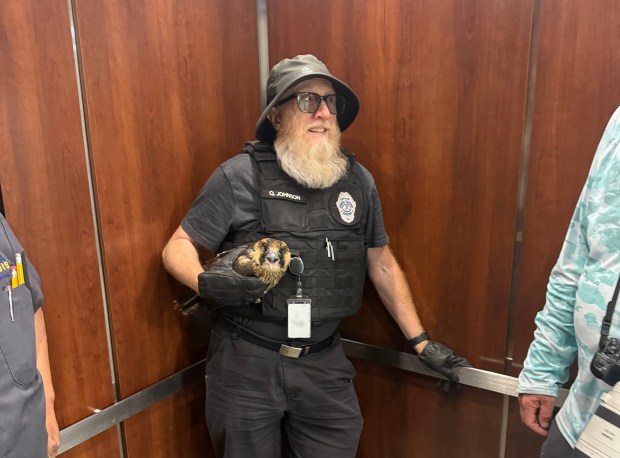
Tom Schrader, a lifelong Aurora resident, has always cherished the Fox River. Decades ago, the river suffered from pollution, with fish suffering and birds scarce. Now, he marvels at the changes. He never expected to see peregrine falcons in downtown Aurora, near the Paramount Theatre, or to be part of a rescue of a baby falcon from the river.
Years ago, these birds of prey were nearly extinct in the region. Their return signifies the success of environmental efforts, including the cleanup of the Fox River. A notable moment came when a pair of falcons nested outside Aurora City Hall in April, capturing the town’s attention. A critical part of this revival included reintroducing water willow, which once helped save a young falcon.
These City Hall baby falcons, now grown, left the nest, leaving residents eagerly anticipating their return. Schrader describes this as a rare, engaging experience. Peregrine falcons typically nest in remote, high places, making this urban setting unique.
Locals followed the falcons’ journey closely, including their parents, Vixen and Dave, who nested on the second floor of the City Hall exterior. The falcons’ evolution from hatching in May to fledging captivated residents. This interest spread widely; locals even discussed the falcons in everyday settings like City Hall offices and local eateries.
Brittany Everett, a city employee, noted the community’s engagement, evident from the live stream views of the birds. The streaming setup faced technical challenges, but the city and Riverfront Playhouse collaborated to provide Wi-Fi and power for the cameras. City Hall staff often gathered to watch the falcons, referencing them as part of the City Hall ‘family.’
The falcons’ presence stirred local interest. This fascination extends back to earlier cleanup efforts by environmental advocates like Jim Phillips, ‘The Fox,’ who raised awareness of pollution in the 1960s.
Historically, the peregrine falcon population had plummeted due to pesticide use, making their current presence a testament to successful conservation. Over time, efforts contributed to the removal of falcons from state protection lists in 2015. The cleanup of the Fox River increased the availability of prey for falcons, aiding their return.
Hope remains for the falcons’ return next year at City Hall or other downtown nests. Schrader is optimistic, citing how the falcons’ presence has unified the city, sparking interest in nature and community life.
The impact of these falcons is undeniable; they fostered community engagement and interest in environmental stewardship. Residents are already organizing to support future appearances of falcons in Aurora, showcasing the town’s commitment to nature and conservation.
 Viral Video Captures Elk Smashing Car Window in Colorado
  Unprecedented Quiet: September Ends Without Atlantic Hurricanes
  Impact and Predictions of the Strongest El Niño in History
  Record-Breaking September Temperature in the U.S.
  States Lead the Way in Energy Policy
  Enhancements in Window Technology for Better Climate Control