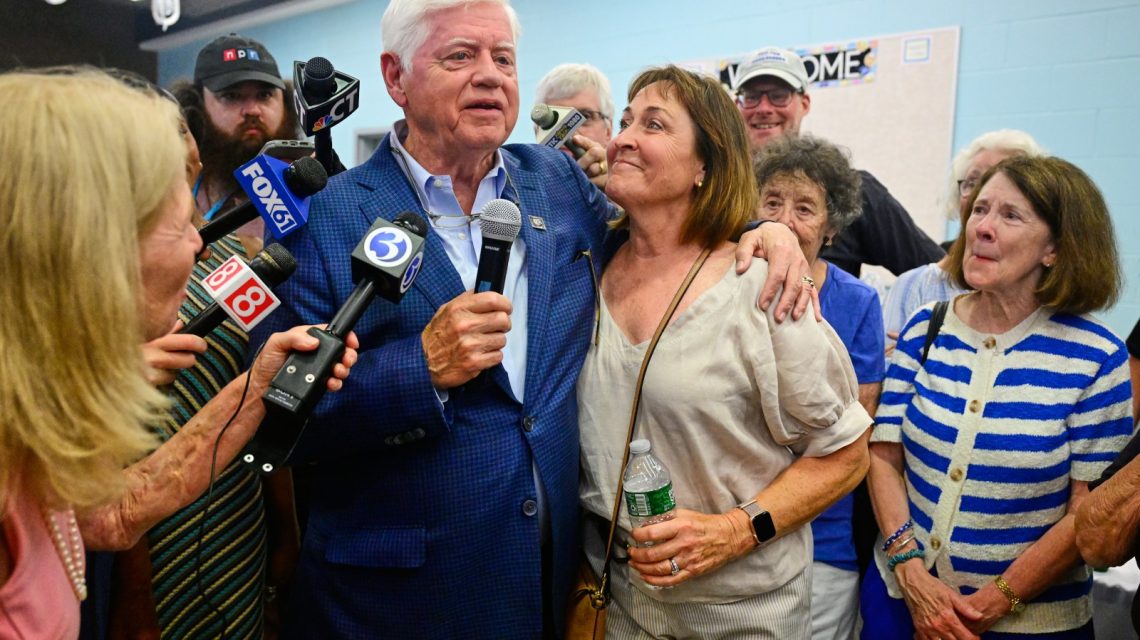
U.S. Representative John Larson, an experienced legislator, lost his seat in the Connecticut Democratic primary. Former Hartford Mayor Luke Bronin defeated the 78-year-old Larson in the 1st Congressional District. This incident marks a growing preference for generational change among Democratic voters.
The Democratic Party faces a rising demand for leadership change, with younger, sometimes more progressive candidates replacing long-serving figures. An expert noted voters’ desire for change. Larson becomes the seventh House Democrat ousted in a primary this year, tying a record set in 2012 when a similar number of Democrats were unseated.
The Age Factor
This year, several older incumbents have been replaced by younger primary contenders. Some victories have come from the party’s left flank, including democratic socialists.
Two incumbents from Texas, Al Green and Julie Johnson, were unseated after redistricting aimed at benefiting Republicans in upcoming elections.
The chain of losses coincides with scrutiny within the Democratic Party regarding aging leadership. President Joe Biden’s indecision and eventual absence from the 2024 election due to age concerns gave way to President Donald Trump’s return to the White House.
Some candidates, successful in primaries, advocated for generational change, presenting themselves as more relatable to voters disenchanted with the status quo. This year’s primaries have seen younger candidates replace five incumbents aged over 60. Larson’s advanced age contributed to his primary loss.
Running for a 15th term, Larson faced his first primary challenge since his initial election in 1999. Concerns arose after he experienced a seizure on the House floor.
Bronin’s campaign emphasized generational change in Congress. After winning, he urged the Democratic Party to embrace new energy, hinting that change should come from grassroots levels if the party remains resistant.
Other older incumbents also lost to younger challengers, such as Colorado’s Diane DeGette, New York’s Adriano Espaillat, and Michigan’s Shri Thanedar. Yet, some veteran lawmakers like Ed Case and Brad Sherman fended off younger opponents.
Progressive Upheaval
Several incumbent losses reflect the progressive wing’s increasing influence within the party. In New York City, candidates from the political left unseated incumbents like Espaillat and Dan Goldman.
Espaillat, 71, lost to 32-year-old Darializa Avila Chevalier, who supports democratic socialist policies. Goldman was defeated by former city Comptroller Brad Lander. Endorsements from major democratic socialists aided these victories, highlighting the push for “better Democrats.”
Progressive Al Green, seeking a 12th term, was beaten in Texas’ 18th Congressional District by younger challenger Christian Menefee after redistricting increased competition.
Implications for Democrats
This wave of losses doesn’t necessarily indicate an ideological overhaul for Democrats. Northeastern University’s political science professor Costas Panagopoulos suggests voters yearn for change, including generational shifts, escaping governance by older figures.
Voter dissatisfaction with aging politicians, inclusive of Biden, Trump, and Senator Mitch McConnell, has fueled this sentiment. GOP members like Mitch McConnell have faced similar scrutiny. Fresh candidates seem favored this year.
Fordham University’s Boris Heersink believes incumbent renomination remains typical, though this year brings notable exceptions. Democrat issues address a mix of left-wing critiques and generational change. Heersink notes potential high stakes in upcoming challenges if Democrats capture a slim House majority.
He suggests candidates hesitant to support Hakeem Jeffries as Speaker might hold their vote, complicating outcomes if the majority remains slim. Democrats must address voter preferences.
Future Democratic Direction
The Democratic National Committee’s summer meeting, planned for Austin, Texas, on August 13-15, will assess the primary landscape. Upcoming significant primaries include Delaware on September 8 and New Hampshire and Rhode Island on September 15, marking crucial remaining contests.
Post-primary, Democrats will focus on the November 3, 2026, general election, aiming to secure 435 House and 35 Senate seats. Leadership responses to younger candidates will influence performance and the party’s future into the 2028 presidential cycle.
For related inquiries, contact Newsweek editors Alfred Joyner and Gray R. Thomas.
 President Trump Establishes Women’s Health Initiatives
  Efforts to Safeguard Midterm Elections Amid Potential Interference
  Concerns Over NLRB’s Influence and Supreme Court’s Stance
  Rep. Ilhan Omar’s Sister Questioned in Immigration Fraud Investigation
  Senator Slotkin’s Stance Sparks Debate Among Young Conservatives
  Federal Authorities Obtain DNA and Passport of Rep. Ilhan Omar Amid Investigations