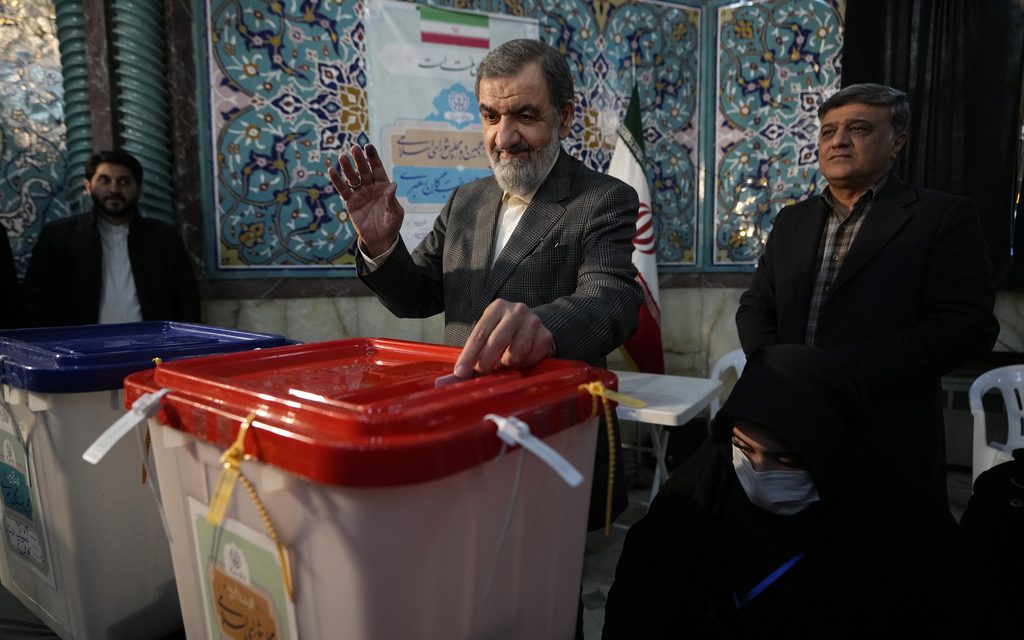
In Tehran, Iran, during the parliamentary and Assembly of Experts elections on March 1, 2024, former Revolutionary Guard commander Mohsen Rezaei cast his vote. Meanwhile, US President Trump discussed a shift in strategy concerning Iran. A week prior, Trump considered major military operations against Iran. However, in an interview with Axios, he indicated a more subdued approach focused on economic pressure. Trump said, “We are low keying it,” emphasizing economic challenges in Iran rather than military action. When asked about the situation, he likened it to “a chess game,” suggesting a belief in eventual resolution.
Trump’s comments reflect a retreat from bold declarations to more open-ended statements. Unlike previous claims about military deadlines or the reopening of the Strait of Hormuz, these new assertions cannot be easily disproved. Tehran, however, did not pause for US strategies to unfold. Mohammad Bagher Zolghadr, then the secretary of Iran’s Supreme National Security Council, outlined six conditions for the US to meet before reconsidering the reopening of the Strait. These include ending US “threats” and “insults,” halting attacks on Iran-aligned groups in several regions, lifting the US naval blockade, compensating for two “imposed wars,” lifting sanctions, and releasing Iran’s frozen assets unconditionally.
Iran’s approach turns negotiations around Hormuz into broader political settlement talks. The United Arab Emirates accused Iran of firing a missile at a tanker in the strait, complicating matters further. Oman, involved in mediating some shipping talks with Iran, condemned the incident, fearing it could disrupt its efforts. Iranian Foreign Minister Abbas Araghchi denied ongoing US-Iran negotiations, contrary to Trump’s claim of “very good discussions.”
A leadership shift emerged in Iran when reports surfaced about Mohsen Rezaei possibly replacing Zolghadr. Though initially denied, the change became official, with Rezaei holding dual key positions. This shift indicates internal struggles within Iran’s governance structure. Rezaei, a co-founder of the Islamic Revolutionary Guard Corps who served during the Iran-Iraq War, now heads the Supreme National Security Council. Iran’s move indicates a potential alignment of its security and foreign policy under a hard-line figure.
This demonstrates that while the US relies on time and economic strategies, Iran increases its demands and places a former Revolutionary Guard commander at the helm of security policy. The critical question remains who in Tehran will negotiate and what terms they will consider. As these dynamics play out, the geopolitical landscape around US-Iran relations remains complex and evolving.
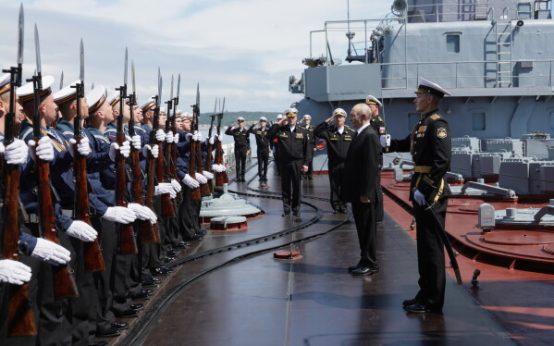 Putin Warns of Retaliation Over Western Seizures of Ships
 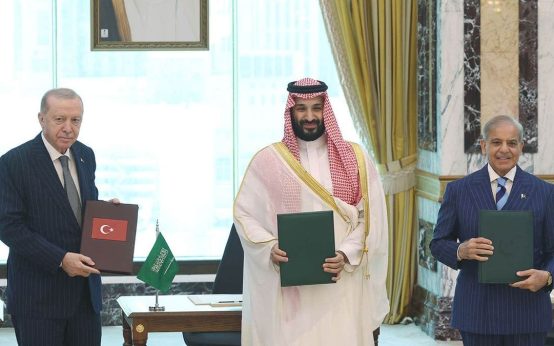 Saudi Arabia, Turkey, and Pakistan Sign New Defense Pact
 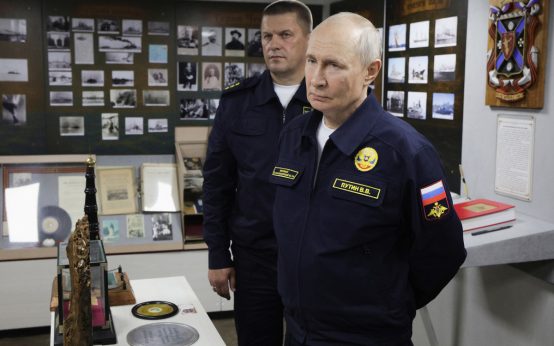 NATO’s Strategic Moves in the Indo-Pacific and Russia’s Response
  ICE Agent Gun Incident in Virginia Sparks Debate
  Trump Secures Release of Marine Veteran from Russia
  Berlin Experiences Partial Solar Eclipse