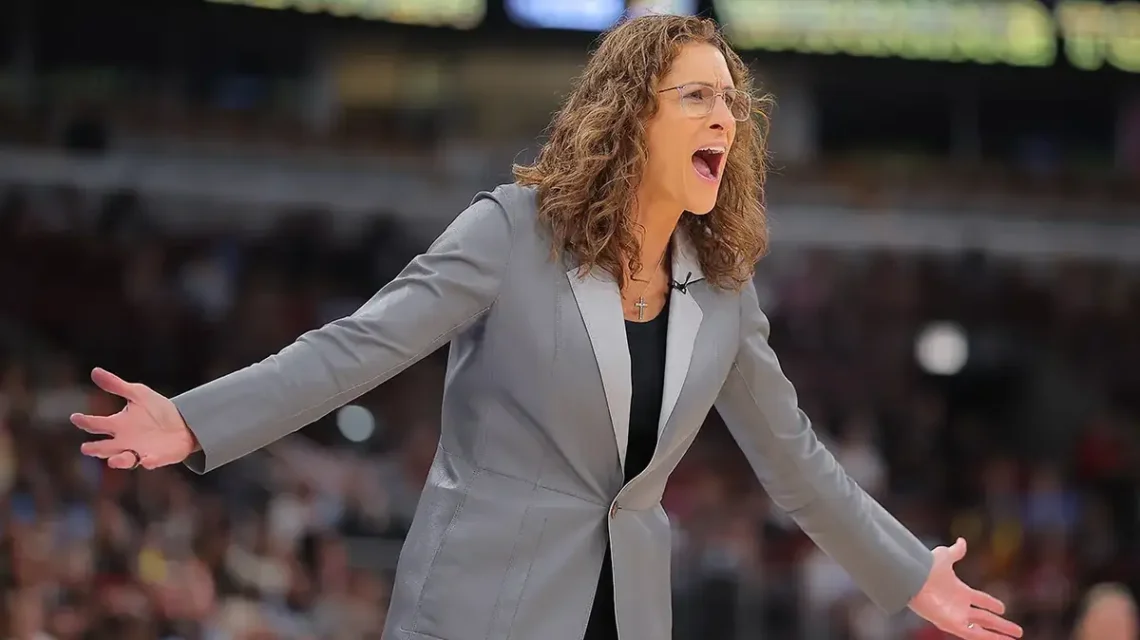
Fever head coach Stephanie White began her pregame press conference Tuesday before Indiana’s game against the New York Liberty with a strong statement. She talked about the “hate,” “fear mongering,” and “divisiveness” she felt were threatening the WNBA.
White’s statement included explicit language and ended with her leaving the room before answering questions. This drew praise from many ESPN analysts and reporters, who described her remarks as “passionate,” “important,” “impassioned,” and “scathing.” ESPN analysts commended her for vulnerability and committing to love, while suggesting her critics might be “fueled by hatred.”
Earlier criticism focused on White’s response to a flagrant foul by DiJonai Carrington on Fever guard Sophie Cunningham. Many felt White defended Carrington more than her own player. White later explained she hadn’t seen the play in real time and changed her assessment after viewing the replay.
White emphasized unity, stating, “The hate, the fear mongering, the divisiveness… will not win.” She borrowed Michelle Obama’s line, “when they go low, we go high,” adding, “love,” “grace,” “humility,” and “kindness” would prevail. Then, paradoxically, she said, “Everybody else can go to hell.”
The media reaction was noteworthy. Outlets consistently framed White’s statement as powerful and emotional. ESPN analysts viewed her as under “immense pressure,” praising her “impassioned plea” to focus on basketball and love. This charitable interpretation portrayed White as courageous.
During ESPN’s coverage, analysts questioned whether White’s critics truly understood her coaching performance. They accused some of being “fueled by hatred,” without offering evidence.
ESPN did more than report on White’s claims; it adopted them in its coverage. Analysts didn’t challenge her assertions about divisiveness or fear mongering, treating them as true without question. Holly Rowe characterized the backlash against White as “online vitriol and harassment.” Rebecca Lobo commented her “heart breaks” for those experiencing harassment, prompting agreement from her co-host Ryan Ruocco.
Criticism isn’t harassment. Wanting a coach fired, even if uninformed, isn’t evidence of trying to “hijack” a league. The WNBA entering typical sports discourse means fans will criticize coaches and overreact to press conferences.
There was also a clear desire to focus on the game itself. While the WNBA has often highlighted non-basketball issues, there seemed a shift to prioritize the sport. White and others stressed the importance of returning to basketball.
White’s message was about defending herself, her players, and combating perceived unfair treatment. ESPN analysts supported her narrative, while blurring criticism with hatred diverted from the real discussion. ESPN and its media allies validated White’s remarks, adding emotional weight to her prepared statement.
 Nick Saban’s Comments Raise Questions Amid College Sports Chaos
  Challenges in College Athletics: NIL Deals and Compensation
  Brock Purdy Leads 49ers with Stellar Performance
  The Knicks Face Decisions as Player Contract Talks Remain Unresolved
  Pittsburgh Penguins Achieve Historic Road Win Against Flyers
  Sonny Gray’s Performance and Reflections on 2026 Season