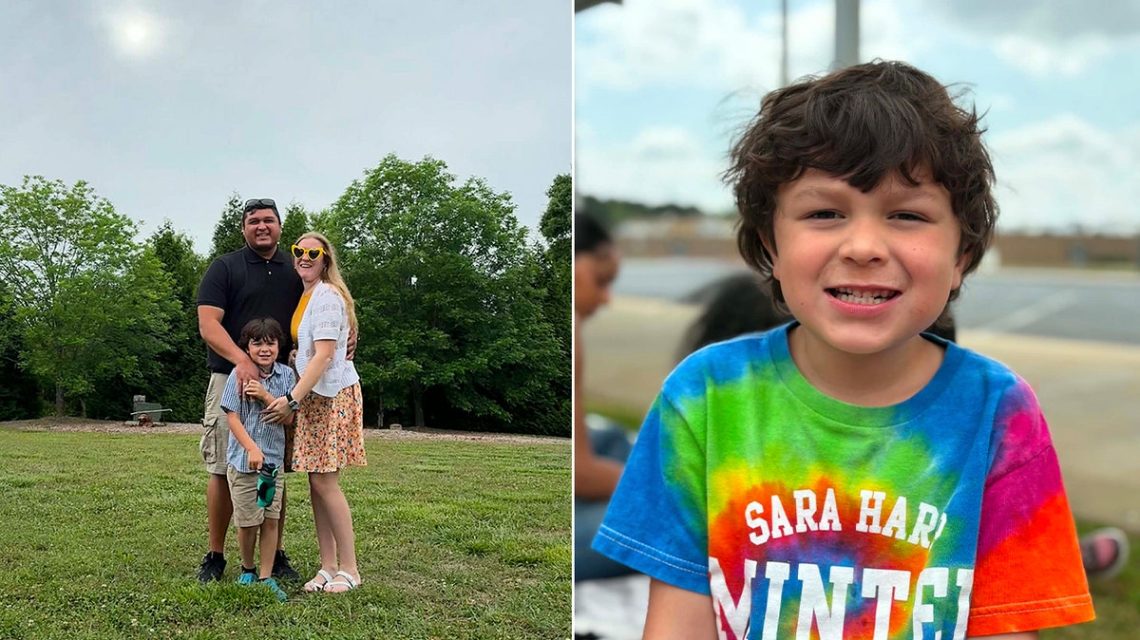
Parents of a Georgia first-grader with autism have raised concerns following their son’s suspension for biting his sandwich into a gun shape and pointing it at a classmate. They argue the school’s disciplinary approach overlooks his developmental disabilities.
John Medina, a 6-year-old student at Sarah Harp Elementary School in Fayette County, was suspended last March. John, diagnosed with level 1 autism at age 4 and ADHD later, faces challenges in understanding social norms, according to his parents.
Kristin and Juan “Ricky” Medina, John’s parents, discussed the issue with Fox News Digital, noting John’s academic proficiency but also highlighting frequent disciplinary actions totaling roughly 15 suspensions and over two dozen incidents since 2023. Though some incidents warranted actions, others seemed harmless, such as hunting drawings and hand-gun gestures, yet attracted scrutiny from the school.
“He refers to himself as a ‘bad kid’ due to peer and school interactions,” explained Kristin Medina.
Initially shocked by the sandwich incident suspension, Kristin questioned the school’s “strike” system, where minor actions may lead to suspension. Ricky expressed similar sentiments.
While physical incidents, like pushing another student and hitting with a branch, involved John, many flagged actions were termed harmless by his parents. Standard childhood behaviors, such as depicting a pilgrim hunting a turkey, attracted intense scrutiny, despite weapon topics being avoided at home.
The Medinas emphasized traditional punishments are ineffective for John due to his autism, potentially encouraging escape from school by verbalizing “gun” during tough days. Kristin suggested utilizing incidents as teachable moments.
Initially, the school resisted accommodation adjustments, denying an Individualized Education Program (IEP) for John citing academic advancement and unrecognized autism. Following additional evaluations and numerous suspensions, his IEP was approved.
John, hesitant about attending school due to fear of ridicule, struggles with self-esteem. His parents hope for increased confidence, better friendships, and avoidance of negative singling out.
John finished the last school year positively, reading at a third-grade level, and narrowly missed eligibility for the gifted program. The school eased suspensions after the Medinas secured Donna Reynolds, a special education advocate, for support during meetings.
Currently, John operates on a behavioral plan, aided during unstructured times like lunch, recess, and PE, succeeding in calmer classroom settings.
Ricky expressed, “I wish for less severe disciplinary measures like suspensions and emphasize learning from experiences, not merely focusing on grave issues.” The school district suggested reviewing John’s full disciplinary records and context instead of isolated incidents.
 Families Challenge Trump’s Ban on Medical Care for Transgender Youth
  Coping with Dietary Restrictions at Social Events
  Addressing Concerns Over Health Decisions for Young Children
  Expanded Recall of Bettergoods Brand Lemon Alfredo Fettuccine Due to Listeria Concerns
  Reopened Investigation Into Education Candidate
  FDA Closes Investigation on Cyclosporiasis Outbreak