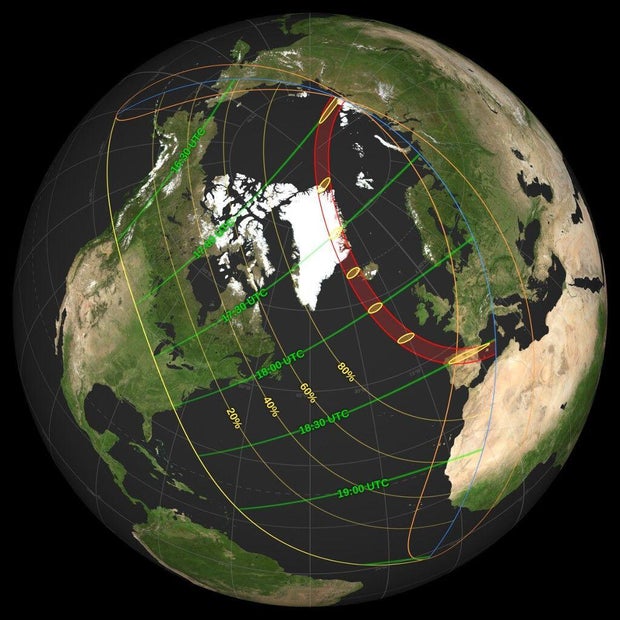
The 2026 total solar eclipse will draw the attention of sky watchers across the Northern Hemisphere on August 12. This celestial event holds significant interest for many, as it is the year’s only total eclipse.
Understanding a Solar Eclipse
In a solar eclipse, the moon moves in front of the sun, creating a shadow on Earth. Although such eclipses occur roughly every 18 months globally, specific locations might experience them only once in several centuries.
Viewing Locations
The path of totality, where the eclipse is fully visible, crosses northern Greenland. However, this area is sparsely populated. Western Iceland and northern Spain provide better viewing opportunities, with Spain witnessing its first total solar eclipse since 1905.
A NASA animation outlines the eclipse’s path and timings but requires browser support for video playback.
Partial Eclipse Zones
A partial eclipse will be visible across wider regions. An estimated 230 million people, including residents of major cities like Madrid, London, and Paris, will see around 90% totality based on data from Columbia University’s Center for International Earth Science Information Network.
In North America, Fairbanks, Alaska offers the best chance for viewing partial eclipse as it reaches 37% totality. Cities such as Boston and New York City will experience 16% and 9% totality, respectively.
Timing of the Eclipse
The eclipse will last about an hour and 45 minutes from start to finish. It begins at 17:00 UTC (1 p.m. Eastern time) in northern Russia. Greenland sees totality by 1:30 p.m. ET, while Iceland follows at 1:45 p.m. ET, with peak totality at 5:48 p.m. local time in Reykjavík.
As it crosses the Atlantic, the U.K.’s totality peaks in London at 2:13 p.m. ET. Northern Spain experiences maximum totality at 2:30 p.m. ET, concluding by 2:45 p.m. ET.
In North America, partial eclipse peaks in Toronto at 1:40 p.m. and New York City at 1:54 p.m. local time. In Fairbanks, Alaska, the peak occurs at 8:27 a.m. local time.
Safety Precautions
Viewing a solar eclipse requires proper safety measures. If you are in totality’s path, totality lasts around two minutes. Solar eclipse glasses are necessary for safe viewing, preventing retinal damage. Remove glasses during totality only. Partial eclipse viewers should keep their glasses on continuously.
Future Eclipses
Americans interested in future eclipses will need patience. The next total solar eclipse over the U.S. occurs in 2044, visible only in Montana, North Dakota, and South Dakota. The 2045 eclipse spans many states, including Northern California to Florida. Cities such as Reno, Little Rock, and Orlando can experience totality.
The 2052 eclipse crosses Southeastern states like Florida and Georgia. Northeastern U.S. residents await totality until May 1, 2079.
Viewing the Event Live
CBS News offers live streaming coverage of the 2026 eclipse starting at 2 p.m. ET, featuring Rob Marciano in Mallorca, Spain. Coverage is accessible on CBS News platforms.
 NASA Collaborates with Boeing to Launch Unpiloted Starliner Test
  NASA’s New Space Telescope Launch: A Breakthrough in Cosmic Exploration
  Trump’s Call with ISS Astronauts and Honors at NASA
 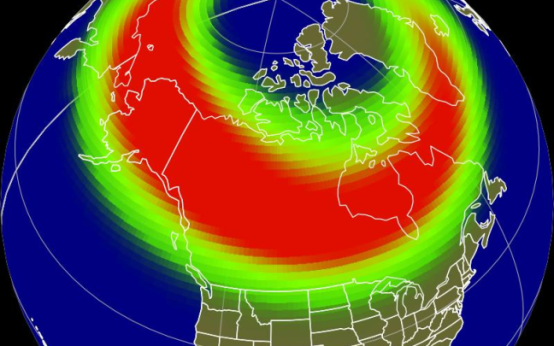 Anticipated Northern Lights Due to Solar Activity
  NASA’s Nancy Grace Roman Telescope Prepares for Launch
 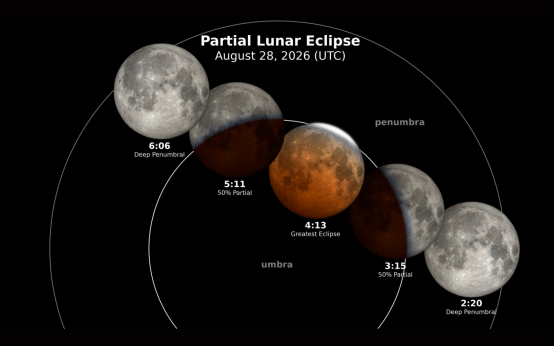 Rare Deep Partial Lunar Eclipse Visible Across the U.S.