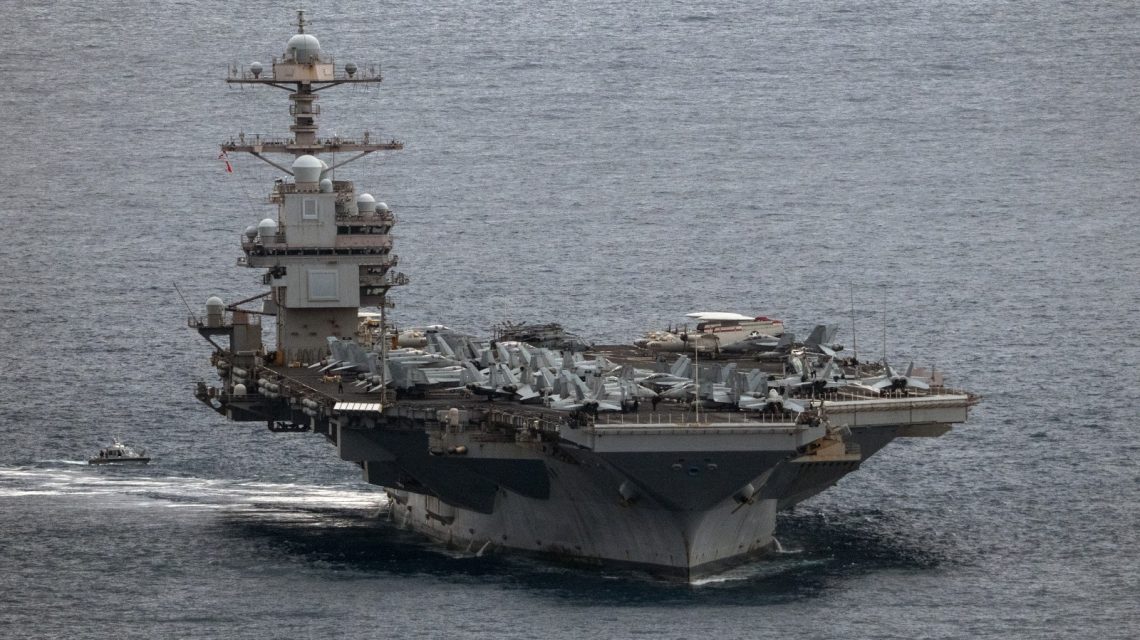
President Donald Trump is pushing for modifications on the U.S. Navy’s newest aircraft carriers. Experts and contractors warn these changes could escalate costs, delay construction, and reverse years of design work.
Proposed Modifications
Trump signed a memorandum requesting the Pentagon and Navy replace the Electromagnetic Aircraft Launch System (EMALS) and Advanced Weapons Elevators on the USS Doris Miller with steam catapults and hydraulic systems. The USS Doris Miller is part of the Ford-class carriers, destined to succeed the Nimitz-class in upcoming decades.
Concerns rose when it was reported that Navy officials are considering relocating the command tower on Ford-class carriers. Bryan Clark, a defense analyst at Hudson Institute, calls such changes a “major redesign” that would be “very disruptive.” The Pentagon and White House have not commented.
Navy Design Strategy
The island on Ford-class carriers was positioned at the rear for enhanced operational efficiency.
This placement maximizes aircraft parking space, boosts launch efficiency, reduces landing turbulence, and enhances safety. A study during Trump’s first term concluded moving the island could cost billions and cause significant delays.
The Ford-class fleet includes the USS Gerald R. Ford, USS John F. Kennedy, USS Enterprise, and USS Doris Miller.
Steam Catapult Debate
Trump has long criticized EMALS as overcomplicated compared to steam catapults. Despite this, the Navy claims EMALS allows higher launch rates and fewer personnel per launch. EMALS has reportedly cut manpower from a dozen sailors to two on the USS Gerald R. Ford. The electromagnetic system is also easier to maintain and space-efficient. Nations like China and France are also adopting this technology on their carriers.
Risks of Changing Plans
General Atomics, which manufactures EMALS, warns addressing the USS Doris Miller plans would pose “significant cost, schedule, and integration risks.” The company notes that production for the vessel’s launch systems is about halfway done, with a $1.2 billion contract signed in 2023.
Amending finalized designs risks large-scale disruptions, according to Clark. The Navy is already dealing with shipbuilding delays and maintenance issues, exacerbated by increased carrier utilization and concerns over prolonged deployments.
Critics Express Concerns
Some analysts question the necessity of these proposed changes. Todd Harrison from the American Enterprise Institute calls them “highly unusual and disruptive.” Senator Mark Kelly opposes changes to systems Navy engineers didn’t request. Kelly, with extensive aviation experience, argues redesigning in-progress ships would “probably cost billions.” Critics warn modifications could thwart modernization goals achieved through years of Navy efforts.
 Contentious Race in Pennsylvania’s 10th District Heats Up
  Trump’s Discontent Over Nobel Peace Prize Decisions
  Trump Urges Replacement of Zelensky Amid Rising Tensions
  Supporting Second Chances: The Clean Slate and Fresh Start Acts
  Judicial Watch Criticizes FBI Over Delayed Document Release in Trump Assassination Investigation
  Security Crackdown in New Delhi Amid Protests Against Voter List Revision