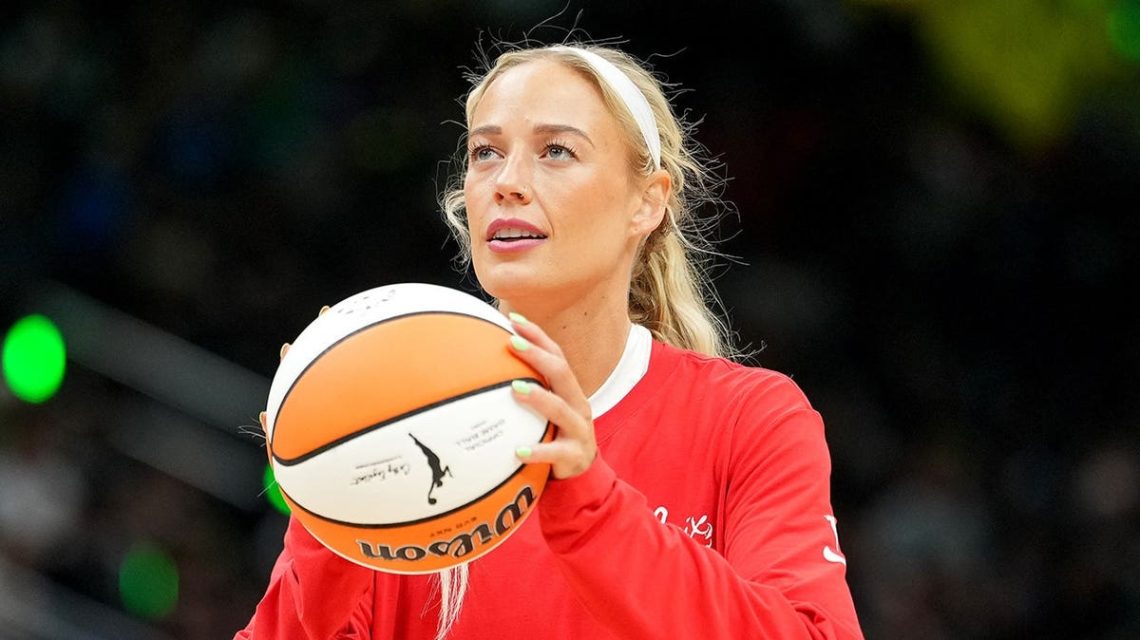
Sophie Cunningham voiced a belief many women have held for years—women’s sports should be for women. Yet, her outspoken stance has met with controversy. Women have long been encouraged to speak up against unfairness. But when Cunningham expressed her view, she faced backlash.
This issue transcends basketball. Cunningham declared publicly what many women discuss in private. They can support transgender rights with dignity and respect while believing women’s sports should be determined by biological sex. Generations of women fought to have their voices heard. Why, then, in the arena of their own sports, do some hesitate to speak?
Women’s sports exist due to biological differences in competition. The separation into gender-specific teams, records, and scholarships wasn’t coincidental. It was intentional. In sports, choices are made. Some make the team, while others don’t. Scholarships go to some; others miss out. This categorization impacts everyone involved.
Cunningham’s stance is not isolated. Over twenty states have laws restricting transgender participation in girls’ and women’s sports. The Supreme Court upheld such laws in Idaho and West Virginia, focusing eligibility based on biological sex. This legal backdrop isn’t merely Cunningham’s notion; it’s a position upheld by law in much of the nation.
However, when Cunningham echoed these sentiments, backlash ensued. Within the WNBA, she faced criticism. Protests have targeted the Indiana Fever, raising the profile of this issue within the league. The headlines capture the outrage, but the resultant silence is perhaps more significant.
Privately, many women have expressed concerns over these matters for years. They don’t wish to see transgender individuals mistreated but question why the biological distinctions foundational to women’s sports should not matter in eligibility. Publicly speaking out often remains dangerous.
Social pressure often polices speech. Witnessing attacks or ridicule for opinions deters open expression. The belief may remain unchanged, but the choice is often made to avoid public trouble. This self-censorship need not be enforced discreetly.
Teens, skilled at reading social cues, quickly discern which views are celebrated or condemned and the consequences of sharing an unpopular stance. This environment doesn’t empower; it teaches discretion in expressing one’s views.
Feminism challenged women’s silence in the past, advocating they didn’t need to remain quiet for others’ sake. Yet, discussions about women’s sports sometimes see women reverting to silence out of politeness, despite disagreements or questions regarding inclusion and biological sex in athletics.
Indiana Fever’s Sophie Cunningham wasn’t deterred by the controversy following her comments. Despite criticism, she didn’t retract her statements. Disagreement with her stance is valid, yet the reaction she faced helps illuminate why others choose silence. Women fought long and hard for their voices. They shouldn’t resort to whispers in the domain of their sports.
 Lincoln-Way East Celebrates Jack Murphy’s Return
  San Francisco 49ers Face Controversies Despite Strong Start to Season
  Aleks Tatum Shines on Senior Night with Standout Performance
  High School Star Quentin Burrell Shines at Mount Carmel
  Gen Z’s Shift to Sports Betting as Investment and Its Impact on Social Security
  Elgin Lanes: A Bowling Alley Reborn