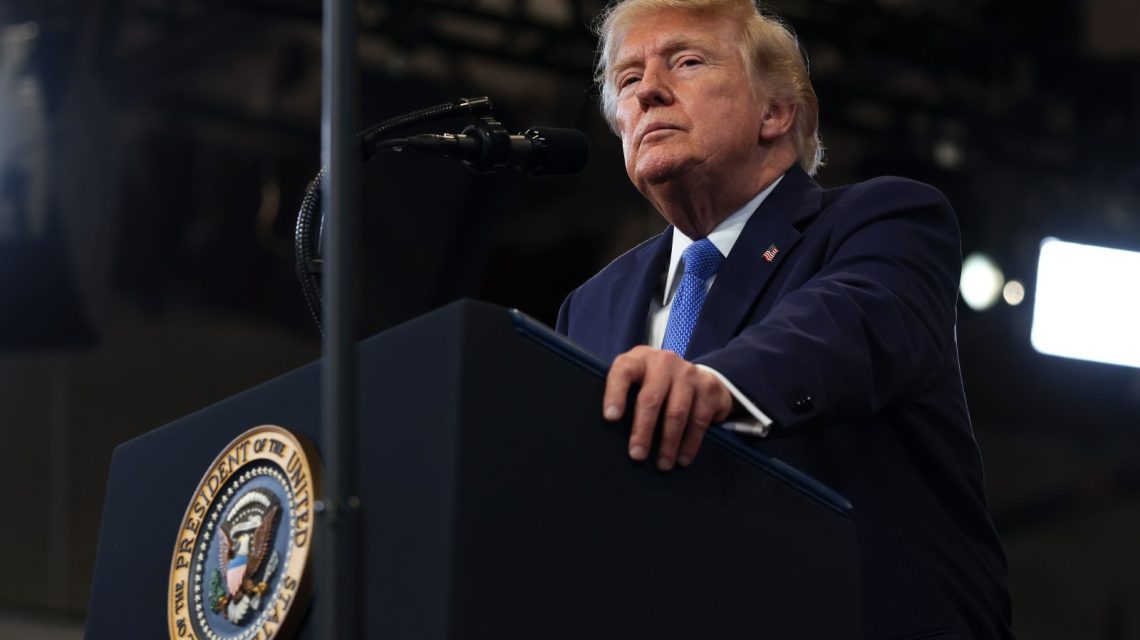
President Donald Trump is urging the Senate to eliminate the biannual clock changes in the United States. He is advocating for legislation that would establish daylight saving time as a year-round standard. In a social media post, Trump encouraged the Senate to pass the ‘NO MORE CHANGING THE CLOCKS ACT.’ He argues that having more daylight in the evening could help reduce crime, criticizing the current practice of adjusting clocks twice a year.
Legislative Process
The push comes after the House of Representatives passed the Sunshine Protection Act, under bill H.R. 139, with a bipartisan vote of 308-117 on July 14. This legislation aims to make daylight saving time permanent across most of the nation. On July 15, the bill was sent to the Senate and referred to the Senate Commerce, Science, and Transportation Committee.
The Senate, currently in recess, is set to return on September 14. To pass H.R. 139, it could be approved through unanimous consent if no senator objects. However, if objections arise, it typically requires 60 votes to bypass a filibuster and bring the bill to a vote.
Senate Opposition
Opposition exists among several senators. Senator Tom Cotton of Arkansas, a Republican, has expressed concerns about permanent daylight saving time. He warns that it would lead to darker mornings in winter for children and workers in some areas. In October 2025, Cotton spoke against the Sunshine Protection Act on the Senate floor.
Other senators opposing permanent daylight saving time include Republicans Ted Budd, Deb Fischer, Jerry Moran, Tim Sheehy, Dan Sullivan, Roger Wicker, Todd Young, and Democrats Lisa Blunt Rochester, Tammy Duckworth, Amy Klobuchar, Gary Peters, and Jacky Rosen, as reported by CBS News. Newsweek reached out to Cotton’s representatives for comments.
Timeline and Potential Impact
The version of H.R. 139 passed by the House does not have a delayed effective date. If the Senate passes it without amendments and President Trump signs it before November 1, it could prevent the scheduled return to standard time, making daylight saving time permanent. This gives the Senate 48 days after reconvening to act. Any amendments would complicate the timeline, requiring further consideration in the House.
If the Senate fails to pass the legislation promptly, the current law remains active, and clocks will be set back by one hour on November 1.
Trump’s Advocacy
Trump has consistently pushed for the end of the biannual clock change. In April 2025, he encouraged Congress to maintain ‘more Daylight at the end of a day,’ highlighting its popularity among the public. The House vote provides a renewed opportunity, potentially offering Trump a popular achievement in anticipation of the midterms. Trump has also suggested that the Sunshine Protection Act could help in reducing crime rates, such as murders and robberies.
The proposal has sparked debates over whether daylight saving time should become the permanent standard. Supporters favor more evening light, while critics like Cotton are concerned about darker winter mornings.
The Senate has shown the capacity to move swiftly on this matter. In March 2022, senators approved an earlier version of the Sunshine Protection Act through unanimous consent. While it stalled in the House, this time, the House has already acted. The key question is whether the Senate will proceed before the next scheduled clock change.
Understanding Daylight Savings Time
Daylight saving time begins on the second Sunday in March in most of the U.S., with clocks advancing an hour at 2 a.m. It shifts daylight from morning to evening. DST ends on the first Sunday in November, reverting clocks back by one hour to standard time. Federal law oversees this practice, though states and territories may choose not to participate. For instance, Hawaii and most parts of Arizona do not observe daylight saving time, except the Navajo Nation in Arizona. Similarly, U.S. territories like Puerto Rico, Guam, and the U.S. Virgin Islands stay on standard time year-round.
 Minneapolis Council Member Criticized for Concerns Over Autonomous Vehicles
  Iowa Senate Candidates Face Scrutiny Over Voting Records
  Alito Discusses the Impact of Supreme Court Decisions
  Reopened Investigation Into Education Candidate
  Federal Case Dismissed: Repercussions for Noncitizen Voting Charges
  Analyzing Spending in the Most Expensive Election Cycle