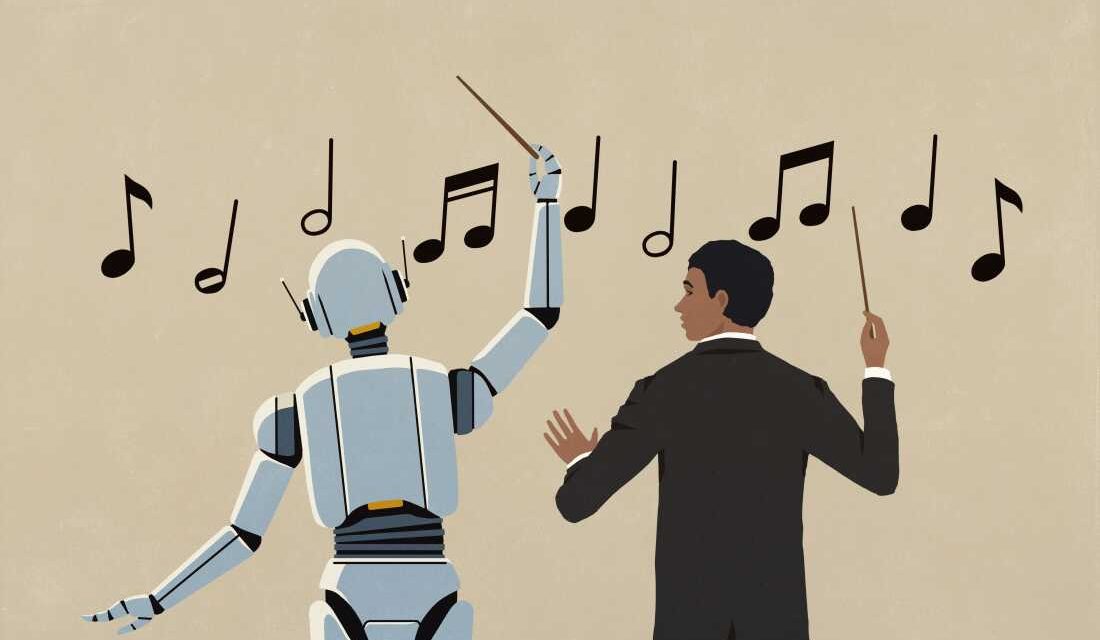
The music industry is facing a significant transformation with the rise of generative AI. Traditionally, the business of music operated on a straightforward principle: using someone else’s work required permission and compensation. This system has supported a vast economy by identifying who owns and contributes to a piece of music, ensuring rightful compensation.
Generative AI now challenges this model. AI platforms like Suno and Udio enable users to create complete songs from simple text prompts. These tools, popular with everyone from hobbyists to Grammy winners, are central to the rise of AI-generated music. Suno, highlighted by its CEO Mikey Shulman in February, has reached over two million paid subscribers.
The core economic question is: when AI learns from millions of songs, who deserves payment for that learning? This issue is increasingly central to a legal and financial showdown within the music sector, fueled by AI music encroaching on the income of human musicians.
The Challenge of AI Training Data
The complexity of the debate partly stems from uncertainty over the materials used to train AI models. This opacity complicates efforts by artists and researchers to ascertain what these systems have learned from. Journalist Alex Reisner, through his ‘AI Watchdog’ project, aids musicians in identifying their work within AI training datasets.
“I think it’s tough to discuss the technology’s potential and risks without more information on its training,” says Reisner.
Transparency has been key. Suno has acknowledged in court filings its training involved accessible online music files of reasonable quality. The critical question, beyond fair use arguments, concerns compensation—who should be compensated for value created by AI using original musical rights.
Economic Implications of AI-Generated Music
AI-generated music is poised to alter the economics of music streaming significantly. Streaming platforms divide revenue across vast song catalogs, presenting a challenge as AI enables massive-scale music creation. Krystle Delgado, an entertainment lawyer, highlights this:
“Everyone’s music, AI or human-made, ends up in the same pool, which then gets divided,” she explains. “AI music risks overwhelming and undercutting human-created music.”
Delgado points to the growing need for copyright enforcement and rules to ensure AI models obtain permission and property compensation for using existing works.
Legal Battles and Copyright
A series of lawsuits could define the rights to compensation when AI utilizes music for training. In June 2024, the Recording Industry Association of America (RIAA) initiated copyright infringement lawsuits against Suno and Udio. These cases, involving major labels like Sony, Universal, and Warner, seek clarity on training models using copyrighted music.
Recent settlements have moved toward requiring licenses for model training music. Yet, the debate extends beyond record labels. The American Federation of Musicians has sued Universal and Warner, contesting the use of recordings by AI without due compensation.
Fair Use and AI Training
Suno and Udio argue their data utilization qualifies as fair use, which allows limited use of copyrighted work without permission for purposes like criticism and research. Krystle Delgado co-leads a class action against these companies, arguing against the fair use claim.
“What they did amounts to mass-scale piracy,” she contends.
The question of who gains financially remains unresolved. Music advocacy figure Tiffany Red emphasizes the need for creators to benefit from AI agreements, questioning if creators will see returns from their contributions.
The music industry is again at the forefront of addressing technological impact on ownership and value. As AI redefines learning from human creativity, the answer to who benefits will echo beyond music.
Alex Reisner asserts that music’s current challenges may soon affect other industries, echoing sentiments by songwriter PJ Frantz that AI music’s future will be shaped by listener preferences, potentially prompting industry-wide shifts toward fairer artist support.
 AI’s Influence on Critical Thinking in Knowledge Work
  Virginia’s Shifting Political Landscape Ahead of Midterms Highlights Data Center Debate
  Trump Forms Task Force to Address Artificial Intelligence
  Florida TikTok Creator Arrested Over Privacy Breach
  AI Safety Debate Heats Up as Tech Leaders Call for Regulation
  The Growing Threat of AI-Assisted Scams and the Call for Legal Protections