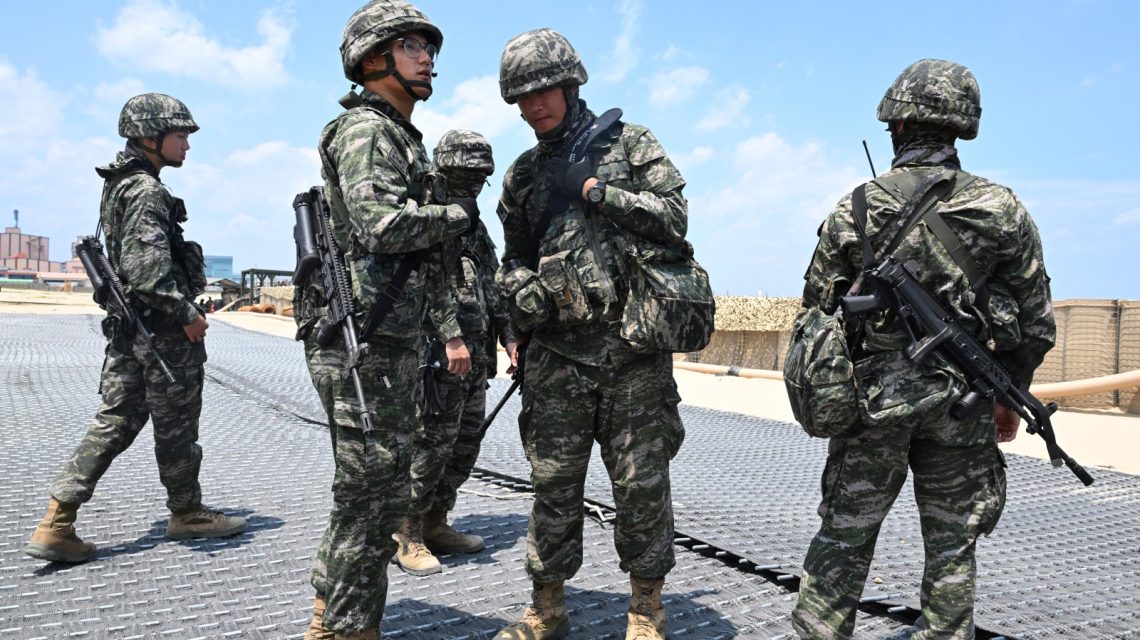
Donald Trump has announced a reduction in military drills with South Korea, which analysts suggest may lead to renewed negotiations with North Korea. This could present an opportunity for Washington to discuss limits on Pyongyang’s nuclear arsenal.
The U.S. President stated he directed Defense Secretary Pete Hegseth to scale back the annual U.S.-South Korea military exercises. He cited his favorable relationship with North Korean leader Kim Jong Un and Seoul’s minimal involvement in the Iran conflict as reasons for this decision. Despite these instructions, the latest exercises commenced as scheduled.
Denuclearization Talks and Pyongyang’s Arsenal
During his first term, Trump held three meetings with Kim for denuclearization talks, which did not yield successful outcomes. Since then, North Korea has expanded its nuclear capabilities. According to a report from June 2026 by a Stockholm-based think tank, Pyongyang possesses approximately 60 nuclear weapons and has sufficient fissile material for at least 30 more. This month, North Korea conducted ballistic missile tests, which are prohibited by the United Nations.
Political Reactions and Strategic Implications
Trump’s announcement on Truth Social was met with concern from both Democrats and Republicans, as well as from South Korean authorities. There are fears that reducing military drills could embolden Pyongyang and cast doubt on Washington’s reliability as an ally amid a complex geopolitical climate.
Evan Sankey, a policy analyst from the Cato Institute, pointed out the potential for renewed U.S.-North Korea talks. While Kim Jong Un is unlikely to relinquish his nuclear weapons, discussions could lead to limitations on his missile arsenal and fissile material stockpile. Jennifer Kavanagh, director of military analysis at Defense Priorities, viewed Trump’s announcement as necessary and strategically aligned with U.S. interests.
U.S. and South Korea Strategic Partnership
South Korea hosts Camp Humphreys, the largest American military installation abroad, and regularly conducts joint military exercises with the U.S. The most recent, named Ulchi Freedom Shield, began as planned. Reuters reported these drills prioritize addressing North Korean capabilities, including countering drones, GPS disruptions, and cyberattacks. The exercises also involved at least 18,000 South Korean troops.
North Korea criticized the exercises, labeling them a rehearsal for aggressive war. Trump’s comments about the drills being hostile to North Korea prompted varied reactions. Senator Jack Reed described the reduction as flattering Kim Jong Un, while Republican Senator Thom Tillis warned it could empower North Korean troops to support Russia’s efforts.
Analyzing the Regional Impact
South Korean media expressed concerns about the weakening of the Korea-U.S. alliance. According to Sankey, the current situation echoes Trump’s past cancellation of drills in 2018 and 2019 during talks with Kim Jong Un. While no new U.S.-DPRK discussions are confirmed, reducing these exercises might signal future diplomatic engagement.
Kavanagh argued there is little evidence that U.S.-South Korea military exercises deter North Korean or Chinese aggression, asserting they might accelerate military buildup and activities from these nations.
South Korea’s Push for Greater Control
The joint exercises have added pressure on U.S. resources amid the ongoing conflict in Iran. Kavanagh suggested Washington should transfer responsibility for South Korean security entirely to Seoul. South Korea’s President Lee Jae Myung reiterated the importance of completing the transfer of wartime operational control from the U.S. to Seoul and urged expedited acquisition of nuclear-powered submarines.
Sankey noted that negotiations between Washington and Pyongyang could potentially lead to a formal declaration ending the Korean War, which ended in an armistice in 1953. Achieving this would align with U.S. interests and justify diplomatic efforts.
 Trump Challenges Allegations in Alaska Senate Primary Race
  House Bill Aims to Help First-Time Homebuyers with Student Loan Debt
 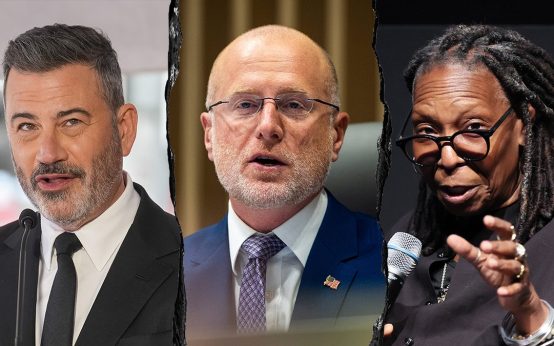 Disney Challenges FCC on ABC License Renewals
  Trump Threatens Actions Amid Middle East Tensions
  The Establishment of Trumpism in American Politics
  Rethinking Immigration Policies for the Future