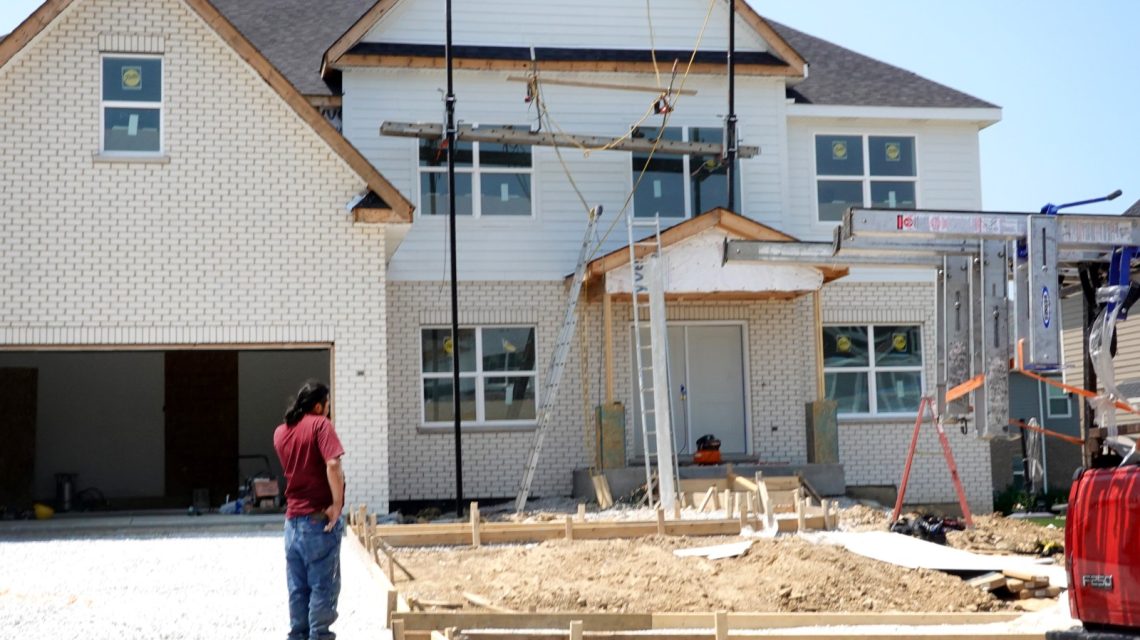
A new bill presented in the House addresses significant hurdles young Americans encounter when pursuing homeownership: student loan debt and housing affordability. Representative Jeff Crank, a Republican from Colorado, introduced the First Time Homebuyer Debt Reduction Act in the House on August 13. Currently, the bill is under consideration by the House Financial Services Committee.
Key Features of the Bill
If passed, the bill would allow government-backed lenders like Fannie Mae and Freddie Mac to classify certain payments made toward a purchaser’s federal student loans as a financial concession when buying a newly built home as their main residence.
Builders, sellers, or other parties in a home sale could contribute up to $25,000 towards a buyer’s federal student loan debt. This contribution would be seen as a financial concession, not a sales concession. Any payment beyond $25,000 would then be treated as a sales concession.
This approach would treat student loan payments similarly to typical seller or builder incentives, making the home purchase more accessible. For instance, builders aiming to attract buyers might propose paying a portion of the buyer’s federal student loan debt.
Such financial help could improve a buyer’s debt-to-income ratio, a critical aspect in mortgage approval decisions, and reduce monthly debt obligations. As a result, some borrowers might qualify for larger mortgages.
The legislation would apply exclusively to newly constructed principal residence purchases. Its goal is to support young Americans facing challenges in buying a home while managing student loan debt.
Limitations Highlighted by Experts
Experts caution that the bill’s benefits may not be as extensive as they appear. According to Fenaba R. Addo, a public policy professor at the University of North Carolina-Chapel Hill, this bill mostly clarifies existing concession rules instead of offering direct financial advantages.
“This bill is more clarifying than beneficial for student debt borrowers given student debt can now be an explicit option that counts towards a seller’s concessions, meaning any amount directed to student debt comes out of what would have gone towards closing costs,” Addo said.
While the bill might seem beneficial for first-time home buyers, it essentially directs how a seller’s concessions can be allocated, without introducing new funds.
According to Addo, the legislation could aid specific borrower groups more effectively, such as those with high-interest student loans or borrowers whose debt-to-income ratio might otherwise disqualify them for a mortgage.
Next Steps for the Bill
The proposed legislation faces an extensive path to passage. Currently referred to the House Financial Services Committee, it requires committee approval, subsequent passage in both congressional chambers, and the president’s signature to become law.
GovTrack, a congressional tracking website, estimates the bill has only about a two percent chance of enactment.
 Trump Challenges Allegations in Alaska Senate Primary Race
  Trump’s Scaling Back of Military Drills with South Korea Sparks Debate
  Disney Challenges FCC on ABC License Renewals
  Trump Threatens Actions Amid Middle East Tensions
  The Establishment of Trumpism in American Politics
  Rethinking Immigration Policies for the Future