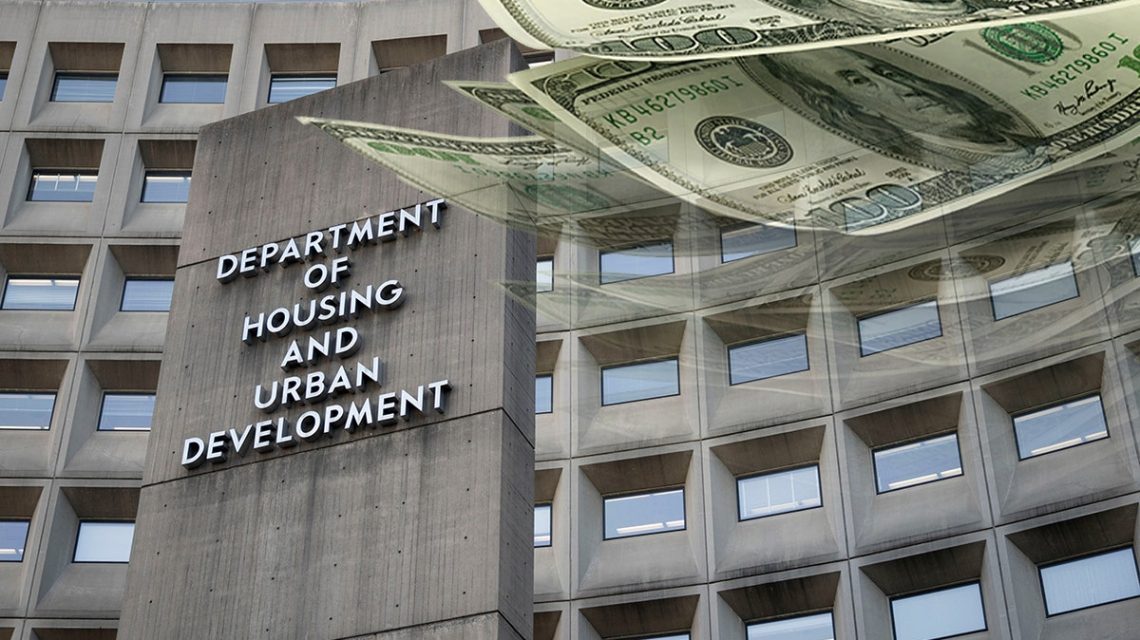
The longstanding idea of owning a home as part of the American dream has become increasingly difficult to achieve over the past decade. This struggle persisted despite Washington investing billions in housing programs. A new analysis by Open The Books, a conservative watchdog group, highlights this issue.
Open The Books scrutinized home price and household income data across all 50 states over ten years, comparing it with federal housing expenditures. They discovered little correlation between increased spending by the Department of Housing and Urban Development (HUD) and closing the affordability gap.
Christopher Neefus, vice president of communications at Open The Books, remarked that efforts distant from potential home sites are less efficient. He emphasized that a single agency in Washington is ill-suited to provide a universal solution.
To assess the situation, the watchdog calculated state-by-state percentage growth in the Federal Housing Finance Agency home price index over the decade. They deducted the percentage growth in median household income, labeling the result as the ‘Affordability Gap.’
This measure quantifies how much quicker home prices increased compared to median household incomes. The analysis revealed that home prices rose faster than incomes in every state between 2015 and 2024, creating what Open The Books termed an ‘Affordability Gap.’
In 48 states, this gap reached double digits. In 17 states, home price growth surpassed income growth by over 50 percentage points.
In total, close to half a trillion dollars was allocated to states over ten years, with no significant impact on incomes keeping up with prices, according to Neefus. He suggested focusing on tackling regulatory obstacles, zoning restrictions, and local investments.
Furthermore, the watchdog explored whether increased federal spending led to better affordability outcomes. They identified roughly $460 billion in HUD spending across 18 programs related to housing affordability, availability, rent control, and homelessness between 2015 and 2024. Comparing state spending with its ‘Affordability Gap,’ the analysis found no linear relationship.
Responding to the report, HUD highlighted the Trump administration’s endeavors to reduce regulations, fight fraud, and promote state and local government decision-making in housing policy.
Under President Trump’s guidance, HUD aimed to deliver results and make housing more affordable for Americans ready to work for it. They pointed out efforts leading to uncovering $495 million in fraud, reducing cumbersome policies from the Biden era, and assisting over 1 million Americans in becoming homeowners.
The report emerges amidst worries that younger generations face tougher challenges attaining milestones linked to the American dream. Median household income nationwide rose 99.7% from 2000 to 2024, while single-family home prices soared 150.1%, according to a recent housing policy study. First-time homebuyer median age also reached 40.
Neefus underscored these patterns, noting that younger generations may see homeownership as increasingly unattainable compared to previous generations. He suggested that comprehending how long it takes to save for a significant down payment could explain why the American dream definition shifts for younger individuals.
Neefus concluded that the analysis indicates that top-down spending alone won’t revive the dream of homeownership.
Reporter Alec Schemmel covers politics for Fox News Digital. Originally from Charlotte, North Carolina, he now resides in the Washington D.C.-Baltimore Metro Area.
 Grieving Father Urges Action on Nationwide Database for Repeat Violent Offenders
  Texas Congressman Faces Scrutiny Over Campaign Spending
  The Challenge of Darline Graham’s Senate Race in South Carolina
 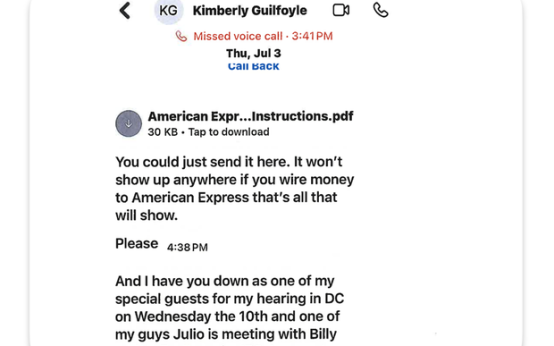 Allegations Surface Against Ambassador Kimberly Guilfoyle
  U.S. Restricts Microsoft on Foreign Worker Employment
  Controversial Past of Colorado’s GOP Gubernatorial Candidate