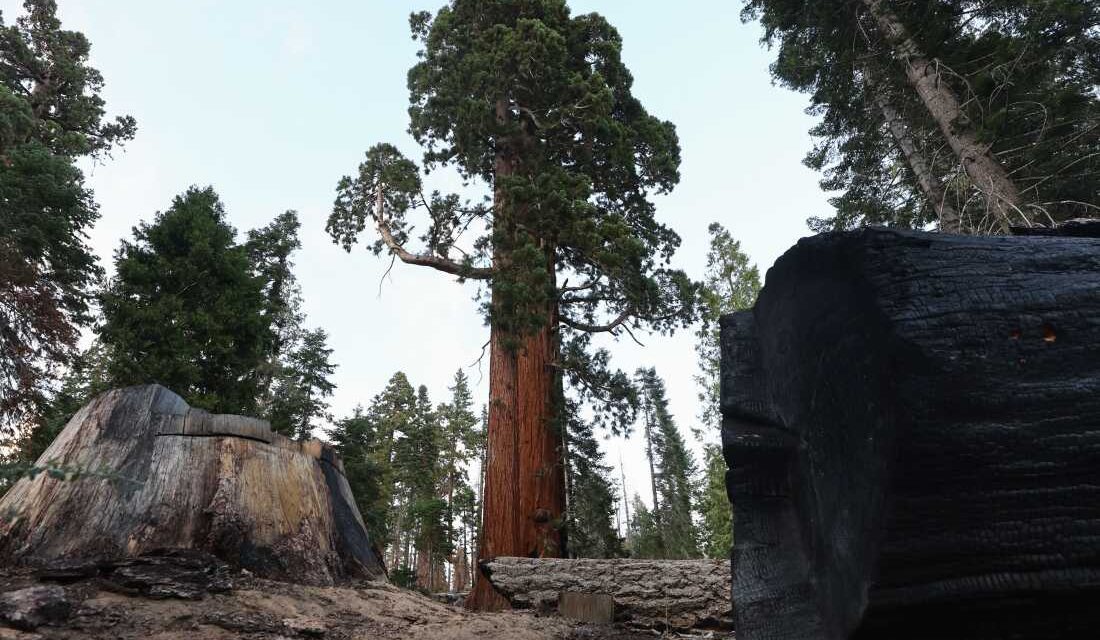
A towering giant sequoia, boasting a circumference of 70 feet, stands amidst smaller trees along the Trail of 100 Giants in Sequoia National Forest, California. This image, captured on August 25, 2022, highlights the lush landscape.
The Trump administration announced plans to roll back an environmental rule that currently restricts road construction, logging, and mining activities on vast public forest lands. Implemented in 2001 by the Clinton administration, the ‘roadless rule’ has been a contentious issue in U.S. debates over economic development and conservation.
Brooke Rollins, U.S. Department of Agriculture Secretary, emphasized in a statement that change is necessary. “Our forests can’t afford another decade of inaction,” Rollins stated. The goal is to enhance forest health and productivity by overturning the roadless rule.
Republican governors from Montana, Utah, and Wyoming praised the proposal. Utah Governor Spencer Cox remarked that abolishing the rule allows for tailored decisions addressing the needs of individual forests and communities. “We can protect the landscapes we treasure by actively managing them for the next generation,” he said.
Advocates of the roadless rule argue it has been pivotal in conserving American land. Drew Caputo, a senior attorney with Earthjustice, described it as the most critical land protection measure in recent decades.
While the Trump administration highlighted potential economic benefits, proponents of the rule emphasized its role in preventing economically inefficient timber sales that previously benefited private operations. Steve Ellis of Taxpayers for Common Sense noted that repealing the rule could exacerbate an existing $6 billion road maintenance backlog within the U.S. Forest Service.
This policy revision occurs against the backdrop of severe wildfires impacting Western states. The administration suggests that rescinding the rule could grant forest managers greater flexibility in preventing and combating fires.
Nick Smith from the American Forest Resource Council agreed that more roads could improve fire crews’ access to remote areas impacted by fires. However, Earthjustice’s Caputo cited research indicating that over 80% of wildland fires stem from human activity, suggesting that additional roads might increase fire risks.
Contributing factors such as climate change and drought conditions, exacerbated by high temperatures, play significant roles in fire risks. Public feedback on the proposed rollback will be open until September 21, 2026.
This move to dismantle the roadless rule aligns with other environmental deregulations by the Trump administration, including the weakening of the Endangered Species Act and permission for commercial fishing in national marine monuments.
 Challenge Looms as Three Will County Incumbents Seek Reelection
  Education Ballot Measures Address Culture-War Issues
  Debate Over SNAP Restrictions for Soda Purchases
  Republican Reflections on Iowa’s Upcoming Elections
  Texas Attorney General’s Campaign Contributions Tied to Legal Interests
  Michigan Senate Candidate Proposes AI Development Freeze