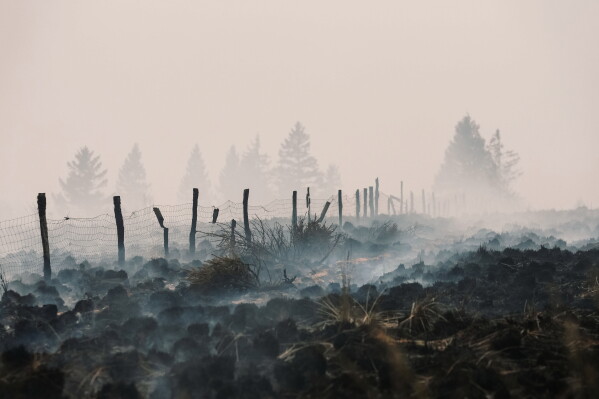
Recent wildfires across Europe have unveiled a dangerous threat beneath scorched landscapes: rusty bombs and mines from World War I and II. These explosives pose a risk to crews combating the fires and have detonated due to intense heat. Explosions have been reported in several countries, including France, Belgium, Germany, and the Netherlands, highlighting a perilous legacy from past conflicts.
Impact of Climate Change
Climate change is intensifying these dangers, according to Sarah Njeri, a peace and conflict scholar at London’s School of Oriental and African Studies. She explains that the continent’s previously stable climatic conditions helped keep these buried munitions dormant. Rising global temperatures are now uncovering and activating them. Fires ignite old munitions and expose them by burning away vegetation that conceals these devices.
This year’s wildfire season was fueled by substantial rainfall in January. This precipitation contributed to vegetation growth, which later became kindling during the hot summer months. With drought conditions, low humidity, and strong winds, fires easily thrived, damaging historical battlefields and setting off explosives. The World Weather Attribution group released a study highlighting these conditions.
Historical Legacy of Unexploded Weapons
In regions with known unexploded ordnance, fires have revealed caches of old ammunition. A severe wildfire in southwestern France uncovered suspected World War II-era armaments near Bordeaux. In Belgium’s Liege province, sporadic explosions occurred, prompting adaptations in emergency response protocols. While fire crews remained safe, a photo surfaced showing a firefighter handling a rusted bomb.
During World War II, booby traps and mines littered Belgium’s High Fens, resulting in civilian casualties post-war. Bernard Collard, a local historian, notes that munitions killed six civilians immediately following Germany’s 1945 surrender. He operates the Truschbaum Museum near Belgium’s border with Germany, which exhibits war relics.
The High Fens, a former battleground where Nazis and Allied troops clashed, currently smolders due to ongoing fires. The site recalls the Battle of the Bulge, along with two lesser-known conflicts along Elsenborn Ridge and in the Hurtgen Forest. These locations suffered substantial troop casualties during World War II.
Ongoing Discoveries and Efforts
As Bernard Collard scans old battlefields now converted into natural landscapes, he frequently discovers war remnants, including mortar shells and helmets. Collaborating with Belgian demining squads, he emphasizes responsible engagement with historical sites. Known as the “iron harvest,” annual agricultural activities in certain areas unearth numerous war leftovers, necessitating intervention from the Belgian Ministry of Defense.
The Belgian Explosive Ordnance Disposal and Destruction Service is highly engaged, handling more than 3,000 requests annually. They dispose of 200 to 250 tons of munitions tied to both world wars. Collard remains vigilant, acknowledging the persistent threat these buried devices pose.
Drought and Waterway Exposures
Drought conditions across Europe have further exposed old weapons. In Slovakia, drying rivers revealed naval mines, requiring police to conduct controlled demolitions. Similarly, Budapest’s Margaret Bridge in Hungary faced temporary closure due to the emergence of World War II-era bombs from riverbeds.
In Germany, receding water levels of the Rhine exposed a bomb from the same period. Christina Greene from the University of Arizona, who has collaborated on research concerning wildfire and explosive ordnance risks, underscores the recurring revelations of buried wartime threats due to climate change. Such discoveries reawaken historical conflicts and necessitate renewed attention and action.
Associated Press writers contributed from various locations, including The Hague, Brussels, Paris, Berlin, and Prague.
 Global Coordination Behind Anti-Israel Protests
  Addressing Challenges in Horizontal Escalation
  Pope Leo XIV Condemns Death Penalty Amid Planned Execution Livestream
  Hurricane Simon Strengthens to Category 4, Threatens Mexico’s Pacific Coast
  Tiger Attack Leads to Death of Man at Yorkshire Wildlife Park
  Riyadh Airport Strike: 12 Killed and Extensive Damage Reported