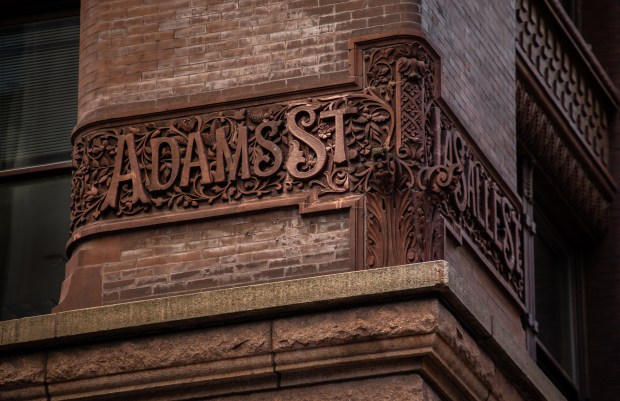
Brick is a defining element in Chicago’s architectural landscape. Since the devastating fire of 1871, bricks have been used extensively in the construction of worker’s cottages, bungalows, three- and six-flat buildings, and courtyard apartments, making them a staple of the city’s neighborhoods.
Architect Ludwig Mies van der Rohe, known for his expertise in modern glass and steel, employed bricks in the Promontory Apartments, his first high-rise in Hyde Park in 1949, showcasing the material’s versatility.
Brick is fundamental to architecture, serving as a building block of the earth, molded and baked for durability. Each unit is hand-sized, allowing for human connection in construction. Many iconic Chicago structures, like The Rookery, the Monadnock, and the Marquette Building, prominently feature brick.
Architect Frank Lloyd Wright preferred Roman brick, an elongated style that complemented his horizontal architectural designs, as seen in Hyde Park’s Robie House.
Brick offers no design guarantee. While the city has many uninspiring structures clad in brick, there are examples where thoughtful design and detailing elevate a building’s architectural value. Several notable brick-faced projects under construction or approval demonstrate this potential.
Recent Brick Projects
A 66-unit building at 1201 W. Kinzie St., designed by Dirk Denison Architects, is a five-story structure in the burgeoning Fulton Market District. Its straightforward design is enhanced by notched setbacks and potential quality finishes like glazed brick, well-crafted windows, and bronze detailing.
A new 59-unit block at 1728 N. Clybourn Ave., designed by Eckenhoff Saunders, features large windows reflecting the industrial past of the area. The building’s mass is broken up by balconies and varying brick colors that provide distinct identities to its sections.
Another attractive addition is a four-story building at 2237 W. Roscoe St. in Roscoe Village, designed by En Masse Architecture and Design with a+c architects. Its simple, weighty design is complemented by subtle design elements that connect the windows.
In Lincoln Park, Studio Dwell’s approved project at 2724 N. Lehmann Court replaces a three-flat with a five-story building, maintaining the neighborhood’s scale while increasing unit capacity to 19. The firm’s credibility ensures careful attention to design details.
At 2758 N. Mozart St. in Logan Square, Chicago Common Studio and Gansari & Associates designed a five-story building noted for a classical composition. Its sturdy appearance, highlighted by a masonry corner, contrasts with modern interior configurations, including two-story townhouses and retail space.
Finally, two compact transit-oriented structures at 1515 and 1607 W. 63rd St. in West Englewood, designed by Beehyyve L3C and Alligood Song, offer curved brick and glass facades, adding a contemporary flair to the neighborhood.
Architectural Legacy and Future
These projects illustrate a conservative design ethos but hold promise for quality architecture, a challenging achievement in today’s construction market. A nod to Chicago’s prominent architects like John Wellborn Root and Frank Lloyd Wright underscores the city’s rich architectural history.
Edward Keegan writes, broadcasts, and teaches on architectural subjects. His column is supported by a grant from former Tribune critic Blair Kamin, through Journalism Funding Partners.
 Florida Startup Develops AI Bot to Reduce Construction Dispute Costs
  Tuya Smart’s Doova Robot: Enhancing Senior Care at Home
  Growing Concerns Over AI in the Tech Community
  Challenges in Robot Food Delivery: A Day in Washington, D.C.
  Understanding Google’s New Gmail Verified Sender Program for Political Emails
  FAA Tests Elroy Air’s Chaparral Drone for Rural Delivery Solutions