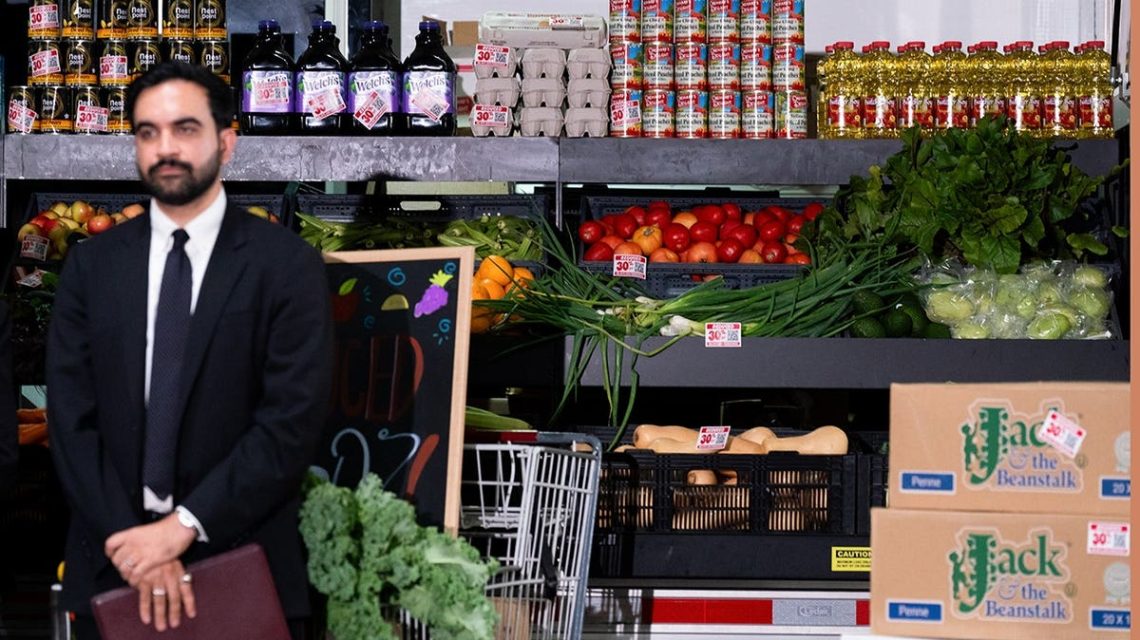
New York City officials are exploring measures to reduce expenses for independent grocery stores amidst concerns about Mayor Zohran Mamdani’s city-owned grocery store initiative. The administration is considering tax breaks, incentives, and zoning benefits to help private grocers with costs. This move comes as the city advances with taxpayer-funded stores that will receive low- or no-cost real estate and other subsidies.
The potential double cost for taxpayers arises as they may be paying for both the city-run stores and the incentives to aid private businesses operating nearby. The municipal stores plan to sell groceries at prices 30% lower than comparable retailers, according to Mamdani’s administration.
Adam Lehodey, a policy analyst at the Manhattan Institute, highlighted concerns about the financial reality of these discounts. “The 30% savings announced are an illusion,” he told Fox News Digital. “Taxpayers will ultimately cover millions in subsidies, with stores operating on government-issued land and rent waivers. New Yorkers will pay the full price indirectly.”
Lehodey warned that selling groceries well below market prices could have unforeseen consequences for both consumers and businesses. He noted that low prices could lead to individuals purchasing goods to resell them, possibly causing shortages as people buy more than usual due to these prices.
E.J. Antoni, chief economist at the Heritage Foundation, questioned the sustainability of the city’s pricing model, stating that grocery stores typically operate on narrow profit margins. A 30% discount at stores with a 2% profit margin means losses that taxpayers will need to offset. Such pricing strategies could harm small businesses as they lose customers to subsidized city stores.
The New York City Economic Development Corporation (EDC), overseeing the program, argued against the idea that municipal stores would harm neighborhood grocers. They believe these stores will attract more foot traffic, ultimately benefiting nearby businesses.
The EDC also clarified a statement about potential grants for existing grocers, saying no grant programs are being planned. However, they are examining the possibility of tax abatements, incentives, and zoning benefits to relieve cost pressures for small businesses across the city.
Among the proposals under consideration is the city’s longstanding FRESH program, offering tax incentives and zoning benefits to qualifying grocery stores. Mamdani has also announced the OPEN for Small Business initiative, aimed at reducing bureaucratic obstacles for small enterprises.
Mamdani has allocated $70 million to open five municipal grocery stores, with the first expected to launch in Hunts Point, Bronx, by the end of 2027. Additional locations are planned for East Harlem, Brooklyn, Queens, and Staten Island. Private grocery operators will manage daily operations, including staffing and product sourcing, while the city sets pricing and operational standards and covers major occupancy costs.
Mamdani promotes this model as a way to reduce grocery bills by cutting out costs like rent and profit margins. The longer-term viability of these savings and their impact on taxpayers and existing grocers will be central issues as the first store approaches its 2027 opening.
For comments, Mamdani’s office directed inquiries to the New York City Economic Development Corporation. Amanda Macias covers business, economics, and politics, focusing on policy impacts on markets, businesses, and American workers.
 Randi Weingarten’s Political Statements Spark Debate at Teachers Union Convention
  Jesse Watters Primetime: Engaging News and Straight Talk
  Debate Over Democratic Party’s Future Intensifies Amid DSA Influence
  Washington D.C. Hosts IndyCar Race Spectacle with Trump in Attendance
  Xavier Becerra and California’s Healthcare Challenges
  Chris Van Hollen Discusses DSA Endorsement and 2028 Presidential Run