
Illinois Implements Work Requirement for Medicaid Expansion
Starting January 1, 2027, Illinois will require adults participating in its Medicaid expansion program to prove they have worked 80 hours in the preceding month or demonstrate they are too sick to work. The assessment of illness will rely heavily on billing codes, which can be problematic. For instance, a woman between an abnormal mammogram and a confirmed diagnosis might be considered healthy based on these codes, despite her doctors’ contrary opinions.
Federal and State Role in Implementation
Congress has established the work requirement, but states are responsible for its implementation. The challenge lies in distinguishing who is too sick to work from claims files. On July 30, a federal judge declined to pause the rule amidst an ongoing multistate challenge. With states currently constructing their systems, Illinois exemplifies the risk of making errors in the process.
Understanding the ‘Medically Frail’ Exemption
The law exempts individuals classified as ‘medically frail,’ a category designed to protect those whose medical conditions prevent them from working. Cancer treatment can be a qualifier. However, the difficulty lies in identifying these patients accurately. Like most states, Illinois plans to depend on claims data, which include billing codes generated from patient care. These codes are effective for patients actively receiving chemotherapy but are insufficient at various stages before a diagnosis is confirmed and after treatment, while ongoing monitoring continues.
The Timing Issue with Billing Codes
An abnormal mammogram creates a patient before establishing a diagnosis. Between the initial image and pathology report, the patient undergoes further imaging, biopsy, and specialist consultations. The cancer code is applied at the conclusion of this process. Until malignancy is confirmed by pathology, records only show screening, abnormal findings, and follow-ups. This isn’t an accurate reflection of the patient’s experience. They aren’t waiting for a code; they’re waiting to learn the status of their suspected condition. If Medicaid renewal occurs during this period, the absence of a confirmed diagnosis is interpreted as the absence of a serious condition, affecting exemption qualification.
The Limitations on Medicaid Coverage
There is another drawback. Illinois covers breast and cervical cancer treatment through a separate Medicaid category. However, state rules dictate that individuals already eligible for Medicaid cannot receive benefits through this category. Hence, a woman enrolled through the expansion remains subject to the work requirement even after diagnosis, throughout surgery and chemotherapy. This situation poses continuous exposure throughout her treatment.
Case Study: Arkansas Experiment with Work Requirement
Arkansas has previously experimented with a work requirement. In the first seven months of its 2018 implementation, approximately 18,000 people lost coverage, equating to one in four affected individuals. A study from the New England Journal of Medicine revealed employment rates did not increase. People lost coverage due to difficulties in navigating reporting procedures, not due to unemployment. By early 2019, only about 10% had regained coverage.
Diverse Implementation Strategies Across States
While the federal law is fixed, the implementation varies across states. Some states screen for medical frailty during application, offer hardship exemptions, and set lengthier compliance periods. Illinois must not reinvent federal policy to safeguard patients but must determine where to place the burden of proof.
Proposed Protective Measures
To protect patients, states could safeguard individuals from the moment they receive abnormal screening results, preventing the need to prove illness during periods when records don’t yet show it. States could introduce a grace period when a diagnosis is documented but the claim hasn’t caught up. Accepting letters from free or community clinics, which don’t bill Medicaid, could prevent the poorest patients from remaining invisible. Additionally, states could ensure survivors continue receiving coverage while being monitored. None of these measures alter the federal requirement; they are within states’ authority.
Impact of the Centers for Medicare and Medicaid Services Projection
The Centers for Medicare and Medicaid Services expects 2.3 million people will lose Medicaid within the first year of this requirement. While no vote in Springfield will amend the federal law, decisions made in administrative offices will determine which diagnoses qualify, when exemptions commence, and the necessary proof patients must provide to demonstrate illness. Cancer doesn’t wait for billing codes, nor should states wait to recognize proof of illness.
Akshaya Sahasra Ganji is an undergraduate health policy researcher at Florida International University, specializing in women’s health, neuroscience, and health policy.
Copyright 2026 Nexstar Media Inc. All rights reserved. This material may not be published, broadcast, rewritten, or redistributed.
 Understanding Rising Stroke Rates in Younger Populations
 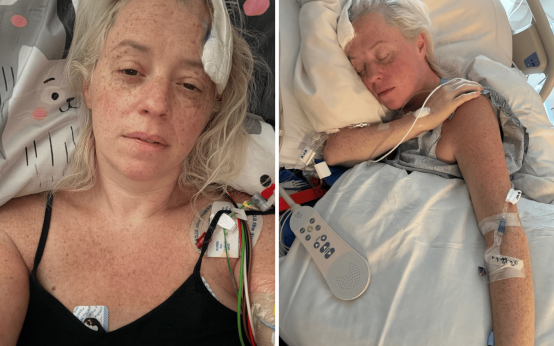 Julie’s Sudden Medical Emergency: A Brain Aneurysm Case Study
  Growing Support for Government-Run Health Insurance Revealed by New Poll
  Resilience: Preparing Health Systems for Unexpected Crises
  President Trump to Discuss Health Alert with Putin Amid Pneumonic Plague Concerns in Siberia
  Barriers in Affording GLP-1s in America