Gray and weary, individuals who once played central roles in a violent gang war now find themselves in a Las Vegas courtroom. Over thirty years ago, these men were embroiled in conflicts that claimed numerous lives, including that of rapper Tupac Shakur. Many survived the bloodshed, but the murder trial brings back memories of the rivalry between the Crips and Bloods and the East Coast-West Coast rap tensions of the early 1990s.
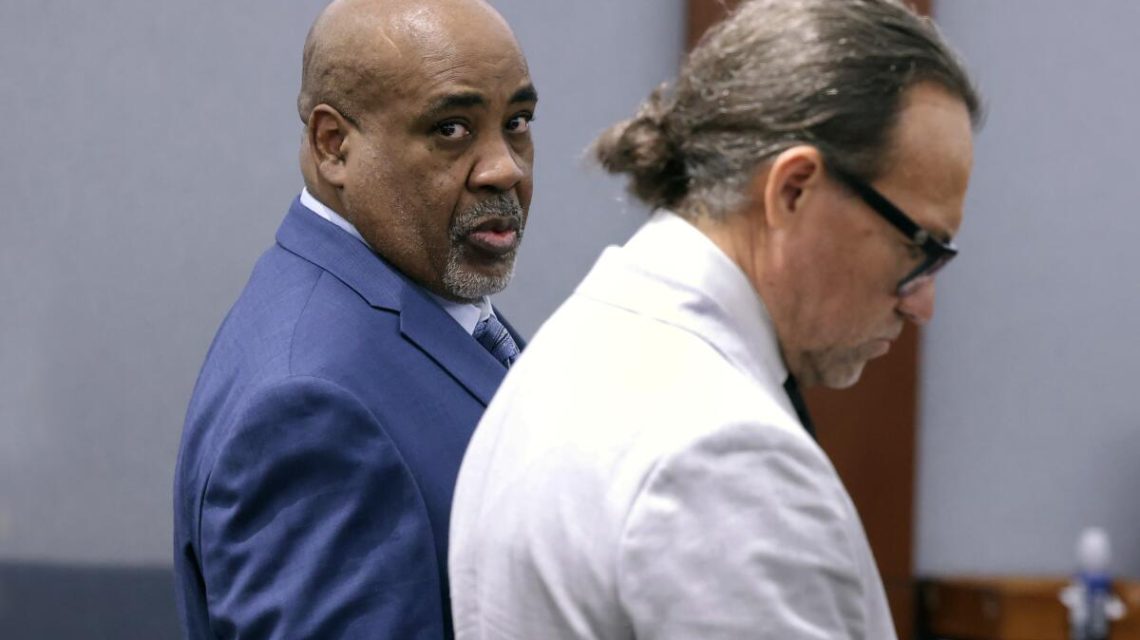
Duane Davis recently appeared in court with his attorney, Michael Sanft, during his trial for the 1996 murder of Tupac. Shakur’s killing on the Las Vegas Strip exposed these tensions, remaining unsolved until now. Prosecutors in Las Vegas are trying Davis, a former Compton gang leader, using testimonies from past associates. Prosecutors allege Davis orchestrated the murder. He denies the charges.
James McDonald, also known as Mob James, testified about life in the gangs. Affiliated with Death Row Records, McDonald shared a car with Shakur on the night he was killed. Prosecutors claim the shooting on September 7, 1996, was part of a conflict between Southside Crips-Burris Street, led by Davis, and Mob Piru, a gang linked to Death Row Records. Shakur had close connections with Death Row.
The confrontation that night followed an altercation at a Mike Tyson fight. Video evidence showed Shakur’s entourage attacking Davis’ nephew, Orlando Anderson, after he was spotted by Mob Piru member Travon Lane. Anderson had previously stolen Lane’s Death Row Records chain in a mall attack. Shakur’s murder sparked further gang violence in Compton, leading to multiple deaths and injuries.
“We all fell victim because we allowed ourselves to be part of the BS,” McDonald testified.
McDonald expressed reluctance to harm Davis, despite their past differences. “I don’t want to send him to prison,” he said, acknowledging the changes in his own life since those days. Prosecutors considered McDonald a hostile witness. He highlighted the neighborhood feuds and preparations for violence that followed Anderson’s beating.
The jury listened to Davis’ 2008 interview with an LAPD federal task force and a 2009 conversation with a Las Vegas homicide detective. In these interviews, Davis mentioned acquiring the gun that killed Shakur and noted his nephew fired it. He admitted he would have done so if in another position that night. Davis warned young gang members against boasting about killing Tupac, emphasizing the longevity of murder charges.
Reggie Wright Jr., former Death Row security chief, testified about Shakur’s security arrangements. At the 1996 Soul Train Music Awards, tensions flared between Shakur and rapper Christopher Wallace (Biggie Smalls). Wright recounted how a weapon was brandished during the confrontation, prompting him to draw his firearm. Wright, who spoke from a mobility scooter, said he informed his father, a Compton police lieutenant, about the altercation.
Defense attorney Michael Sanft argued that no credible evidence links Davis to Shakur’s murder. He reminded jurors of previous investigations that dismissed Davis’ statements due to credibility issues.