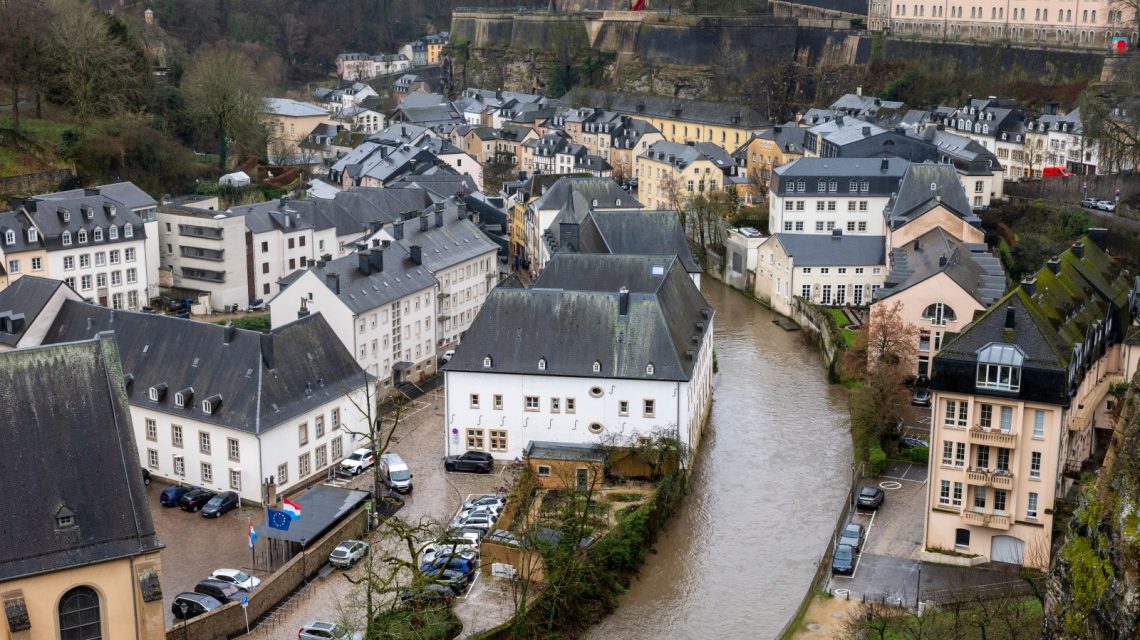
Carys Cassidy, a 35-year-old transgender woman from Denver, has long considered leaving the United States. The idea of moving to Europe has been in her mind since childhood and has grown stronger with time. “The cultural and political climate here has been polarized even before Donald Trump’s time,” Cassidy shared with Newsweek. “I felt constrained back then. Social mobility in the U.S. isn’t what it is in Europe.”
Cassidy expressed that in the U.S., “the expectation is you work extensively, and attempts to improve yourself are met with obstacles like debt or sacrifices in housing and experiences.” Europe seemed to offer her a chance to breathe and realize her dreams. Eventually, she discovered a genealogical link to Luxembourg, where a great-great-great-great-grandfather provided a pathway to citizenship under the country’s laws.
Delving into her family history, Cassidy found ancestors who migrated from Luxembourg to the United States in the 1800s, passing through regions like Chicago, Minnesota, Iowa, and Kansas. Luxembourg’s citizenship laws permitted her claim due to an unbroken male lineage tracing to an ancestor born in Luxembourg in 1815 or later. In March, after a year of gathering documents, Cassidy secured her Luxembourgish citizenship without needing a language test or a visit to the country. Concerned about a potential second Trump administration, she left the U.S. for Sweden soon after.
Increasing Demand for Luxembourg Citizenship
After Trump’s return to the White House, more Americans sought Luxembourgish citizenship amid rising political uncertainty. According to the national register, 3,574 Americans acquired Luxembourg citizenship during Trump’s second term, marking the largest cohort recorded. The Ministry of Justice noted only 657 of these were new citizens applying through naturalization, option, or reclaiming; many had automatic citizenship due to ancestry, if a parent was Luxembourgish at their birth or if born in the country before April 1948.
Cassidy’s situation falls within the 657 new voluntary applications, which rose 40% compared to the previous year. Daniel Atz, a dual citizen aiding Americans through this process, had also sought European life and availed himself of Luxembourg’s 2008 nationality law opportunity. His successful application in 2014 helped him reconnect with his European family, bringing newfound relationships and support.
Atz noticed increasing interest since Trump’s initial election, with citizenship applications surging in 2016. Now, around 900 Americans obtain Luxembourg citizenship quarterly—a threefold increase. New figures reveal by late September, 23,690 Luxembourg citizens reside in the U.S., surpassing those in Germany. Between June and September, there were 952 new Luxembourg citizens in the U.S.
Relocation Realities and the Lure of a “Plan B”
While obtaining citizenship, only a small fraction move to Luxembourg. For many, the passport is a strategic measure amidst political and economic unease, offering EU entry. Atz noted, “Most are moving to other Schengen countries, not Luxembourg,” citing financial impracticalities and limited job markets as deterrents. More people choose countries like Spain, Portugal, and France over Luxembourg.
Cassidy, intending to establish in Luxembourg, questioned the financial viability and was uncertain about her permanent European residence while briefly back in the U.S. “Transitioning here is daunting,” she remarked.
The Prospect of Renouncing U.S. Citizenship
Many Americans abroad are renouncing U.S. citizenship, yet Cassidy remains hesitant. “A lot of challenges persist, but there’s hope for favorable election results,” she expressed, maintaining optimism for potential improvements in the U.S. political landscape. “What happens in the closing years of the Trump administration will be crucial.”
For further information on this topic, contact Newsweek‘s editors Matthew Robinson and Shakeema Edwards.
 Jack Keane Defends Israel Amid UN Criticism, Pillay’s Nobel Victory
  Empire State Building Honors Fox News’ 30th Anniversary
  Investigating the Far-Left Influence Behind France’s Student Protests
  Navigating Complexities in the Strait of Hormuz Conflict
  Nobel Peace Prize Awarded
  Updates on Iran Conflict and Regional Tensions