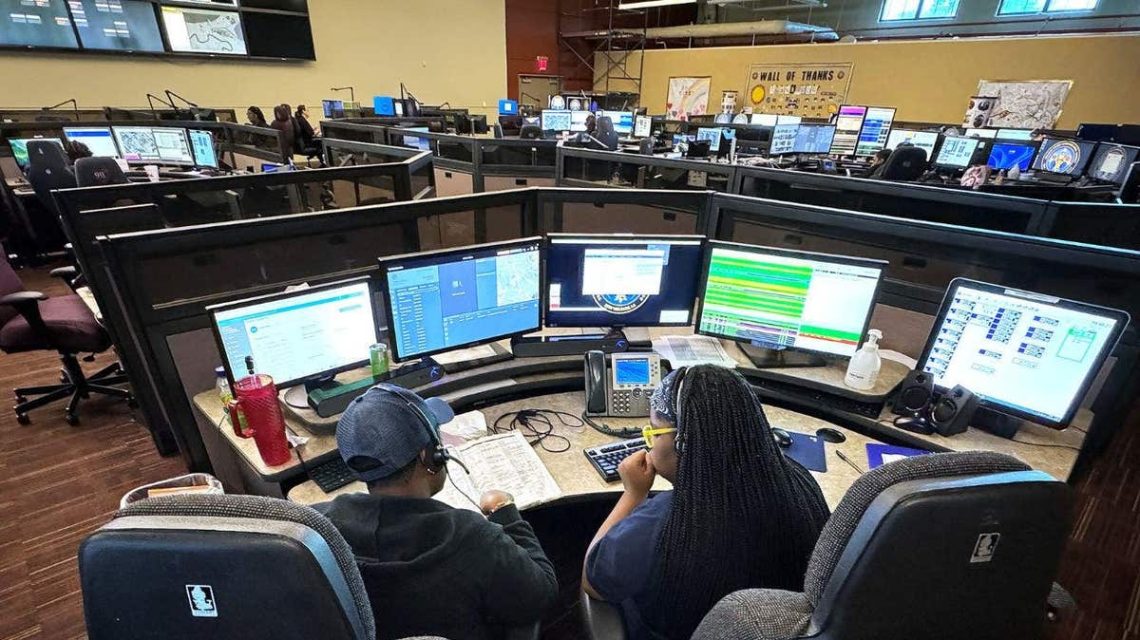
Calling 911 typically signals a need for urgent human assistance. In New Orleans, however, certain calls about already reported auto crashes may receive an answer from an artificial intelligence system. Orleans Parish Communication District (OPCD) manages these 911 communications and utilizes AI to handle repeat crash reports, allowing human operators to focus on other emergencies.
AI System in New Orleans
The technological shift may cause concern if an automated system responds when expecting a human voice. The AI system steps in under limited scenarios and maintains human oversight beyond these tasks.
System Operation
OPCD collaborated with Carbyne to introduce AI-V Emergency Call Triage. This system aids in managing sudden influxes of calls from the same event. Car accidents frequently result in multiple reports from drivers, and during busy times, these repetitive calls can overwhelm dispatchers.
The AI evaluates whether an incoming call originates within 200 meters, approximately 650 feet, of a known crash. It operates only when all human call-takers are occupied. This limited deployment keeps direct human involvement in other call categories unchanged.
AI Call Handling
The AI initiates calls, identifying itself as New Orleans 911, and checks if the caller refers to a specific accident. If the response is anything other than yes, the call returns to the human queue. If confirmed, the system informs the caller that the crash has been reported, though those with more information may stay on the line. Importantly, AI does not terminate calls; the caller decides when to hang up.
Limitations and Safeguards
The AI system does not dispatch emergency responders nor assess call urgency. It determines the nature of repeat crash calls and whether they warrant placement in the human queue.
It is not a large language model like ChatGPT, instead focusing on a specific task in emergency communications. If it fails to understand the caller, it defaults to human operators. The system supports multiple languages and has been coached using local recordings to better comprehend New Orleans accents and street names.
Post-Hang-Up Procedures
Hanging up during the queue process does not remove the call from the list. Normal callback procedures ensure calls remain for follow-up by staff. OPCD recommends staying connected until reaching an operator.
Interactions with AI are recorded alongside regular call metadata and audio logging. Investigations can access these records, which are not uploaded to external language models, safeguarding privacy.
System Effectiveness
OPCD tested the technology extensively before implementation. The agency reported no false positives or negatives in its review of calls managed during the system’s initial months.
Carbyne shared performance data indicating a 30% reduction in redundant calls and faster response times for distressed callers, highlighting potential benefits. OPCD continues to monitor the system rigorously.
AI’s Current Role and Expansion Potential
While AI is utilized as a support tool amidst staffing challenges, NPCD does not perceive it as a replacement for human call-takers. The primary aim is improving efficiency during peak call periods.
Experimental uses for AI in other call clusters are underway but not yet operational. Expansion depends on ensuring technological reliability in varying scenarios.
Implications for Communities
New Orleans serves as a testing ground for integrating AI into emergency response systems, posing questions for future implementation in other areas. Key considerations include AI’s role, its capability limitations, and accessibility to human operators during system missteps.
Currently, AI focuses solely on the specific context of known vehicular accidents. Human agents remain essential for broader 911 operations, prompting ongoing discussions about AI’s potential application.
 Plan for Express Train to Chicago’s O’Hare Airport Moves Forward
  The High-Cost Evolution of Foldable Smartphones
  AI’s Impact on Employment in China’s Rapidly Evolving Job Market
  AI and Cybersecurity Risks in Water Utilities
  Autonomous AI Agents Breach Systems in Unprecedented Cyberattack
  Impact of AI Infrastructure on U.S. Housing Market