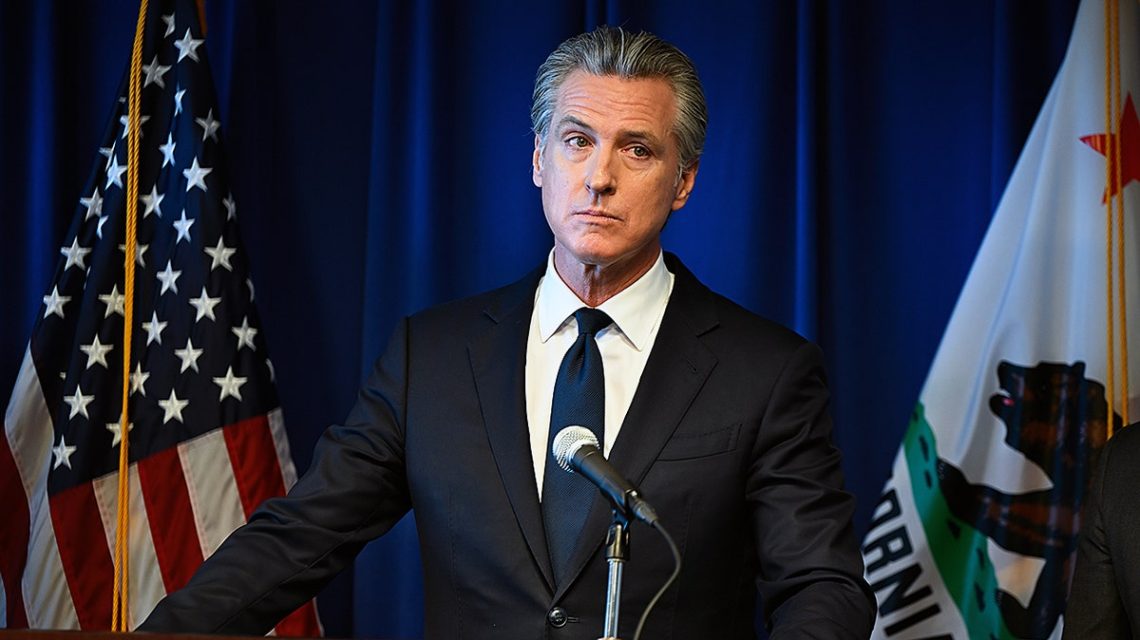
California Governor Gavin Newsom revealed plans to initiate legal action against the Trump administration following its efforts to limit mail-in voting. This development follows the Supreme Court’s decision to allow the enforcement of contested elements of President Trump’s order related to “election integrity” while ongoing litigation persists. The court’s ruling, which passed with a 6-3 vote, lifted an injunction affecting 23 states prior to the midterm elections.
The Supreme Court emphasized that its ruling focused on the injunction, not the final legality of the order, allowing room for further legal challenges. Governor Newsom expressed strong opposition to the court’s decision, issuing a statement through his office.
“The Supreme Court just let the Trump administration move ahead (for now) with its plan to disenfranchise voters across the country,” Newsom stated. “California will be suing AGAIN to block these Orwellian rules from being implemented.”
Newsom’s administration highlighted two legislative proposals moving through the California Legislature aimed at safeguarding the state’s electoral processes. AB 282 proposes new felonies related to seizing ballots, election records, or certified voting technology prior to certification of election outcomes. SB 259 introduces criminal penalties for disrupting mail-in ballot delivery or return, including a felony punishable by up to four years in prison under certain circumstances.
The initiatives are described as part of an “Election Protection” package, which adds to the election-related legislation Newsom signed earlier in the year. Meanwhile, the U.S. Postal Service (USPS) and Department of Justice announced plans to enforce the revised mail-ballot restrictions following the court ruling.
Trump’s executive order mandates federal agencies to compile lists of eligible voters based on citizenship, directing the USPS to mail ballots solely to individuals listed on approved registries.
The Supreme Court explained its decision, noting that the order instructs the Department of Homeland Security to generate and distribute state citizenship lists, imposing requirements on federal agencies rather than states. The court asserted that this presidential directive to subordinates places no obligations on the states, and thus, states suffer no tangible harm, nullifying standing.
Justices Sonia Sotomayor, Elena Kagan, and Ketanji Brown Jackson dissented from the ruling. A representative for Newsom did not immediately respond to requests for comment.
 Federal Immigration Officers Redirected to Investigate Voter Fraud Claims
  Controversy Over Kennedy Center Renovation Plans
  Trump Faces Elevated Security Threat Amid Surge in Secret Service Cases
  Transgender Locker Room Policies Raise Concerns
  Impact of Trade Dispute with Canada on U.S. Senate Races
 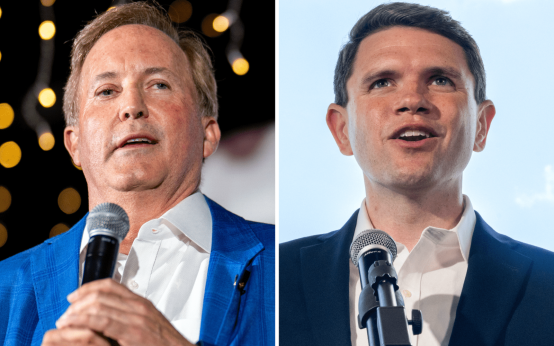 Texas Senate Race: Warning Signs for Ken Paxton